
Maker of decorated tins
Would you like to photograph small lines, raised details or other decorations individually? Look at how well the camera focuses for your chosen framing and shooting distance, and make sure your setup is stable.


Choose a compact camera with a focusing distance and angle of view that suit your tabletop setup; the minimum focusing distance can change when you zoom in. To capture recognisable colours and visible decorations, you’ll also need to consider white balance, light positioning and a stable camera setup. A zoom compact is handy for changing your framing, a macro camera suits very small details, and a fixed-lens camera is only suitable if its angle of view works with your shooting distance.
Would you like to photograph small lines, raised details or other decorations individually? Look at how well the camera focuses for your chosen framing and shooting distance, and make sure your setup is stable.
Would you like to show the whole tin and its colours clearly under consistent artificial lighting? Remember to consider the background, lighting and white balance too.
Would you like to photograph the tin and use the same camera for other subjects? Compare the flexibility of a zoom lens with the limitations of a fixed angle of view.
Choose this if: you want to switch between overall shots and detail shots without changing lenses, and get close to the tin at the wide-angle setting.
Bear in mind: Canon Nederland lists a focusing distance of 5 cm at the wide-angle setting and 40 cm at telephoto for the PowerShot G7 X Mark III, measured from the front of the lens. Zooming in doesn’t automatically mean you can focus from close up.
Choose this if: you’d also like to use the camera beyond this tabletop setup, with a greater optical zoom range.
Bear in mind: Sony Nederland lists a focusing distance of around 8 cm at the wide-angle setting and around 100 cm at telephoto for the RX100 VII, measured from the front of the lens. Check that you can focus at the telephoto setting from your tabletop shooting distance.
Choose this if: very small decorative details are your main subject and you have room to position the lighting.
Bear in mind: OM Digital Solutions states that the Tough TG-7 can focus as close as 1 cm and has approximately 12 megapixels. That macro focusing distance alone tells you nothing about colour reproduction or reflections on the tin as a whole.
Choose this if: the fixed angle of view suits both the tin and the space available, and you want to shoot in RAW.
Bear in mind: the Fujifilm X100VI has a fixed 35 mm-equivalent angle of view; the Ricoh GR IV has a fixed 28 mm-equivalent angle of view. You can’t adjust your framing with optical zoom.
When photographing a decorated biscuit tin under artificial light, your choice mainly comes down to five possible priorities. Assess focusing, framing and lighting together, using an object and lamps like the ones you’ll be working with.
| What to consider | What should you check? | Who is this most important for? |
|---|---|---|
| Small decorations | Check the minimum focusing distance at each zoom setting and assess the framing from your shooting distance. | If I want to show small lines or raised details on their own, the camera needs to focus at my chosen distance and zoom setting. Around 25% of consumers prioritise detail. |
| Colours under artificial light | Look for a useful white balance setting and take a test shot under your own lights. | I want the colours of the tin and its decorations to remain recognisable under my lights. Around 25% of consumers prioritise colour reproduction. |
| Reflections on the tin | Review a test shot and see how changing the camera and light positions affects reflections. | With a shiny tin, I want to show the decorations without reflections dominating the shot. Around 20% of consumers prioritise controlling reflections. |
| Framing the whole tin | Measure the tin and the available shooting distance; check that the angle of view suits the space. | If I want the whole tin in one shot, the angle of view needs to suit the space available on my table. Around 20% of consumers prioritise an overall view. |
| Compact and easy to use | Decide whether you also want to take the camera with you, and whether you’d rather zoom than move your position. | I want one compact camera for the tin and other occasions, without having to keep rearranging my setup. Around 10% of consumers prioritise portability and ease of use. |
The stated distance can vary depending on the zoom setting. Canon Nederland lists 5 cm at the wide-angle setting and 40 cm at telephoto for the PowerShot G7 X Mark III; Sony Nederland lists around 8 cm and around 100 cm for the RX100 VII.
Check the focusing distance, zoom setting and framing you want together, using an object about the same size as your tin.
Artificial light can affect colour reproduction, while a shiny tin can reflect light sources. A different camera won’t make those reflections disappear by itself.
Take a test shot under your own lights, check the white balance and, if needed, move the light before comparing cameras based on aperture alone.
The Fujifilm X100VI and Ricoh GR IV each have a fixed angle of view. If you can’t move further back from the table, the whole tin might not fit in the frame you want.
Measure the tin and the available shooting distance, then check in advance whether the angle of view suits your setup.
According to the Dutch government, a manufacturer’s or retailer’s warranty is in addition to your statutory rights. The Netherlands does not have one fixed statutory warranty period that applies to all products.
Check who the seller is and compare the terms of any additional warranty with the rights you already have.
The PowerShot G7 X Mark III is a zoom compact for switching between overall shots and close-up details.
The RX100 VII offers a stated optical zoom range for anyone who also wants to use the camera for other subjects.
The Tough TG-7 offers a dedicated macro option for anyone who prioritises very small decorative details.
The X100VI has a fixed lens; choose this angle of view only if it suits your shooting distance.
The GR IV is a fixed 28 mm-equivalent option for anyone looking for a wide angle of view and RAW shooting.
A selection of compact cameras and camera lighting bundles from Joybuy. Before choosing, check the focusing distance and how to adjust the white balance for your specific setup.
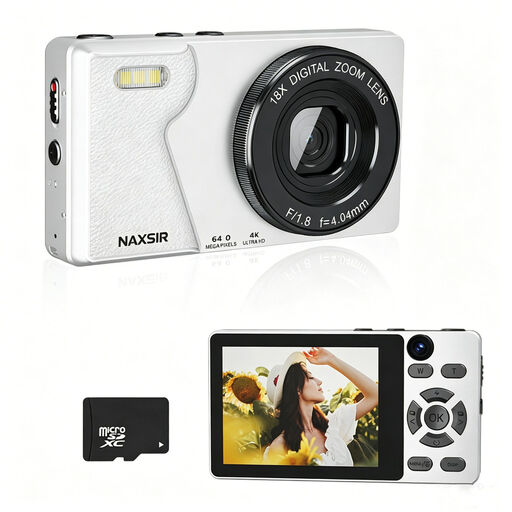 No image available
Could be a good fit if you’re looking for a compact camera with autofocus and digital zoom; check the focusing distance for close-up detail shots.
The product name lists 4K Ultra HD, 64 MP, 18x digital zoom and a 32 GB memory card.
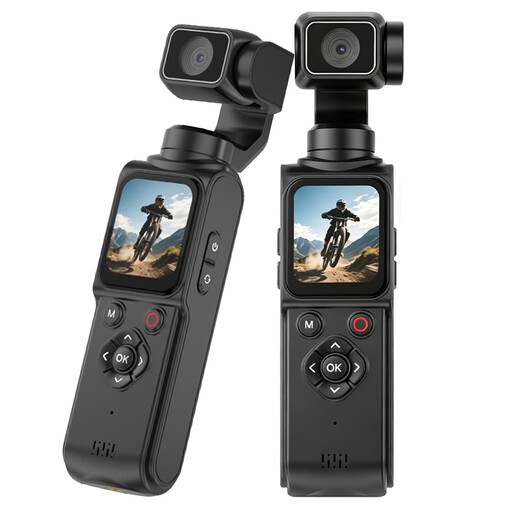 No image available
Could be a good fit if you’re looking for a mini camera with a rotating lens; check the focusing distance and white balance for close-ups under your lights.
The product name lists 64 MP, a 330° rotating lens, a 1.72-inch touchscreen, a tripod and Type-C.
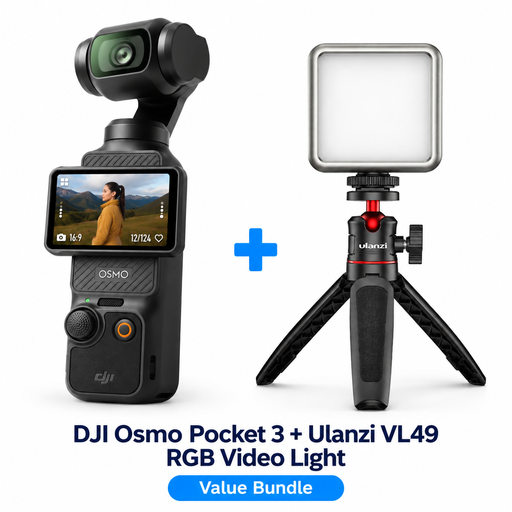 No image available
This product name combines a DJI Osmo Pocket 3 with an RGB LED video light; check that the camera and its controls suit your still close-up shots.
The bundle name lists the Ulanzi VL49 RGB LED Video Light. Check the light position and focusing distance with your tin before choosing.
No image available
Could be worth considering if you’re looking for a camera and an RGB LED video light in one product; check the focusing distance for the size of your tin.
The product name lists the DJI Osmo Pocket 3 and the Ulanzi VL49 RGB LED Video Light. Also check that you can set the white balance as you’d like.
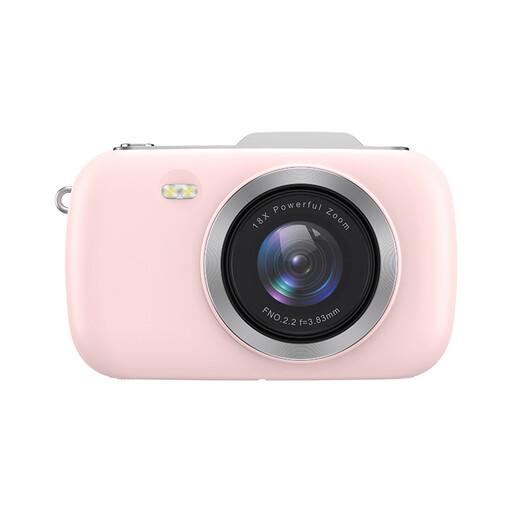 No image available
Could be a good fit if you’re looking for a portable camera with zoom; check what type of zoom the 18X figure refers to and whether the camera can focus at your shooting distance.
The product name lists 4K, 80 MP and 18X zoom. The pink finish is part of the product variant.
No, you should also check the angle of view and the available shooting distance. Canon Nederland lists a focusing distance of 5 cm at the wide-angle setting and 40 cm at telephoto for the PowerShot G7 X Mark III, measured from the front of the lens.
Take a test shot and check the white balance, as artificial light can create a colour cast. Keep the camera steady if you want to preserve the composition while adjusting the lighting or background.
Not necessarily. First, check what the light and surroundings reflect in a test shot, then move the light or camera if needed. A suitable focusing distance remains a separate consideration for detail shots.
Contact the seller. According to the Dutch government, consumers in the Netherlands are entitled to a product that works as it should; any manufacturer’s warranty is in addition to that. The Netherlands does not have one fixed statutory warranty period for all products.
For distance sales from a business, you usually have 14 days to change your mind, although exceptions apply. The Dutch government also distinguishes between buying from a business and buying from a private individual, so check who the seller is.