
Evening photographer at the table
You’re photographing a stationary tin in artificial light and want sharp pictures without losing the atmosphere of the evening or the finer details.


When choosing a compact camera for photographing a decorated biscuit tin, first check the minimum focusing distance at the zoom setting you want to use; this can vary between wide-angle and telephoto. A fast zoom lens gives you the flexibility to switch between a wider view and close-up details from the same spot at the table, while a camera with a fixed lens is best suited to situations where you can move the camera or the tin. Manufacturer specifications can help you make your choice, but they are not a comparative test of evening photographs of a biscuit tin.
You’re photographing a stationary tin in artificial light and want sharp pictures without losing the atmosphere of the evening or the finer details.
You want to switch between shots of the whole biscuit tin and small decorative details. The minimum focusing distance at your chosen zoom setting matters here.
You want to control the colour, background and camera position across multiple shots, while taking the light on the tin’s surface into account.
First compare the focusing distance at wide-angle and telephoto; then consider whether you can position the camera steadily and control the light on the shiny tin.
| What to consider | What should you check? | Who is this important for? |
|---|---|---|
| Sharpness and evening light | Check the aperture values at the zoom setting you’ll use, and whether you can position the camera steadily. | If I want to capture the stationary tin sharply in artificial light, I look at the exposure and a stable setup; around 36% of consumers give evening lighting top priority. |
| Wider shots and details | Compare the minimum focusing distance at wide-angle and telephoto, and measure the available distance to the tin. | If I want to switch between the whole tin and small decorations from the same spot at the table, I check that the camera can focus on both compositions; around 29% of consumers put details first. |
| Reflections and colour | Check whether you can adjust the light source, background and camera angle, and assess a test shot under your own evening lighting. | If the tin’s shine and colours are my main concern, I want to be able to adjust the lighting and camera position; around 21% of consumers start with the surface and colour reproduction. |
| A repeatable setup | Check whether you can see the screen clearly from your camera angle and whether the camera can stay in a fixed position. | For a series of photos with similar framing, I don’t want to have to reposition everything each time; around 14% of consumers give ease of use top priority. |
A minimum focusing distance may apply only at wide-angle. When you zoom in, the camera may need to be further from the tin, so it might not focus on a detail from your usual working position.
Compare the stated focusing distances at both wide-angle and telephoto, and check where the manufacturer measures from.
The zoom range alone doesn’t tell you whether the camera can focus close up or let in enough light. For example, Panasonic lists a minimum focusing distance of 200 cm at telephoto and an aperture of f/3.3–6.4 for the Lumix DC-TZ99.
Consider the aperture, working distance and composition together, rather than comparing only the zoom figure.
Lighting and the background also affect product photography. A light tent can change the shadows, but it won’t automatically create the desired lighting on the tin.
Take a test shot and, if needed, adjust the lighting, background or camera angle before basing your choice solely on camera specifications.
A controlled lighting setup can take extra preparation time and may require additional equipment.
The PowerShot G7 X Mark III is a compact zoom option for anyone who wants to switch between wider shots and details in a limited space at the table.
The RX100 VII combines a compact body with a 24–200 mm equivalent optical zoom, making it suitable for use beyond the tabletop setup too.
The X100VI is a good fit if you’re happy with a fixed angle of view and can move the camera or subject to frame your shot.
The Lumix DC-TZ99 is a travel zoom option if you also want to use the same camera for subjects at a range of distances.
The GR IIIx is a compact camera with a fixed angle of view for anyone who prefers to frame a shot by moving the camera.
This selection includes compact and pocket cameras sold for photography. Check whether each model’s focusing capabilities suit the distance and composition you want to use for the biscuit tin.
 No image available
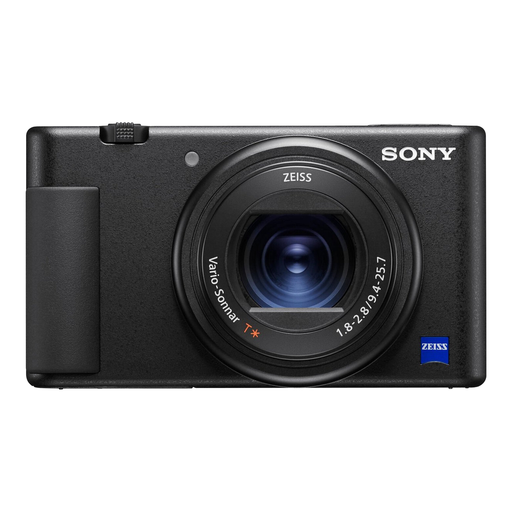
The zoom may suit you if you want to switch between a wider shot and a close-up; check the focusing distance at the zoom setting you’ll use.
1-inch sensor, 24–70 mm, 2.7× optical zoom and f/1.8–2.8 aperture. Supports RAW and has a tilting screen and image stabilisation.
 No image available
The rotating screen can be useful when shooting from an unusual angle; check separately whether the camera can focus on the tin from your chosen distance.
1″ CMOS sensor, 2× lossless zoom, 107 GB of built-in storage and a rotating 2-inch screen.
 No image available
If you’re looking for a compact camera with a rotating screen, check that the focusing distance and controls are suitable for the close-up you want.
1-inch CMOS sensor, 4K/120fps video and a rotating 2-inch screen. The product information also mentions fast focusing and 10-bit D-Log M colour.
 No image available
If you’re considering a pocket camera for photography, check how its focusing and digital zoom suit the composition you want of the tin.
The product name lists 4K, 44 MP and 16× digital zoom; the product information mentions autofocus.
Not necessarily. As the tin is stationary, you can first position your current camera securely and adjust the lighting. A wider aperture lets in more light, but also reduces the depth of field; check that the decoration you want to capture remains sharp enough.
Check the minimum focusing distance at your chosen zoom setting. Canon lists 5 cm at wide-angle and 40 cm at telephoto for the PowerShot G7 X Mark III; Panasonic lists 3 cm at wide-angle and 200 cm at telephoto in macro mode for the Lumix DC-TZ99. These distances apply to the models and settings mentioned, not to every compact camera.
Keep the camera and background in fixed positions as much as possible, and check the lighting between shots. Canon recommends using a tripod to keep framing consistent and reduce camera shake when taking product photos.
Check the seller’s product information and what it says about returns and additional costs. For a faulty product, the seller is responsible for the statutory guarantee under ACM ConsuWijzer guidance; in the Netherlands, there is no standard two-year time limit that applies in every case.
For a consumer online purchase, there is generally a statutory 14-day cooling-off period after delivery under ACM ConsuWijzer guidance, although exceptions apply. This is separate from the statutory guarantee for a faulty product. Before buying, check the seller’s information about returns and any additional costs.