
Photographing decorative details
You want to show fine lines, texture or printed designs. The camera needs to focus at close range without leaving too little room for lighting.


Start with the photo you definitely want to take: a small detail, the whole tin or a series of shots with the same framing. For small decorations, the OM SYSTEM Tough TG-7 is worth considering, with close-up focusing down to 1 cm according to OM Digital Solutions. For switching between wider shots and details, the Canon PowerShot G7 X Mark III has a zoom lens, but the focusing distance varies depending on the zoom setting. On a shared workbench, also check that there’s enough room left for lighting and an uncluttered background.
You want to show fine lines, texture or printed designs. The camera needs to focus at close range without leaving too little room for lighting.
You want to photograph the whole tin against an uncluttered background and need framing that works within the limited distance available on the workbench.
You often take photos in the same shared space and want to be able to recreate the background, camera position and lighting for your next session.
When photographing a decorated biscuit tin, the focusing distance, desired framing and room for lighting all matter. Compare focusing distances at the zoom setting you want to use: Canon gives the PowerShot G7 X Mark III a focusing distance of 5 cm at wide angle and 40 cm at telephoto, measured from the front of the lens.
| What to consider | What should you check? | Who should pay particular attention? |
|---|---|---|
| Focusing on small details | Compare the minimum focusing distance at each zoom setting and, if possible, try framing a detail of a similar size. | If I want small decorations to show up clearly, I look for close-focusing capabilities. Around 31% of consumers put details like these first. |
| Managing reflections | Check whether you can adjust the direction of the light and create an uncluttered background on the workbench. | If you want to stop the light overpowering the decoration on the tin, it helps to have room to adjust the lighting. Around 25% of consumers prioritise this. |
| Framing the whole tin | Measure the available distance and assess the camera’s angle of view at the setting you want to use. | If I want to photograph the whole tin from my usual spot, I focus on finding a frame that works there. Around 25% of consumers prioritise the entire product. |
| A repeatable set-up | Consider whether a camera support, background and file transfer will work with your process; don’t assume accessories are included. | If you often take photos in the same shared space, you’ll want to be able to recreate the set-up easily. Around 19% of consumers prioritise repeatable shots. |
Canon describes a tripod as a useful way to keep the composition and background consistent in product photos. On a shared workbench, though, the support must fit without taking up so much room that there’s no space left for the tin and lighting.
The Tough TG-7’s close-up capability down to 1 cm, as stated by OM Digital Solutions, doesn’t tell you how much room you’ll have to light the tin at that distance.
Try setting up the tin, camera and lighting before choosing a camera based mainly on its shortest focusing distance.
For the Canon PowerShot G7 X Mark III, the stated minimum focusing distance is greater at telephoto than at wide angle: 40 cm and 5 cm respectively, measured from the front of the lens.
Compare the focusing distance and the framing you want at the same zoom setting.
An uncluttered background and adjustable lighting are part of a product photography set-up too. Canon lists a tripod as a useful way to keep the composition consistent.
First, test the background and direction of the light with the camera you already own. Then decide which camera feature you still need.
These models show different ways to photograph both the whole tin and its details. The features listed apply to the specific product ranges and don’t, by themselves, tell you whether a model will suit your workbench.
The Tough TG-7 is worth considering if getting close-up shots of small decorations is your priority.
The PowerShot G7 X Mark III could suit you if you want to switch between wider shots and details with one zoom camera.
The LUMIX DC-TZ99 is worth considering if you also want to use the camera for a variety of subjects.
The GR IIIx is a compact option if its fixed angle of view suits your working distance.
Below are Joybuy cameras listed for photography as compact or pocket cameras. For photos of your biscuit tin, check the minimum focusing distance and framing at the zoom setting you want to use. A stated zoom factor alone doesn’t tell you how close the camera can focus.
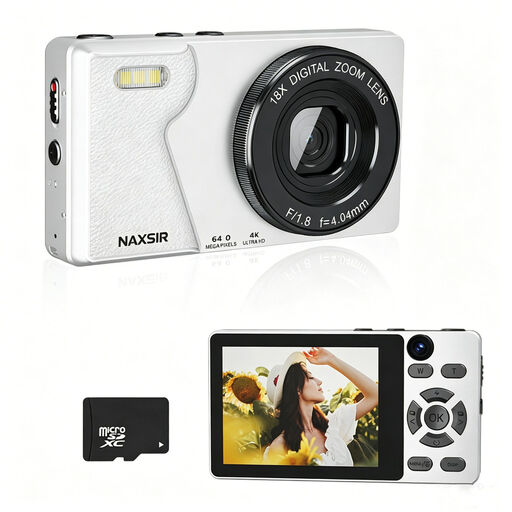 No image available
The product listing mentions autofocus and digital zoom. Check whether the camera can focus at the distance you need for the decoration.
Features listed: 4K Ultra HD, 64 MP, 18× digital zoom and a 32 GB memory card.
 No image available
The product listing mentions autofocus. Check the focusing distance and the framing you want before choosing this camera for small details.
Features listed: 4K, 80 MP and 18× zoom. The type of zoom isn’t specified.
 No image available
The listed 16–50 mm zoom lens could be useful if you want to try different framings. Also check the minimum focusing distance at the setting you plan to use.
The product description lists a 24.2 MP APS-C sensor and a Product Showcase setting with a focus transition from face to subject.
 No image available
The product listing mentions autofocus. Take a test shot to check whether the camera focuses on the decoration from the distance you want.
Features listed: 4K, 44 MP and 16× zoom. The type of zoom isn’t specified.
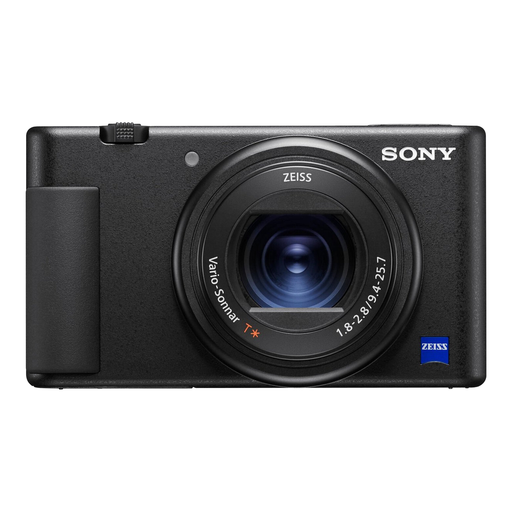 No image available
The zoom lens offers different angles of view. Check that the tin fits in the frame from the space available and that the camera focuses at the distance you need for details.
Features listed: 20 MP, 24–70 mm and 2.7× optical zoom.
No. Check both the focusing distance at the zoom setting you want and the framing from your working distance. For example, Canon gives the PowerShot G7 X Mark III a focusing distance of 5 cm at wide angle and 40 cm at telephoto, measured from the front of the lens.
Mark where the tin and background go and, if there’s room, use a stable camera support. Canon describes a tripod as a useful way to keep the composition and background consistent in product photos.
According to the Dutch government, a product bought by a consumer must be of satisfactory quality. The Netherlands has no fixed statutory warranty period, and the retailer is your point of contact if there’s a problem. For eligible distance sales, you’ll often have a 14-day cooling-off period. Check the terms that apply to your specific purchase.
Not automatically. According to the Dutch Data Protection Authority, recognisable people in photos count as personal data. Photos taken or published for business purposes need a legal basis under the GDPR; for publishing photos of employees, the regulator says consent is required in most cases. The exception for personal or household use may apply to photos kept strictly private.