Who is this buying guide for?

Online shop owner photographing baskets

You want to photograph the whole basket clearly and consistently against a simple background, paying attention to colour and using a fixed set-up. Adobe recommends a controlled environment, good lighting and an uncluttered background for product photography.

Photographer capturing woven details

You want to capture individual fibres and joins, so you’ll need to check the focusing distance at the zoom setting you plan to use. Canon Netherlands and OM Digital Solutions describe close-up capabilities for specific camera models.

Buyer looking for one camera for several uses

You want to photograph other subjects as well as baskets, and need to balance zoom and portability against the space available for your table-top set-up. Panasonic, Sony and Ricoh product specifications show a range of zoom and field-of-view options.

What should you look for when buying?

Versatile compact camera: Canon PowerShot G7 X Mark III

A good fit if: you mainly photograph the whole basket but also want to capture details.

The trade-off: the minimum focusing distance varies with the zoom setting. Canon Netherlands lists 5 cm at the wide-angle end and 40 cm at the telephoto end, measured from the front of the lens.

Close-ups: OM SYSTEM Tough TG-7

A good fit if: individual photos of small fibres and joins are your priority.

The trade-off: the close-up mode can focus as close as 1 cm, but that doesn’t tell you whether the whole basket will fit in the frame from that distance. OM SYSTEM also emphasises the importance of a stable set-up for focus stacking.

More zoom for other subjects: Panasonic LUMIX DC-TZ99 or Sony RX100 VII

A good fit if: you want to use the camera for distant subjects as well as basket photos.

The trade-off: a long telephoto reach doesn’t automatically mean you can focus up close. Panasonic lists 200 cm at the telephoto end for the TZ99; Sony gives approximately 100 cm for the RX100 VII. Both distances are measured from the front of the lens.

Fixed field of view: Ricoh GR IIIx

A good fit if: you’re working with a fixed set-up and can check in advance that the basket will fit fully in the frame at the available distance.

The trade-off: the lens has a fixed field of view of approximately 40 mm equivalent in 35 mm format. Without zoom, you can’t adjust the framing optically.

What to consider What to look for Who is this important for?
Framing the whole basket Measure the basket and the available distance. Check that your preferred zoom setting allows you to frame the basket and focus on it. I want to photograph the whole basket in focus against a simple background from my small table; around 36% of consumers make framing the whole subject their top buying priority.
Capturing the weave close-up Check the focusing distance at the setting you’ll use and see whether focus bracketing or focus stacking is available. I want to focus up close and show plenty of detail in individual photos of fibres and joins; around 29% of consumers prioritise woven details.
Creating a consistent series of photos Check the white balance and exposure settings, and assess test shots under the lighting you actually use. I want to keep the colour, exposure and framing as consistent as possible across a series of basket photos; around 21% of consumers make consistency their top buying priority.
Using the camera elsewhere too Compare a fixed field of view with zoom options and check the focusing limit at the telephoto end. I want to use the same camera for other subjects too, and may be happy to compromise on basket details; around 14% of consumers prioritise versatility.

Common buying mistakes

  • Assuming the minimum focusing distance is the same at every zoom setting

    On some models, the focusing limit is further away at the telephoto end. Canon Netherlands lists 5 cm at the wide-angle end and 40 cm at the telephoto end for the PowerShot G7 X Mark III, measured from the front of the lens.

    Before choosing a camera for close-ups, compare the focusing distances at different zoom settings with the space you have at your table.

  • Choosing the camera but forgetting about the set-up

    A fixed set-up helps keep framing and lighting consistent across product photos. A test set-up will show whether your current lighting and support are up to the job.

    First, create a test set-up using a plain background and the light available to you. Then work out what extra equipment you need.

    A stable support or additional lighting may mean you need extra equipment. A test set-up will help you work out what your workspace needs.

  • Assuming a fixed lens will give you the same framing as a zoom lens without testing it

    According to Ricoh, the GR IIIx has a fixed field of view. If space is limited, you can’t zoom out optically to widen the frame.

    Compare the basket’s dimensions with the available distance and check that the whole basket and its background fit in the frame.

Brands to consider

Canon

The PowerShot G7 X Mark III is a compact zoom camera for wider shots and individual details.

  • Canon lists manual focusing and focus bracketing for this model.
  • According to Canon, the minimum focusing distance is 5 cm at the wide-angle end and 40 cm at the telephoto end, measured from the front of the lens.

OM SYSTEM

The Tough TG-7 is worth considering if you want to photograph very small woven details individually.

  • The manufacturer lists close-up shots from as near as 1 cm. OM SYSTEM also describes focus stacking, which combines images taken at different focus positions.
  • A stable set-up is important for focus stacking, and the close-up mode doesn’t prove that the whole basket will fit in the frame.

Panasonic

According to Panasonic, the LUMIX DC-TZ99 combines travel zoom with AF Macro and focus stacking.

  • Panasonic lists 30× optical zoom and a minimum focusing distance of 3 cm at the wide-angle end in macro mode.
  • Panasonic lists 200 cm at the telephoto end. The 1/2.3-inch sensor and f/3.3–6.4 aperture are separate factors to consider in low light; zoom range alone doesn’t determine how well it will photograph a basket.

Sony

The RX100 VII is an option if you want a compact camera with a wider zoom range for subjects beyond product photography.

  • Sony lists a 24–200 mm equivalent focal length in 35 mm format for this model.
  • According to Sony, the focusing limit ranges from approximately 8 cm at the wide-angle end to approximately 100 cm at the telephoto end, measured from the front of the lens.

Ricoh

The GR IIIx suits anyone considering a fixed field of view who can check the shooting distance in advance.

  • Ricoh lists an APS-C sensor and a fixed lens with a focal length of approximately 40 mm equivalent in 35 mm format.
  • These specifications don’t tell you whether the basket will fit fully in the frame or appear at the size you want on your table. Check this in advance.

Cameras at Joybuy

The selection below includes cameras for photography and video, including vlogging and action cameras. For basket photography, check whether each model’s focusing distance and angle of view suit your set-up.
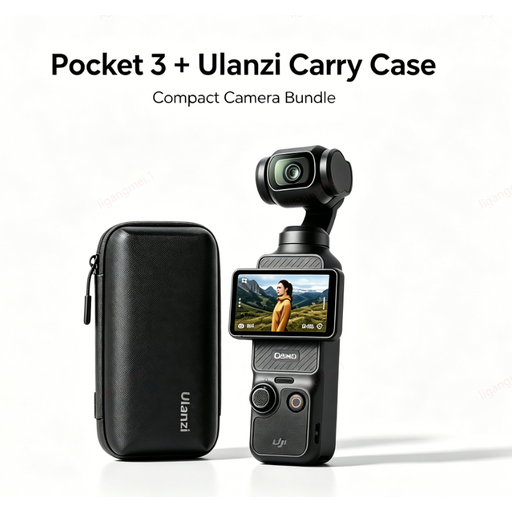
DJI Pocket 3 camera with Ulanzi storage case

DJI Pocket 3 camera with Ulanzi storage case

The product information lists stabilisation. For basket photography, check separately whether the camera can capture the framing and close-ups you want.

View at Joybuy
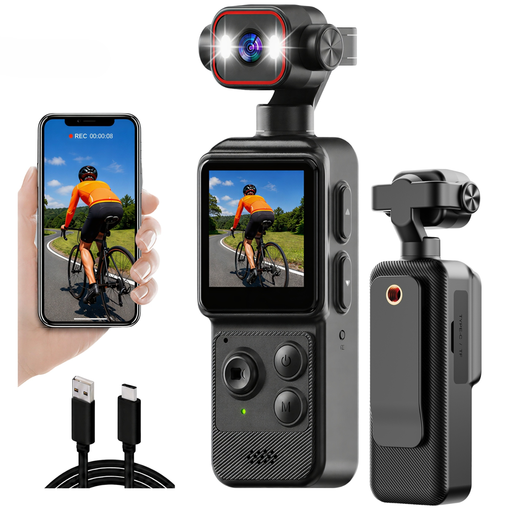
Mini 4K action camera with clip, display and wide-angle lens

Mini 4K action camera with clip

The product name lists a 140° wide-angle lens and a 1.54-inch display. Check whether the whole basket will fit in the frame and be in focus from your shooting position.

View at Joybuy
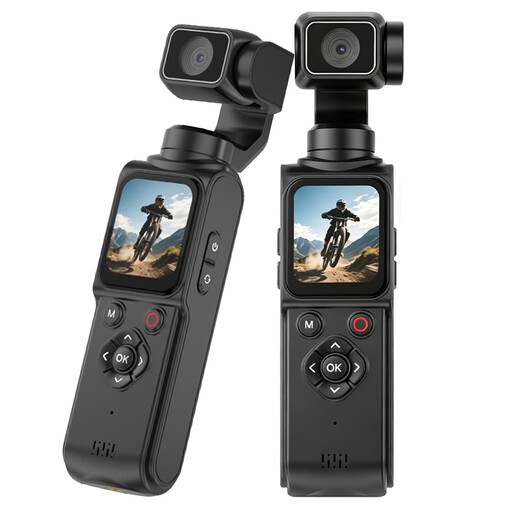
KINSI mini 4K vlogging camera with 64 MP

KINSI mini 4K vlogging camera, 64 MP

The product information lists a mini tripod as included. Also check that the focusing distance and angle of view suit the basket and the space available on your table.

The product name lists a 330° rotating lens and a 1.72-inch touchscreen.

View at Joybuy
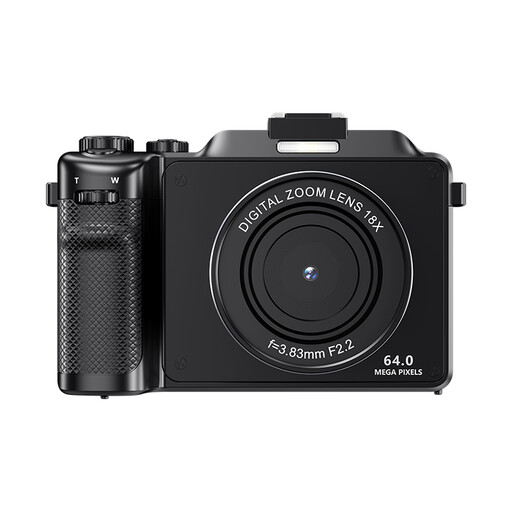
KOMERY X9 4K 64 MP camera with autofocus

KOMERY X9 4K 64 MP camera

The product name lists autofocus. Check whether the camera can focus on the basket’s weave from your preferred distance.

The product information warns that the stated 18× digital zoom may reduce image quality.

View at Joybuy

KOMERY G7 5K camera, white

KOMERY G7 5K camera, white

The product name lists 80 MP and 18× zoom. Before choosing, check the focusing distance and framing this version offers for your basket set-up.

View at Joybuy

Frequently asked questions

Is the shortest stated focusing distance close enough to photograph my whole basket?

Not necessarily. It tells you whether the camera can focus at that distance, not whether the whole basket will fit in the frame. Check the framing from your available shooting distance and pay attention to the zoom setting. Canon Netherlands lists 5 cm at the wide-angle end and 40 cm at the telephoto end for the PowerShot G7 X Mark III.

How can I keep more of the weave in focus from front to back?

Start with a stable set-up and suitable lighting. If one plane of focus isn’t enough, focus stacking can combine several focus positions. OM SYSTEM describes this feature for the Tough TG-7 and emphasises the importance of stability.

What are my rights when buying a camera online in the Netherlands?

For eligible online consumer purchases, ACM ConsuWijzer says you have up to 14 days to change your mind after the product has been delivered. You’re also covered by the statutory guarantee: if a product used normally doesn’t meet what you could reasonably expect, the seller is responsible for providing an appropriate solution. A manufacturer’s warranty period is not automatically the same as the duration of the statutory guarantee.

What should I look for in a camera with Wi-Fi or Bluetooth?

The relevant rules for radio equipment may apply to cameras with Wi-Fi or Bluetooth. Dutch government information refers to the Radio Equipment Directive for devices with Wi-Fi, Bluetooth or a radio frequency module. Check which accessories are included with the specific version you’re considering; this general information doesn’t confirm that an individual product complies with the rules.
