As the light fades, focus on sensor size and lens brightness; if you want to fill the frame with trees on the opposite bank, optical zoom matters more. Exposure compensation and bracketing are useful when a bright sky sits above dark banks, but with the models discussed, a greater zoom range goes hand in hand with a smaller sensor or a less bright telephoto lens. These recommendations are based on published specifications, not a comparative performance test.
Who is this buying guide for?
Walker shooting in fading light
You take photos along the canal during an autumn walk, staying out into the evening, and want a camera that’s easy to handle. Compare each model’s lens brightness, sensor and stabilisation; Canon and Sony publish these specifications for their camera models.
Photographer shooting from the opposite bank
You can’t get closer to the trees and want to fill the frame with individual trees or autumn leaves. Optical telephoto reach is an important point of comparison here; Panasonic and Canon list this for models including the DC-TZ99 and PowerShot SX740 HS Lite Edition.
Composition-maker working with high contrast
You’re photographing a bright sky above dark banks and want to adjust the exposure or take several exposures. Check the available exposure modes and features for each model; Canon and Fujifilm publish model specifications on this.
What should you look for when choosing?
Start with the trickiest part of your walk: low light, distance from the trees, contrast in the scene or carrying your camera.
Bright lens with a short zoom range
A good fit if: wide canal views and shooting later in the day are important to you. Canon specifies a 1.0-type sensor and a 24–100 mm-equivalent f/1.8–2.8 zoom for the PowerShot G7 X Mark III.
Trade-off: its telephoto reach is shorter than that of the travel zoom cameras discussed here; lens brightness alone won’t predict how every shot will turn out.
Long optical zoom
A good fit if: you want to frame trees more closely from the opposite bank. Panasonic specifies 30× optical zoom for the DC-TZ99, while Canon specifies 40× for the PowerShot SX740 HS Lite Edition.
Trade-off: both models have a 1/2.3-type sensor. According to the manufacturer, the Panasonic lens ranges from f/3.3 to f/6.4, so consider its brightness at the telephoto end too.
Zoom with an electronic viewfinder
A good fit if: you want to take both wide shots and close-up views of trees. Sony specifies a 1.0-type sensor, an electronic viewfinder and 8× optical zoom with a 24–200 mm-equivalent range for the RX100 VII.
Trade-off: according to Sony, the maximum aperture changes from f/2.8 at the wide-angle end to f/4.5 at the telephoto end.
Fixed angle of view
A good fit if: you mainly take wide street and canal shots and don’t need zoom. Fujifilm specifies a fixed 35 mm-equivalent f/2 lens and manual exposure modes for the X100VI.
Trade-off: the built-in lens doesn’t have optical zoom; to change your framing, you’ll need to move to a different position or crop the image.
| What to consider |
What to look for |
Who is this most important for? |
| Shooting in fading light |
Compare sensor size and maximum aperture at both the wide-angle and telephoto ends; check stabilisation for the exact model. |
If I’m taking photos on a walk as the light fades, I want to assess the lens and sensor, not just look at the zoom. Around 36% of consumers put fading light first. |
| Trees on the opposite bank |
Compare optical zoom and the stated focal length range; digital zoom doesn’t provide optical magnification. |
If I can’t get closer to the trees, I need optical reach to fill the frame with them. Around 29% of consumers prioritise reach across the canal. |
| Exposure in high-contrast scenes |
Check exposure compensation, exposure bracketing and supported file formats for the exact model. |
With a bright sky and dark bank, I want to adjust the exposure myself and review the result on the spot. Around 21% of consumers put exposure control first. |
| Carrying the camera on a walk |
Compare dimensions and weight, including the battery and card; decide which lens range you actually need. |
If I’m walking along the canal for a long time, I want a camera that’s easy to carry without choosing more reach than I need. Around 14% of consumers prioritise portability. |
Common buying mistakes
-
Comparing only the highest zoom factor
The zoom factor alone doesn’t tell you how bright the lens is at the telephoto end. Panasonic specifies a maximum aperture of f/6.4 at the telephoto end for the DC-TZ99.
Alongside optical reach, compare sensor size and the maximum aperture at the telephoto end.
-
Treating a digital crop as optical zoom
The Fujifilm X100VI has a fixed built-in lens; a digital crop doesn’t change that. Leica also describes digital image selection alongside a fixed lens for the Q3.
Before buying, decide whether you need to frame subjects closer using optical zoom.
-
Assuming a manufacturer’s warranty limits your statutory rights
A manufacturer’s warranty is separate from your statutory rights. ACM ConsuWijzer explains that your statutory guarantee depends on what you could reasonably expect from the product under normal use, not on a single fixed period.
Keep your proof of purchase and, if something goes wrong, take your statutory rights against the seller into account too.
Camera brands to consider
Canon
For this guide, the PowerShot G7 X Mark III and PowerShot SX740 HS Lite Edition are relevant; the models have different lens ranges and sensor types.
- Canon specifies a 1.0-type sensor and a 24–100 mm-equivalent f/1.8–2.8 lens for the G7 X Mark III.
- Canon lists 40× optical zoom for the SX740 HS Lite Edition.
- According to Canon, the SX740 HS Lite Edition has a 1/2.3-type sensor. These differences apply to the models named here, not to all Canon cameras.
Sony
According to Sony, the RX100 VII combines an electronic viewfinder with a zoom lens for both wide views and extra reach.
- Sony specifies a 1.0-type sensor and 8× optical zoom with a 24–200 mm-equivalent range.
- According to Sony, the maximum aperture ranges from f/2.8 at the wide-angle end to f/4.5 at the telephoto end; these are stated specifications, not the results of an independent practical test.
Panasonic
The LUMIX DC-TZ99 is a pocket-sized travel zoom for anyone who values optical reach across the canal.
- Panasonic specifies 30× optical zoom for the DC-TZ99.
- According to Panasonic, the DC-TZ99 has a 1/2.3-type sensor and a lens with an aperture range of f/3.3–6.4. These specifications apply to this model.
Fujifilm
The X100VI is designed for a fixed angle of view, making it suited to anyone who deliberately takes wide street and canal shots.
- Fujifilm specifies an APS-C sensor, a fixed 35 mm-equivalent f/2 lens, RAW shooting and manual exposure modes.
- The built-in lens has no optical zoom; changing your framing means moving to a different position or cropping the image.
Leica
The Q3 is an option if you’re specifically looking for a full-frame compact camera with a fixed wide-angle lens.
- Leica lists a 60-megapixel full-frame sensor and a fixed 28 mm f/1.7 lens with optical image stabilisation for the Q3.
- The digital image selection mentioned by Leica isn’t optical zoom. Leica’s quality claims are manufacturer claims.
Joybuy cameras
The Joybuy products below include compact cameras, handheld cameras and action cameras. Check each model to make sure its stated zoom type, angle of view and controls suit the way you take photos along the canal.
 No image available
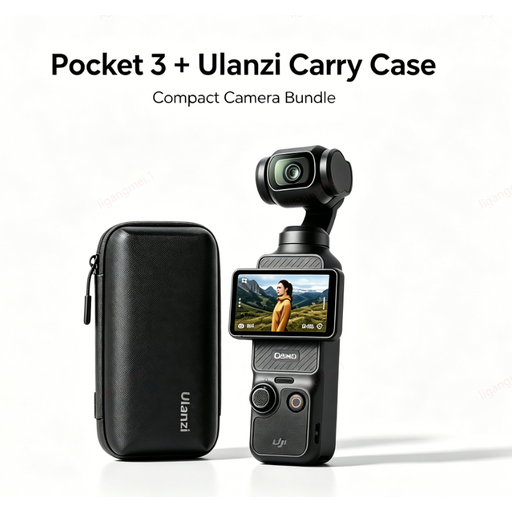
DJI Pocket 3 camera with Ulanzi storage case
The product name lists a camera and a Ulanzi storage case; check whether this type of handheld camera suits the way you take photos along the canal.
View at Joybuy
 No image available
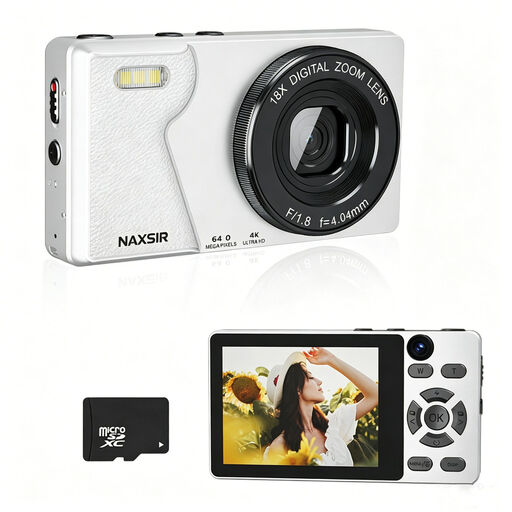
NAXSIR 4K Ultra HD digital camera, 64 MP
The product name describes a digital camera with autofocus; check whether digital zoom meets your needs for getting a closer view of trees on the opposite bank.
64 MP photo resolution; 18× digital zoom; autofocus; includes 32 GB memory card.
View at Joybuy
 No image available
Songdian Pocket Camera 4K 44MP, pink
The product name describes a pocket camera for photos and video; its stated zoom is digital, not optical zoom for filling the frame with trees.
4K video; 44 MP; 16× digital zoom; pink finish.
View at Joybuy
 No image available
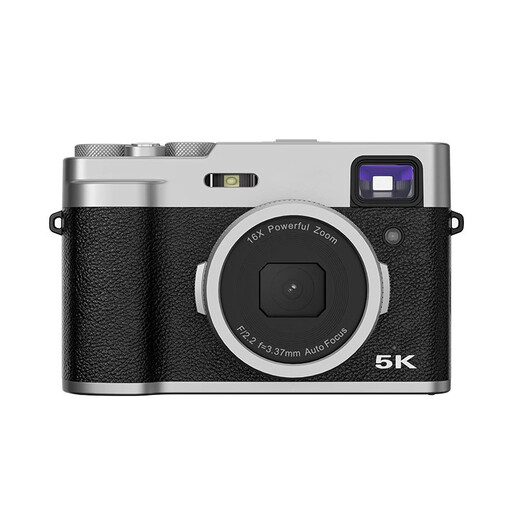
Songdian Retro digital camera 48MP, black
The product name describes a digital camera with an optical viewfinder; check whether its fixed camera design and controls suit the way you frame your shots.
48 MP; 5K Ultra HD; 2.8-inch LCD screen; optical viewfinder.
View at Joybuy
 No image available
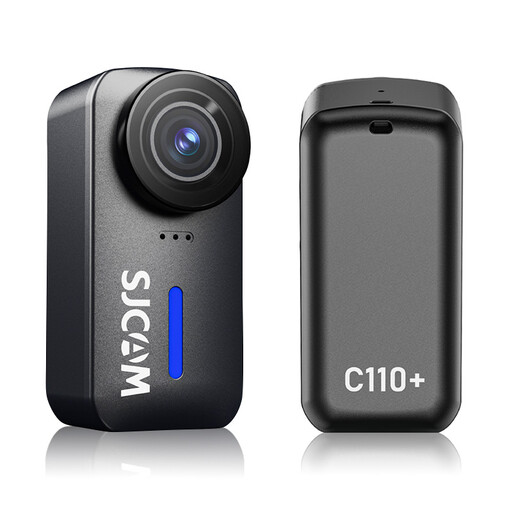
SJCAM C110+ 4K action camera
The product name describes an action camera with an ultra-wide-angle lens; this wide angle is designed for a different type of framing than optically zooming in on trees across the canal.
170° ultra-wide-angle lens; f/1.8; 20 MP photos; 4K video.
View at Joybuy
Frequently asked questions
What helps when there’s a bright sky above a dark canal?
Check whether the camera offers exposure compensation or bracketing, and review the shot on the spot. Canon specifies both features for the G7 X Mark III; Nikon describes bracketing as taking several exposures for high-contrast scenes.
Does image stabilisation keep moving leaves and water sharp too?
No. Image stabilisation is designed to reduce camera shake; it doesn’t freeze moving leaves or water. Choose a shutter speed that suits the effect you want. For deliberately long exposures, Nikon recommends using a sturdy tripod.
What should you check about the memory card and setting up your camera?
Check card compatibility in the manual for the exact model. Fujifilm lists SD, SDHC and SDXC cards for the X100VI and directs users to its own compatibility list.
What are the rules on returns and guarantees in the Netherlands?
According to ACM ConsuWijzer, online purchases come with a 14-day cooling-off period after delivery. Statutory guarantees also depend on what you could reasonably expect from the product under normal use; according to ACM, there is no fixed two-year period.
Can you share canal photos featuring identifiable passers-by publicly?
Not necessarily. According to the Dutch Data Protection Authority, the exception for personal or household use applies when you keep images private or share them only with a very limited group. This exception doesn’t apply if you publish images of identifiable people more widely; you then need a lawful basis under the GDPR, depending on the use and circumstances.


