
Creator of faithful card photos
You want to photograph the entire print straight on, with even lighting and recognisable colours – for example, for a portfolio.


To photograph a complete printed art card faithfully, the right angle of view, a camera positioned parallel to the card and even lighting matter more than the shortest focusing distance alone. For paper fibres or raised print details, a close-up mode is only useful if it can focus on the area you want to capture from your working distance. National Museums Scotland describes raking light as a way to reveal fine texture; if needed, take a separate shot as well as the evenly lit overview.
You want to photograph the entire print straight on, with even lighting and recognisable colours – for example, for a portfolio.
You want to capture small surface details separately, so you pay attention to close-up mode, framing and working distance.
You photograph several cards in a fixed set-up and want to keep the framing and lighting consistent.
First decide whether your priority is photographing the whole card or a specific surface detail. Then check that the focusing distance, framing and lighting suit your card size and set-up.
| What to consider | What should you check? | Who is this important for? |
|---|---|---|
| Fine surface details | Compare the focusing distance from the front of the lens and the framing at the zoom setting and working distance you want to use. | I want to capture paper fibres or print details sharply on their own, so I check the framing at my working distance. Around 33% of consumers prioritise capturing fine details sharply. |
| The whole card | Try a shot with the camera parallel to the card. Check that all four corners are in frame, and look out for reflections and uneven lighting. | For my portfolio, I want to show the whole card straight on and evenly lit, not just a crop. Around 33% of consumers prioritise faithful overview shots. |
| A series of cards | Check that the angle of view and settings work from the same camera position for the card sizes you photograph. | When photographing several cards, I want to be able to repeat the framing and lighting. Around 17% of consumers prioritise consistent photos of multiple cards. |
| Compactness and other uses | Consider the detail crop you want, the space above the card and any other subjects you plan to photograph. | I also want to take the camera out and about, so I check that I can get the card framing I want from the working distance available to me. Around 17% of consumers prioritise compactness and broader use. |
The stated focusing distance for the Canon PowerShot G7 X Mark III and Sony RX100 VII differs between wide-angle and telephoto. On its own, that distance does not tell you how much of a card will fit in the frame.
Test the detail crop you want at the zoom setting and working distance you’ll actually use.
Even lighting for the whole card and raking light to show raised details serve different purposes. National Museums Scotland explains how light falling at an angle across a surface can emphasise fine details.
Take an evenly lit overview shot and, if needed, a separate texture shot using raking light.
Taking a second shot may mean spending extra time adjusting the lighting set-up.
A manufacturer’s or seller’s warranty is not the whole story: ACM ConsuWijzer distinguishes between these warranties and your statutory guarantee rights.
Keep your proof of purchase and contact the seller if there’s a fault. Consider the manufacturer’s warranty separately from your statutory rights.
The PowerShot G7 X Mark III combines zoom with manual focusing and focus bracketing.
The Tough TG-7 is designed for close-up use and has a rugged body.
The GR IIIx has a fixed angle of view, making it suitable for photographers who can plan their shooting distance.
The RX100 VII has a built-in zoom, making it a good option if you also want to photograph other subjects.
These Joybuy product picks are digital and compact cameras to compare for photography. Check for yourself whether the focusing distance, angle of view and framing you want suit your set-up for printed cards.
 No image available
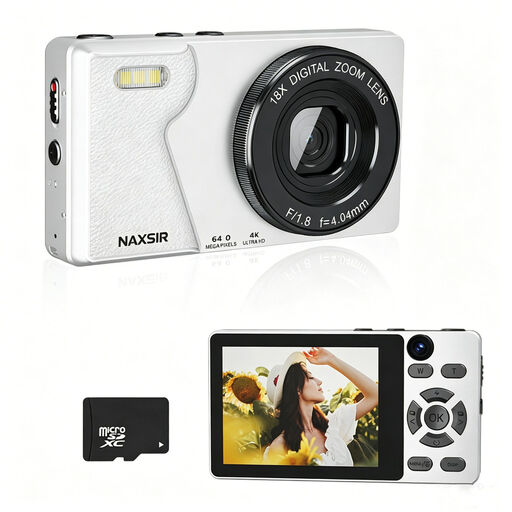
The product title describes a compact vlogging camera for beginners; check the focusing distance and framing before choosing it for card details.
The title lists 64 MP photo resolution, 18x digital zoom and autofocus, plus a 32 GB memory card.
 No image available
The product title describes this model as a portable camera for beginners; check that the close-up distance and angle of view suit your cards.
The title lists 4K video, 80 MP and 18x zoom.
 No image available
The product title describes this model as a portable camera for beginners; test your preferred framing and focus at the working distance you use for card photos.
The title lists 5K video, 80 MP and 18x zoom.
 No image available
The product title describes a pocket camera for photography and video; check that its focusing distance is suitable for the details you want to capture.
The title lists 4K and 44 MP. The product description mentions autofocus; the title lists 16x zoom.
 No image available
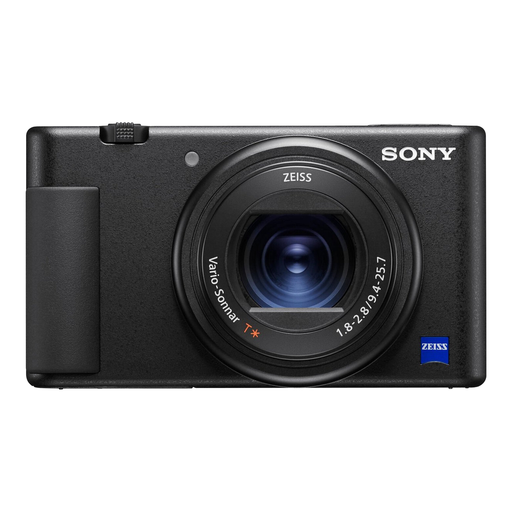
This compact camera is also worth considering for other types of photography; for art cards, check the close-up distance and desired angle of view separately.
The product specifications list 20 MP, JPEG and RAW files, 2,7x optical zoom and a tilting screen.
If needed, take two shots for different purposes: one with even lighting for the whole card, and a separate shot with light falling at an angle across the surface to show its texture. National Museums Scotland describes this raking-light technique for revealing fine details.
Position the camera parallel to the card and check that all four corners are in frame. Use even lighting for your overview shot and look out for reflections; the New Mexico State Committee of the National Museum of Women in the Arts advises positioning the camera parallel to the artwork.
No, statutory guarantee rights are separate from a manufacturer’s or seller’s warranty. ACM ConsuWijzer makes this distinction; what you can ask for if there’s a fault depends on the circumstances that apply. Contact the seller and keep your proof of purchase.
Not automatically. The Dutch government distinguishes between making a copy for personal use and distributing or publishing copyright-protected work. Before publishing, check the rights and whether you need permission.