For printed art cards under artificial light, choose a camera that can capture the whole card in sharp focus from the working distance available to you. For colour-critical work, a consistent lighting setup and white balance control are just as important. A short minimum focus distance helps with small details, but it won’t prevent reflections, skewed edges or colour shifts. So compare the minimum focus distance at each zoom setting, and allow room for stable positioning and lighting.
Who is this choice relevant to?
Creators working with colour-critical cards
You want the colours in your printed work to match the card as closely as possible, and you’re happy to spend time setting up consistent lighting and checking colour. Adobe describes white balance as an adjustment that makes colours look more realistic; DT Heritage discusses controlled, repeatable lighting for flat artwork.
Sellers photographing entire cards
You photograph whole cards regularly and need straight framing, sharp edges and a practical working distance from the camera. DT Heritage explains how a copy stand can help keep artwork flat, maintain even focus and provide repeatable lighting.
Photographers capturing print details
You want to show fine lines or paper texture in close-up, so you need to balance the minimum focus distance against the room needed for lighting. Manufacturers list different minimum focus distances for each model, so also check how much space the camera and lights will take up in your workspace.
What should you look for when choosing?
| What to consider |
What should you check? |
Who is this important for? |
| Colour under artificial light |
Check whether you can adjust the white balance, then take a test shot using your own lights and a colour reference. Adobe explains that white balance affects how colours are rendered. |
If you need the colours of your card to stay as close as possible to the printed original, you’ll want careful control over lighting and colour. Around 36% of consumers put colour accuracy first. |
| Sharpness and framing |
Compare the minimum focus distance at the zoom setting you’ll use, then check the card right into the corners from your available working distance. |
If you regularly photograph complete cards, you’ll want sharp edges and framing that fits without having to position the camera impractically close to the card. Around 29% of consumers prioritise this combination. |
| Reflections and even lighting |
Check how the card’s finish looks in a test shot and whether there’s room beside the card to position lights. DT Heritage describes controlled lighting as part of digitising flat artwork. |
With glossy cards, you’ll want to reduce distracting reflections and spread the light evenly across the surface. Around 21% of consumers put reflection control at the top of their list. |
| A repeatable workflow |
Check whether the controls and a fixed setup suit the number of cards you photograph, and consider whether you want to set the exposure yourself. |
If you photograph lots of cards in a row, keeping the camera and lights in fixed positions can help you follow the same process each time. Around 14% of consumers prioritise a simple, repeatable approach. |
Common buying mistakes
-
Assuming the shortest focus distance applies at every zoom setting
For Canon and Sony models, the stated minimum focus distance differs between wide-angle and telephoto. A camera that can focus close up at the wide-angle setting may need more distance at another zoom setting.
Check the distance and desired framing at the zoom setting you actually plan to use.
-
Assuming a more expensive camera is a substitute for good lighting
With flat artwork, positioning and controlled, repeatable lighting matter too. Your choice of camera alone won’t determine whether reflections and colour differences disappear.
First, try a test setup with your own cards and lights. Then decide which camera feature you still need.
Bear in mind that a permanent setup may require lighting, a stable mount or a colour reference.
-
Using a general compact camera test as a ranking for photographing art cards
Consumentenbond says its compact camera test covers models up to autumn 2025 and is now considered out of date. It doesn’t rank cameras for photographing printed art cards.
Use general test information as background at most, and compare the model specifications with your own lighting setup to see what suits your needs.
Camera brands to consider
Canon
The PowerShot G7 X Mark III has an adjustable zoom, making it suitable if you work with different card sizes and distances.
- Canon specifies a 24–100 mm full-frame equivalent range and focusing from 5 cm at the wide-angle setting.
- The stated minimum focus distance is 40 cm at the telephoto setting. These specifications are not an independent assessment of art reproduction.
Sony
The ZV-1 offers zoom for different framing needs; the RX100 VII has a greater zoom range if you also need it for other types of photography.
- Sony specifies a focus distance of around 5 cm at the wide-angle setting and 30 cm at the telephoto setting for the ZV-1, measured from the front of the lens.
- For the RX100 VII, Sony lists around 8 cm at the wide-angle setting and 100 cm at the telephoto setting. In a small workspace, allow for the distance required at the zoom setting you choose.
Ricoh
The GR IIIx has a fixed angle of view, making it a good option if you can set up a permanent shooting position.
- Ricoh specifies an approximately 40 mm full-frame equivalent focal length, around 24.24 effective megapixels and manual exposure.
- With a fixed angle of view, you can’t frame different card sizes from the same camera position using zoom; you may need to move the camera or card.
OM SYSTEM
The Tough TG-7 is worth considering if you want to photograph very small print details as well as complete cards.
- OM Digital Solutions specifies focusing down to 1 cm and around 12 million effective pixels.
- The ability to focus very close doesn’t, on its own, tell you whether the camera can capture a complete card well from the same setup.
Cameras at Joybuy
This selection includes cameras for photography and video. For each model, check that the minimum focus distance, framing and adjustable image processing are suitable for photographing your cards under artificial light.
 No image available
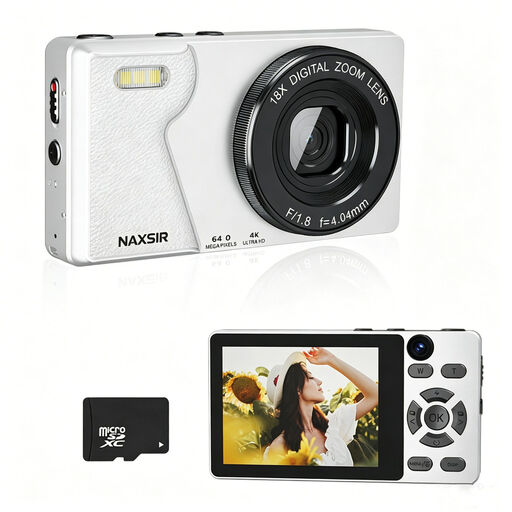
NAXSIR 4K digital camera, 64 MP, 18x digital zoom, 32 GB memory card
If you’re looking for a compact camera with autofocus and zoom, the product title lists both features. Take a test shot to check whether the card is in sharp focus and fully in frame from your working distance.
The product title lists 4K, 64 MP, 18x digital zoom and a 32 GB memory card.
Joybuy
 No image available
KOMERY G7-A 4K digital camera, pink, 18x zoom
If you’re considering a camera with zoom for different card sizes, check that the focus and framing work at your usual distance; the product title alone doesn’t provide this information.
The product title lists 4K, 80 MP, 18x zoom and the colour pink.
Joybuy
 No image available
DJI Osmo Pocket 3, 1-inch CMOS sensor
If you want to shoot video as well as take photographs, the product title lists both uses. Check separately whether the model can capture your still cards in sharp focus at the distance you need.
The product title lists a 1-inch CMOS sensor, 4K/120fps video, 3-axis stabilisation and a 2-inch rotating touchscreen.
Joybuy
 No image available
Songdian 4K pocket camera, 44 MP, pink, 16x zoom
If you’re looking at a pocket camera with zoom for framing cards, test the focus and check that the whole card fits in the frame from the distance you can maintain in your workspace.
The product title lists 4K, 44 MP, 16x zoom and the colour pink.
Joybuy
 No image available
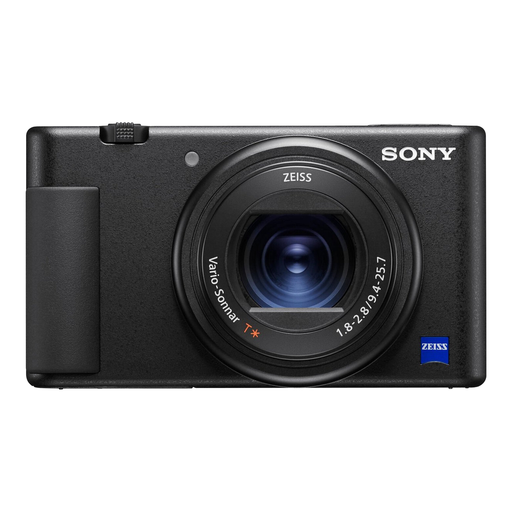
Sony ZV-1 compact camera
Zoom can help you adjust the framing for different card sizes. Sony specifies a focus distance of around 5 cm at the wide-angle setting and 30 cm at the telephoto setting, measured from the front of the lens. So check the distance at the zoom setting you’ll use.
The product information lists JPEG and RAW files. The file formats alone don’t indicate how accurately colours will be reproduced under your lights.
Joybuy
Frequently asked questions
How can you reduce colour casts from artificial light?
Photograph under lighting that’s as consistent as possible and set the white balance accordingly. For colour-critical work, use a colour reference to check your shot; Adobe explains that white balance affects colours other than white too.
Why aren’t the edges of a card equally sharp or straight all the way round?
Check that the camera and card are parallel, use a stable setup and inspect the corners of a test shot. DT Heritage describes keeping artwork flat and using repeatable lighting when digitising flat artwork; this isn’t a performance claim about any specific compact camera.
What are your rights on returns and guarantees when buying online in the Netherlands?
For an item bought online, you generally have a cooling-off period of up to and including 14 days after delivery, subject to legal exceptions, as ACM ConsuWijzer explains. You’re also covered by the statutory guarantee if a product, under normal use, doesn’t do what you could reasonably expect; the retailer is your point of contact. Check the terms of your specific purchase.
Can you publish photos of someone else’s printed art cards?
Not automatically: the Dutch government distinguishes between making a copy for personal use and distributing or making it publicly available. Check the rights to the specific image and, where necessary, ask the rights holder for permission before publishing photos.


