
Card maker comparing colours
You photograph several printed cards and want to avoid differences in workshop lighting making it harder to compare colours. Consistent lighting and white balance may matter more than extra zoom.


For photographing entire art cards and the occasional detail, choose a camera that lets you frame the card clearly from the height available and keep the setup steady. If you want to capture fine print, also check the focusing distance at the zoom setting you intend to use: a short macro focusing distance does not necessarily apply at telephoto. Consistent lighting and white balance matter when comparing colours, but camera specifications alone cannot predict how accurately colours will appear in your own setup.
You photograph several printed cards and want to avoid differences in workshop lighting making it harder to compare colours. Consistent lighting and white balance may matter more than extra zoom.
You share your workbench and need to fit the camera, card and lighting into the space available. Test the framing from the height you can actually use, and check whether the camera can sit steadily above the card.
You want to photograph small details as well as the whole card. The focusing distance at your chosen zoom setting, and the space between the lens and card, will help determine whether a close-up is practical.
Assess the camera alongside its lighting and support. The Consumers' Association (Consumentenbond) highlights factors such as ease of use and zoom range, while Adobe also discusses stable support and a suitable light source for flat-lay photography.
| What to consider | What should you check? | Who is this most important for? |
|---|---|---|
| Comparing card colours | Check whether you can adjust the white balance, and keep the lighting and camera settings the same from card to card. Start by assessing a test shot under your usual workspace lighting. | If I want to compare colours across prints, I want to use as similar lighting and shooting conditions as possible. Around 36% of consumers say colour consistency is their main buying concern. |
| Framing the whole card | Measure the available height and space. Test whether the largest card fits entirely in the frame and whether the camera can sit level and steady there. | When I share a workbench, I want to capture the whole card without taking up the space for longer than necessary. Around 29% of consumers say workspace and framing are their main considerations. |
| Capturing fine print details | Compare the focusing distance at both wide-angle and telephoto, and take a test shot of the smallest detail from the available working height. | If small print or paper details are my priority, I want to know whether the chosen zoom setting can focus closely enough. Around 21% of consumers say details are their main buying concern. |
| Repeating a shared setup | Check whether users can reproduce the same camera position, lighting and white balance, and whether the support will fit in the shared space. | When several people use the same table, I want to be able to recreate the setup without having to work out where everything goes each time. Around 14% of consumers say repeatability is their main buying concern. |
For the Canon, Panasonic and Sony models mentioned, the minimum focusing distance increases at telephoto. This could mean the camera has to sit too far from a detail to focus on it when used on a shared workbench.
Check the focusing distance at the zoom setting you plan to use, and take test shots of both the whole card and its smallest detail.
Colour comparison also depends on lighting and white balance; the camera specifications mentioned are not a comparative measure of colour reproduction.
Make your lighting setup repeatable and assess test shots before treating extra zoom as the deciding factor.
For an overhead shot, the support must also fit within and above the available workspace.
Measure your work area and shooting height before choosing a camera and support.
You may need separate support to keep the camera steady. Remember to consider how practical it will be to store and set up in your shared workspace, too.
In the Netherlands, your statutory guarantee depends on what you can reasonably expect from the product. A stated period does not automatically mark the end of your general legal rights.
When buying as a consumer, ask the seller about the terms and conditions. Don’t judge your guarantee solely by a stated number of years.
The PowerShot G7 X Mark III combines a fixed zoom lens with manual focusing. It’s an option for anyone who mainly wants to photograph whole cards and the occasional detail.
The DC-TZ99 is a travel zoom camera with RAW and manual shooting modes, suited to anyone who also wants to use their camera away from the workbench.
The RX100 VII is a compact camera with a 24–200 mm-equivalent range for a variety of shooting distances.
The Tough TG-7 is a close-up-focused option for anyone mainly looking to capture small surface details.
The WG-90 has a digital microscope function and macro lights, making it an option for anyone who prioritises details.
Below are compact cameras and cameras for photography or video. Check each model to see whether its listed features suit your card size, workspace and need for close-up shots.
 No image available
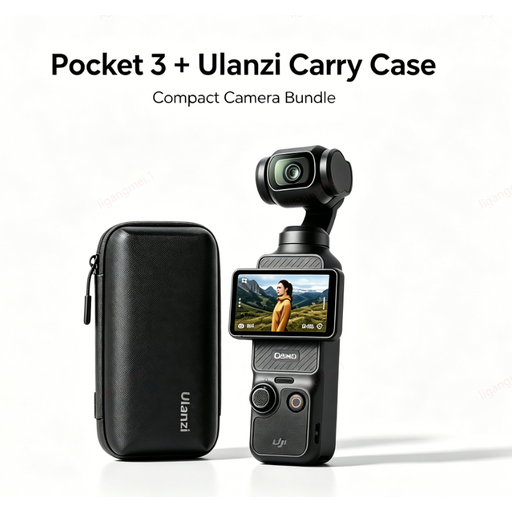
The product title mentions a Pocket 3 camera and a Ulanzi storage case. Check whether the shape and setup are suitable for overhead photography.
 No image available
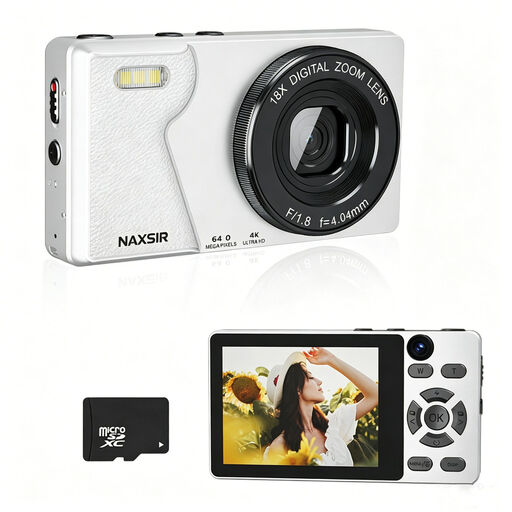
The title describes a compact camera. Take a test shot to check whether you can frame the whole card from the height available.
The title lists 4K Ultra HD, 64 MP photo resolution, 18× digital zoom, autofocus and a 32 GB memory card.
 No image available
The title describes this model as a portable camera for photography and vlogging. Check separately whether the shooting height will work for your cards.
The title lists 4K, 80 MP and 18× zoom; this version is pink.
 No image available
The product title describes a pocket camera for photography and video. Check whether you can capture the whole card from your usual working height.
The title lists 4K, 44 MP and 16× zoom; this version is pink.
 No image available
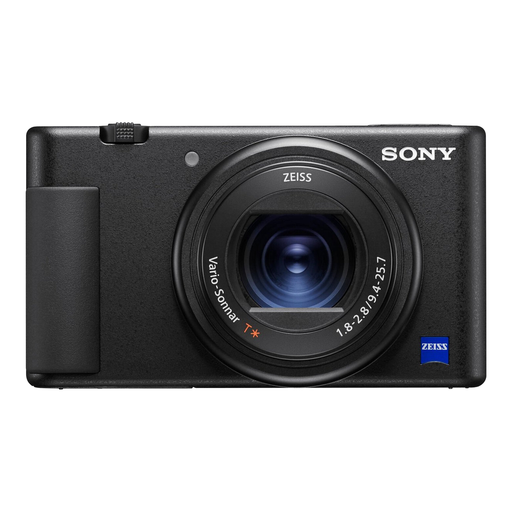
The product title describes a compact camera for vlogging. Check whether the controls and positioning work for photographing art cards on your workbench.
First, check that the largest card fits entirely in the frame from the height available. Keep the camera steady above the card and use the same lighting position and white balance for a series of shots. Make a note of the setup so the next person can repeat it.
No. Such a short distance applies to a specific close-up or wide-angle setting. For a full card, check separately whether it fits in the frame from your shooting height; the minimum focusing distance may increase at telephoto.
Check whether you need support to keep the camera steady above the table, and which memory card suits the way you work. Also consider whether you can put the lighting setup away after use without getting in the way of others sharing the workspace.
Not automatically. The Dutch Government distinguishes between making a copy for personal use and distributing or making protected work available to the public. Before publishing, check who owns the rights and whether you need permission.
Not in every case. ACM ConsuWijzer explains that online consumer purchases generally come with a statutory 14-day cooling-off period from delivery, although exceptions may apply. The cooling-off period is separate from your rights if a product is faulty.