
Photographer of card series
If you photograph several cards from one position, it helps to have a repeatable full-frame composition and consistent lighting. DT Heritage describes a flat set-up as a way to achieve even focus and repeatable lighting.


When choosing a camera for a fixed set-up, start with the largest card size and the available distance: the whole card must fit in the frame and be in focus at your chosen zoom setting. A zoom lens gives you room to adjust the framing, while a fixed focal length requires you to work with a set angle of view. Canon, Sony and RICOH publish different focal length and focusing distance specifications for their models. Keep the camera, card and lighting consistent between shots. A short macro focusing distance is most relevant for capturing details and, on its own, does not prove that a whole card will be reproduced accurately.
If you photograph several cards from one position, it helps to have a repeatable full-frame composition and consistent lighting. DT Heritage describes a flat set-up as a way to achieve even focus and repeatable lighting.
For portfolios or reproductions, controllable white balance and a consistent lighting set-up matter. Camera specifications alone cannot guarantee accurate colour reproduction. Nikon shows in an example that automatic white balance may not reproduce the colour of a white surface exactly.
If you want to capture fine lines or print texture separately, check the focusing distance at the zoom setting you’ll actually use. Manufacturers publish different distances for some compact cameras, depending on the zoom setting.
| What to consider | What should you check? | Who is this important for? |
|---|---|---|
| Full-frame composition | Measure the largest card and the distance to the lens. At your intended camera height, take a test shot with all the edges visible. | I want to capture the largest card in full, consistently, from the same height. Around 36% of consumers prioritise full, repeatable framing. |
| Colour consistency | Check the available white balance settings and file formats. Photograph with consistent lighting and a neutral reference surface. | I want successive cards to retain comparable colours under the same lighting. Around 29% of consumers give colour consistency top priority. |
| Print details | Compare the focusing distance at the zoom setting you’ll use and check how large the detail you want to capture appears in the frame. | I want to be able to view fine lines or print texture separately. Around 21% of consumers give close-up details top priority. |
| Practical set-up | Check that the camera can be mounted on your intended support and review the storage and power options for the exact version. | I want a practical set-up without paying for features I don’t need for photographing cards in a fixed position. Around 14% of consumers prioritise a simple, suitable purchase. |
The minimum focusing distance does not tell you how much of the card will appear in the frame. With zoom cameras, the stated distance may also vary depending on the zoom setting.
Test both the largest full card and the smallest detail you want to capture at your planned camera height.
You may need a different camera height or support to achieve the framing you want.
For flat printed material, camera position, lighting and colour processing also play a part. A published pixel specification is not a comparative reproduction test.
Compare test shots of the same card under the same lighting, paying particular attention to the corners and a neutral colour surface.
A repeatable process may also require a support and controlled lighting; these are not automatically included with the camera.
Check what’s included with the exact version and whether the camera will work with the support and process you have in mind.
You may also need a suitable support, lighting and possibly extra storage or power.
The PowerShot G7 X Mark III is a zoom option worth comparing if you want to photograph different card sizes without repeatedly raising or lowering the camera.
The RX100 VII is a zoom alternative if you also use the same camera for subjects further away.
The GR IV is an option if its fixed angle of view suits your card size and RAW processing is part of your workflow.
The Tough TG-7 is worth comparing if you also want to capture very close-up details as well as card photos, or you’re looking for a robust camera.
For each of these cameras, check whether the whole card will fit in the frame and be in focus from your fixed camera height. Also consider which features and accessories are relevant to your own set-up.
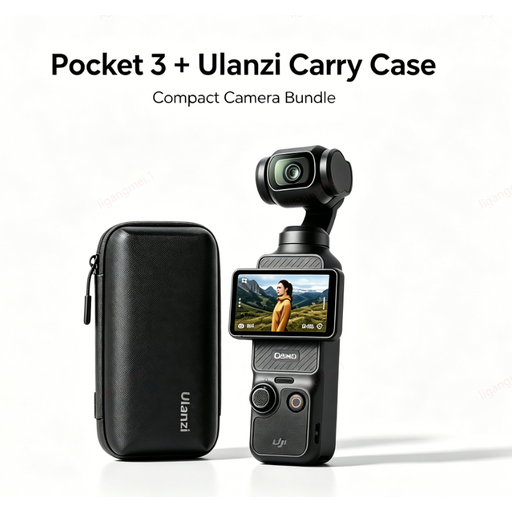 Image unavailable
For a fixed card set-up, check that you can frame the whole card from your planned camera height.
The product name includes a Ulanzi storage case.
 Image unavailable
Assess this model for card photography by taking a test shot from your fixed camera height.
The product name lists 4K, 80MP and 18X zoom.
 Image unavailable
Take a test shot to check whether you can achieve the framing you want from your intended fixed camera height.
The product name lists 5K, 80MP and 18X zoom.
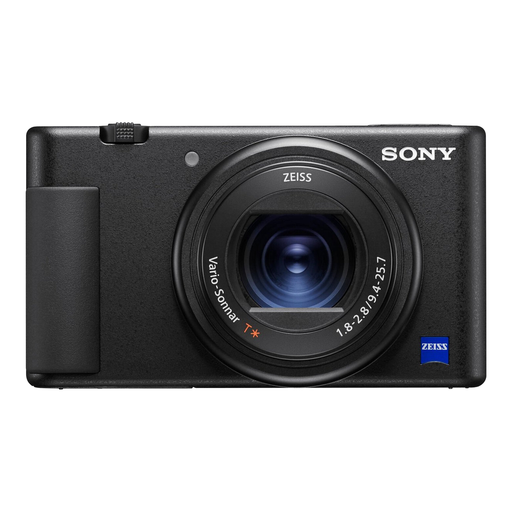 Image unavailable
Check whether this model can frame and focus on the whole card size from your fixed camera height.
The product name identifies the camera as a Sony ZV-1.
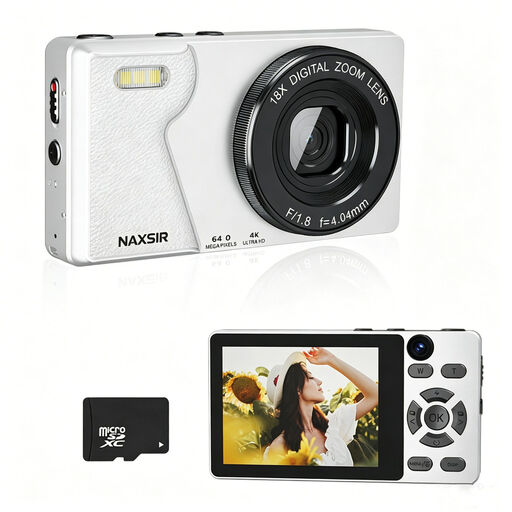 Image unavailable
Check whether the camera can capture the full card image you want from your fixed camera height.
The product name lists 4K Ultra HD, 64 MP, 18x digital zoom and a 32 GB memory card. Digital zoom does not change the framing in the same lens-based way as optical zoom.
No. The minimum focusing distance describes the shortest distance at which a camera can focus, not how much of the card fits in the frame. Canon and Sony list different distances for wide-angle and telephoto settings; check the full frame at your actual camera height.
Keep the camera and card in the same position, use consistent lighting and set the white balance deliberately. Nikon shows in an example that automatic white balance may not reproduce the colour of a white surface exactly. A reference card and test shot can help you check your own process.
For a standard online consumer purchase in the Netherlands, you generally have up to 14 days after delivery to change your mind; ACM ConsuWijzer outlines the exceptions. If a product is faulty, the seller remains responsible for the statutory guarantee, which is not automatically limited to the duration of any manufacturer’s warranty offered.
Not necessarily. According to the Dutch government, you can make a private copy of copyright-protected work for your own use, but you cannot distribute or publish it. Get permission before publishing, or check what rights apply to the card in question.