
If you’re short on cupboard space
You want to make berry smoothies at home, but need to fit the motor base, jug and separate parts into a small cupboard.


A compact blender is a sensible starting point for making smoothies with fresh berries if you’re short on cupboard space. Remember to measure the room needed for the jug, cup and separate parts too. If you often use frozen berries, check that the specific model is suitable for them; compact size or wattage alone won’t tell you whether your smoothie will be smooth. The Consumentenbond notes that blenders can vary in how well they process frozen fruit.
You want to make berry smoothies at home, but need to fit the motor base, jug and separate parts into a small cupboard.
You regularly use frozen berries and want to check whether the compact model you choose is suitable for them.
You want to keep cleaning to a minimum after blending, or take your smoothie with you in the same cup.
Measure your storage space first, then decide whether you’ll mainly use fresh or frozen berries. The Consumentenbond warns that many blenders can struggle with frozen fruit; Bosch says the MMB2111S is suitable for frozen fruit, according to the manufacturer.
| What to consider | What should you check? | Who is this particularly relevant for? |
|---|---|---|
| Will everything fit in the cupboard? | Measure the height and depth, then compare them with the appliance dimensions and the parts you need to store. | If my cupboard space is limited, I also need room for the cup and separate parts. Around 36% of consumers say storage space is their top priority. |
| Is it suitable for berries? | Decide whether you’ll use fresh or frozen berries. Check the manual and, if possible, look for a test using frozen ingredients for the exact model. | If I often use frozen berries, I want to know whether the model can handle them. Around 29% of consumers put suitability for frozen berries first. |
| Cleaning | Check the cleaning instructions for each part and whether it’s dishwasher-safe. | If I use it regularly, I want the cup and blade to be easy to clean. Around 21% of consumers make ease of cleaning their top priority. |
| Taking it with you | Check the cup’s capacity and which drinking lids are included with the exact version. | If I take my smoothie with me, I want to know whether I can blend and drink from the same cup. Around 14% of consumers make this their top priority. |
Wattage alone doesn’t tell you how well a particular model will blend a smoothie containing frozen ingredients.
Check the manual to see which ingredients are suitable and, if available, look for a test using frozen fruit for the model you’re considering.
The motor base dimensions won’t tell you whether the whole set will fit in your cupboard.
Measure the space available and check which parts come with the exact version.
An extra cup or separate blade unit also needs storage space.
Listings for the nutribullet Original 600 show different cup configurations; the NB603DG model variant isn’t clearly identified in every Joybuy listing.
Before buying, compare the full model number and the list of cups and lids.
Philips says the HR2510/90 mini blender is designed for smoothies and sauces, and describes it as compact.
Bosch says the VitaPower Serie 2 MMB2111S has a 0,6 l cup and measures 367 × 122 × 126 mm.
The manufacturer describes the Original 600 NB603DG as a personal blender with a 700 ml cup, measuring 343 × 140 × 140 mm.
The Mix&Move BL15FD30 manual describes a compact personal blender supplied with two 0,6 l travel bottles.
These product picks focus on compact and portable blenders for smoothies, with capacity, portability and storage in mind.
 No image available
The drinking cup may suit you if you want to take your smoothie with you straight away; check the stated height before choosing a spot in your cupboard.
500 ml glass jug; dimensions 13 × 13 × 35 cm. The description mentions a replaceable drinking lid and removable, dishwasher-safe parts.
 No image available
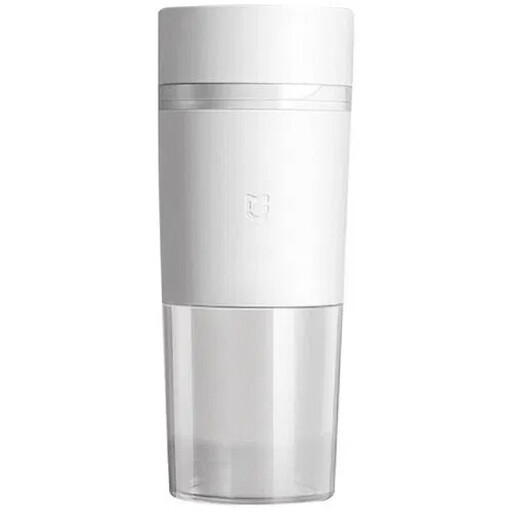
This portable model may suit you if you want to make and take a single serving of smoothie with you; check the dimensions of the space where you plan to store it.
Capacity 475 ml; dimensions 29,4 × 9,3 × 9,1 cm. The description mentions a rechargeable battery and USB-C charging.
 No image available
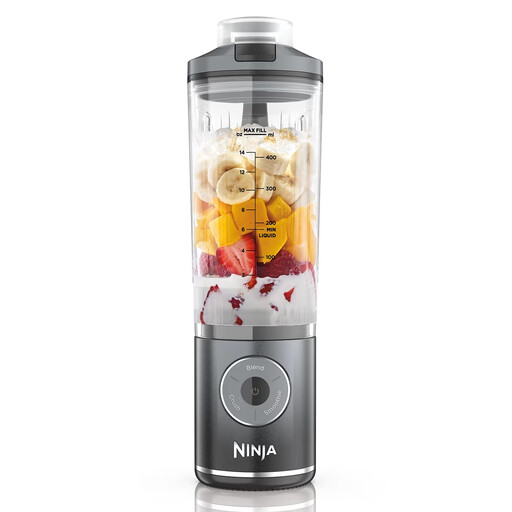
This portable blender is described as suitable for smoothies and shakes; check the instructions for this model before using frozen berries.
Capacity 400 ml. The description mentions a rechargeable battery and USB-C charging; according to the product description, it isn’t suitable for hot liquids.
 No image available
The included cups may suit you if you want to take your smoothies with you; remember to allow space for the extra parts when storing it.
The description mentions two 530 ml cups, a leakproof lid, rechargeable operation and dishwasher-safe parts.
 No image available
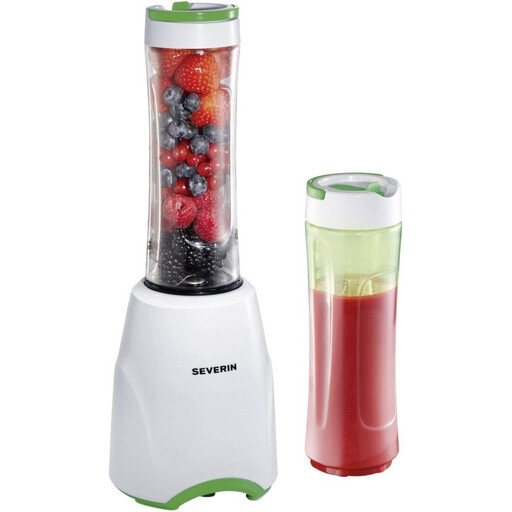
The two drinking cups may suit you if you want to take your smoothies with you straight away; measure the storage space needed for the full set.
Capacity 0,60 l; height 36,40 cm. The description mentions two cups and dishwasher-safe parts.
Not necessarily: check whether the specific model is suitable for frozen fruit. The Consumentenbond says many budget blenders can struggle with frozen fruit, while Bosch lists this use for the MMB2111S. Check the manual and, if possible, a test of the model.
Follow the manufacturer’s separate instructions for the cup and blade unit. The Voedingscentrum recommends washing fruit and vegetables under running water and keeping kitchen utensils clean; washing won’t necessarily remove all pathogens.
You’re entitled to a product that meets reasonable expectations, but there’s no fixed statutory guarantee period in the Netherlands. If there’s a fault, contact the seller, according to the Rijksoverheid. ACM ConsuWijzer says online purchases generally come with a cooling-off period of up to 14 days after delivery, subject to exceptions and rules on trying out and returning items.
The requirements depend on the product and the legislation in force. The NVWA describes the Low Voltage Directive as applying to electrical equipment with a rated AC voltage of 50–1.000 V; other rules may apply to other electrical equipment. A CE mark doesn’t prove that an individual model has been independently approved.