A compact voice recorder is enough if your main aim is to record your own delivery, listen back and transfer files easily. Only choose a handheld recorder with extra inputs or recording features if you’ll actually use them. If you do, check the storage, power and playback controls you’ll need. Making a test recording from your usual speaking distance will help you judge whether your voice is clear in your room.
Who is a recorder for practising presentations suitable for?
Speaker who wants to practise quickly
You want to record, listen back and start again with as few steps as possible. Simple controls and an easy way to transfer files may matter more than extra recording features. OM SYSTEM describes these features for the WS-882.
Speaker who wants to refine specific sections
You listen repeatedly to your pace, pauses or pronunciation and want to return quickly to a tricky section. So check the playback and search functions of the exact model; Sony describes Easy Search and Time Jump for the ICD-UX570.
Speaker who wants to expand their set-up
You want to start practising with the built-in microphones, but may later use an external microphone or a different recording workflow. Check the connections and recording formats of the model you choose. Zoom and Tascam list these options for the H1essential and DR-05XP respectively.
What should you look for in a presentation recorder?
Compact voice recorder
Suitable if: you mainly want to record your own delivery and listen back straight away.
Bear in mind: check the controls, storage and power requirements of the exact model; feature specifications aren’t an independent comparison of sound quality.
Handheld recorder with built-in microphones
Suitable if: you may want to connect a compatible external microphone or make other types of recordings too.
Bear in mind: extra connections don’t replace suitable microphone placement or the storage you need; check the power requirements too.
Voice recorder with app controls
Suitable if: you want to start recording remotely while practising or transfer recordings to your phone.
Bear in mind: using an app adds a phone and connection step; uploading to a transcription service is a separate choice.
| What to consider |
What to look for when buying |
Who is this important for? |
| How clear your voice sounds |
Make a test recording from your usual speaking distance. Check the built-in microphones and, only if needed, a suitable external microphone input. |
If I want to assess my pronunciation in my own practice space, I first need to know whether my voice is easy to follow on the recording. Around 33% of consumers prioritise clarity. |
| Getting started quickly |
Check how to start recording, see that it’s running and listen back straight away. |
For a short practice session, I’d rather start recording straight away than spend time on settings. Around 27% of consumers prioritise getting started quickly and easily. |
| Listening back to specific sections |
Check whether the model has search, repeat or playback speed functions. |
If I want to refine my pace, pauses or pronunciation, I need to be able to return quickly to a specific section. Around 20% of consumers prioritise targeted playback. |
| Requirements and file transfer |
Check the storage, power requirements, what’s included and how to transfer files to your computer or phone. |
For a compact practice set-up, I don’t want to find I need extra components or connection steps I hadn’t expected. Around 20% of consumers particularly value needing as few extras as possible. |
Which pitfalls can you avoid?
-
Assuming a recording format guarantees clear speech
A 32-bit float mode won’t tell you how your voice sounds in your room from your usual speaking distance.
Make a test recording from the spot where you normally practise and listen back. Assess the result before deciding whether you need to change the microphone position or use a different microphone.
-
Choosing a recorder without checking the complete set-up
Storage, power and file transfer can vary between models. For example, the H1essential manual covers microSD cards and power supply.
For the exact model, check what’s in the box, which storage and power options you need, and how to transfer files.
-
Automatically using an app or transcription feature when recording others
If other people can be identified in a recording, the purpose and the way you handle that recording may be relevant. An app or optional transcription service isn’t necessary for every practice session.
Use these features thoughtfully. If the recording isn’t solely for personal or household use, check in advance which privacy rules and legal basis apply.
Which brands are worth comparing?
OM SYSTEM
The WS-882 is worth considering if simple controls and direct USB transfer are important to you.
- OM SYSTEM lists a simple mode, a built-in USB connector and 4 GB of internal memory for the WS-882.
- Don’t assume this model has Bluetooth.
Sony
The ICD-UX570 is worth considering if you want to jump quickly to a section when listening back.
- Sony lists Time Jump, Easy Search and a direct USB connection for this model.
- These are model specifications and manufacturer descriptions, not an independent assessment of sound quality.
Philips VoiceTracer
The DVT4115 is worth considering if remote controls or transferring files via a phone would suit your practice routine.
- Philips lists three microphones, 8 GB of internal memory and app controls for this model.
- Uploading to a transcription service is an extra step; consider how you’ll use recordings that include other people.
Zoom
The H1essential is worth considering if you want a handheld recorder with built-in microphones and the option to use a compatible external microphone.
- Zoom lists a 3.5mm mic/line input, 32-bit float recording and playback at adjustable speed.
- Check the memory card and power requirements; 32-bit float on its own says nothing about how clear a recording will sound in your room.
Tascam
The DR-05XP is a handheld recorder option if you want to combine built-in microphones with an external input and a choice of recording formats.
- Tascam lists a 32-bit float mode, MP3 and an external input for the DR-05XP.
- Don’t treat manufacturers’ sound quality claims as independent test results.
Recorder options at Joybuy
This selection includes compact voice recorders for capturing and listening back to speech, devices with transcription or summary features, and a wireless microphone set for a different recording set-up. Think about which approach suits your practice session before you choose.
 No image available
Plaud Note Pro AI Notes & Summary Voice Recorder (Silver)
Worth considering if you want to use AI note-taking and summary features as well as recording speech. Check in advance what steps or connections your preferred workflow requires.
Joybuy
 No image available
Digital Voice Recorder 64 GB with Transcription Function
An option to explore if you want to record speech and use transcription. The product title lists 64 GB and transcription in 118 languages; check which languages and features are available for your intended use.
Joybuy
 No image available
AI Dictation Device 64 GB Mini Voice Recorder
Worth considering if you’re looking at a mini voice recorder with transcription and summary features. The product title lists 64 GB and 118 languages; check in advance which features suit the way you practise.
Joybuy
 No image available
Rexsun 128GB Portable Digital Voice Recorder, L357
Worth considering if you’re looking for a portable recorder with an LCD screen. The product title lists 128 GB; before buying, check how the recorder transfers files and what controls you’ll need to listen back to specific sections.
Joybuy
 No image available
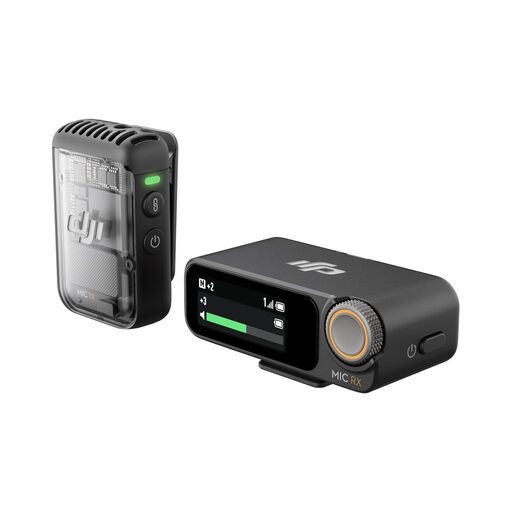
DJI Mic 2 (1 TX + 1 RX)
This is a wireless microphone set for a different recording set-up from a simple voice recorder. The product title lists 32-bit float recording; check whether the connections are compatible with the device you want to record with.
Joybuy
Frequently asked questions
How can I test whether a recording is useful for improving my presentation?
Record a short section from the distance and spot you plan to use when practising. Listen back to check that words, pauses and quieter sections are audible; move the recorder and repeat the test if needed. A stated feature specification isn’t the same as a real-world test in your room.
Do I need to buy a memory card?
That depends on the exact model and what’s included in the box. OM SYSTEM lists built-in storage for the WS-882, as does Philips for the DVT4115. The Zoom H1essential manual covers inserting a microSD card; when buying, check what storage and power options you need and what’s included.
How do I transfer a recording so I can listen back to it later?
OM SYSTEM and Sony describe a direct USB connection for the WS-882 and ICD-UX570 respectively. Philips also describes transferring files via the VoiceTracer app for the DVT4115. Check that your chosen transfer method is compatible with the connections on your computer or phone.
Who should I contact about a fault after buying in the Netherlands?
According to the Dutch government, you should contact the seller if there’s a problem with a product. An additional manufacturer’s warranty doesn’t replace your statutory rights.
Can I record my presentation if other people can be heard too?
That depends on how and in what circumstances the recording is used. According to the Dutch Data Protection Authority, processing that is purely for personal or household use falls outside the GDPR. If that exception doesn’t apply and identifiable people are recorded, you must consider an appropriate legal basis in advance; consent is one possible basis, but isn’t automatically the only one. So let everyone know about a group practice recording beforehand, and separately consider whether sharing or uploading it is appropriate.


