Who is this guide for?

Speaker in an echoey hall

Wants to capture their own pronunciation clearly and can move the microphone. The distance from the speaker and the sound in the room both matter; Worcester Polytechnic Institute recommends considering the microphone’s position.

Language learner who practises with short clips

Wants to record and listen back to words or sentences independently. A-B repeat or adjustable playback speed may be useful; Sony lists these features for the ICD-UX570 series, while Zoom describes A-B repeat for the H1essential.

Facilitator working with several speakers

Needs to decide whether the exercise is mainly about recording one voice or several participants. A microphone close to one speaker serves a different purpose from a set-up for voices coming from different places; Philips and RØDE describe different microphone set-ups for their respective products.

What should you consider when choosing?

Standalone voice recorder

A good fit if: you want to record without a phone and listen back to exercises on the device. Sony lists built-in memory, A-B repeat and adjustable playback speed for the ICD-UX570 series.

Keep in mind: a built-in microphone does not record only the voice, so place the recorder where the speaker can be heard clearly.

Portable audio recorder

A good fit if: you want the option to connect an external microphone or try different set-ups. Zoom and Tascam list a microphone input on the H1essential and DR-05XP respectively.

Keep in mind: check the connection, storage medium and power supply for each model. Zoom describes microSD use for the H1essential, while Tascam lists two AA batteries for the DR-05XP.

Clip-on microphone with a smartphone

A good fit if: you move around while speaking and want to record using a compatible smartphone. The RØDE Wireless Micro uses clip-on transmitters and is available with a USB-C or Lightning receiver.

Keep in mind: this is not a standalone recorder: you still need a phone, and a microphone worn by one speaker will not automatically capture all participants equally clearly.

What to consider What should you check? Who is this important for?
Clarity Make a short test recording in the place you plan to use it, then listen back. Try moving the microphone closer to the speaker. If you mainly want to assess your own pronunciation, a clear voice matters more than leaving the recorder in the middle of the hall. Around 33% of consumers say clarity is their main concern.
Repeating clips Check whether the exact model offers A-B repeat or the playback speed you want. If you want to listen to words or sentences repeatedly as part of a language exercise, focus on the playback features. Around 27% of consumers say listening back is their top priority.
One speaker or a group Decide whose pronunciation you want to assess and test the recording from the places where participants will speak. If several participants will take part, you’ll want to know whether the chosen set-up can capture their voices clearly from different places. Around 20% of consumers prioritise group recording.
Storage and power Check the storage medium, available space and power supply for the exact model, and make a test recording beforehand. If the exercise needs to be recorded and saved without interruption, you’ll want to know in advance how storage and power are handled. Around 20% of consumers say recording reliability is their main concern.

Common buying mistakes

  • Focusing only on the recording format

    A recording of a distant voice may include echo and background noise, even if the recorder has advanced features. Worcester Polytechnic Institute notes that turning up a quiet voice can also amplify background noise.

    Test the set-up where you plan to speak and listen before deciding which microphone and recorder features you need.

  • Assuming every set-up works on its own

    Storage and power vary between recorders. The RØDE Wireless Micro is also a microphone designed for use with a smartphone, not a standalone recorder.

    Before buying, check what storage, power and phone connection your chosen set-up needs, and what is included in the box.

    Depending on the combination, you may need a suitable memory card, power supply or compatible smartphone. Check this before you start your exercise.

  • Confusing recording with permission to use it later

    According to the Dutch Data Protection Authority, an organisation processing personal data needs a legal basis under the GDPR and must tell the people concerned what it is doing with their data and why. Recording an exercise does not automatically give you a legal basis for sharing it later.

    If an organisation is making a recording, agree in advance who will be recorded, how the recording will be used and who may receive it.

Brands to consider

Sony

The ICD-UX570 series is a standalone voice recorder for recording and listening back on one device.

  • Sony lists 4 GB of built-in memory, A-B repeat and adjustable playback speed for this series.
  • These features are not available on every Sony model, and they do not prove that a distant voice will be clearer.

Philips VoiceTracer

The VoiceTracer models covered in the manual have built-in microphones and a microphone socket, for anyone considering different set-ups.

  • Philips Dictation / Speech Processing Solutions lists WAV and mp3 recording, 8 GB of internal memory and repeat modes in the manual.
  • Check the full model number: the manual specifies that some features are only available on certain DVT variants. These are manufacturer specifications, not the results of a test in a hall.

Zoom

The H1essential is a portable audio recorder with a built-in XY microphone or a connection for a compatible external microphone.

  • Zoom describes 32-bit float WAV, microSD use and A-B repeat for the H1essential.
  • 32-bit float recording will not eliminate echo caused by being a long way from the microphone.

Tascam

The DR-05XP is a portable recorder with built-in stereo microphones and an input for a compatible external microphone.

  • Tascam lists 32-bit float recording, use as a USB audio interface and power from two AA batteries for the DR-05XP.
  • These are DR-05XP specifications, not an independent comparison of pronunciation recordings in a community hall.

RØDE

The Wireless Micro is a clip-on microphone for use with a compatible smartphone, not a standalone recorder.

  • RØDE describes two clip-on transmitters and versions with a USB-C or Lightning receiver.
  • You still need a phone; the product description is not an independent test in this hall.

Voice recorders at Joybuy

The products below are voice recorders for recording speech; features such as transcription, storage and repeat playback vary by model.
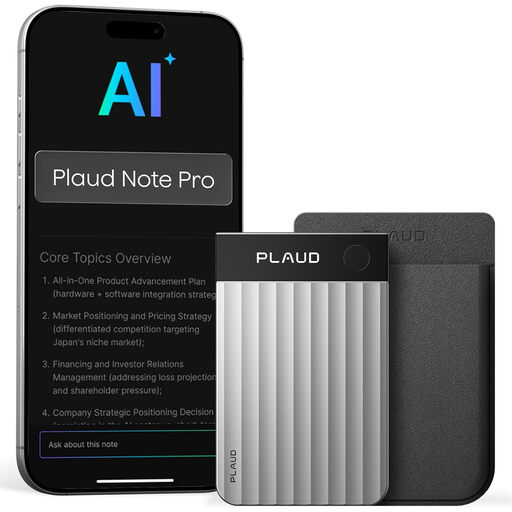
Plaud Note Pro AI voice recorder in silver

Plaud Note Pro AI voice recorder (Silver)

A good fit if you want to record speech and also need text processing.

The product description mentions one-button recording, transcription and summaries.

View at Joybuy

Digital voice recorder with 64 GB and transcription function

Digital voice recorder, 64 GB, with transcription function

A good fit if you’re looking for a voice recorder with storage and transcription, as stated in the product title.

The title mentions 64 GB and a transcription function; check that it has the features you need for your recording.

View at Joybuy
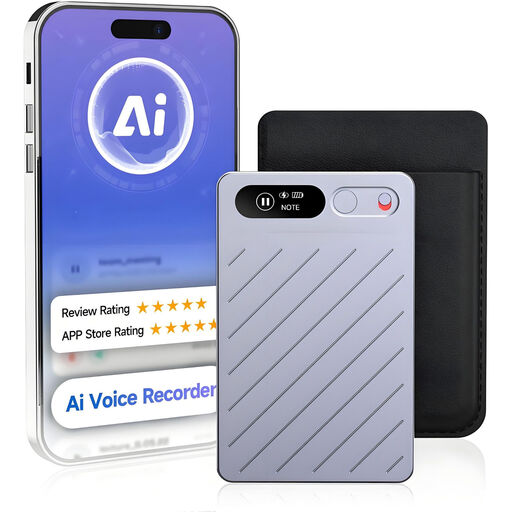
Mini AI dictation device with 64 GB, transcription and summaries in 118 languages

Mini AI dictation device, 64 GB, transcription and summaries in 118 languages

A good fit if you want to record speech and need the text features mentioned in the title.

The product title states 64 GB and transcription and summaries in 118 languages.

View at Joybuy

Rexsun L357 digital voice recorder with 128 GB

Rexsun L357 digital voice recorder, 128 GB

A good fit if you want to record and listen back to short pronunciation clips.

The product information lists 128 GB of storage and A-B repeat; MP3 and WAV recording are also mentioned.

View at Joybuy

Rexsun L810 digital voice recorder with 64 GB

Rexsun L810 digital voice recorder, 64 GB

A good fit if you want to make a quick pronunciation recording and listen back to it straight away.

The product information lists 64 GB, one-button recording and WAV recording; headphones are listed for playback.

View at Joybuy

Frequently asked questions

Does 32-bit float help with echo in a community hall?

No. 32-bit float recording is no substitute for good microphone placement. First, test a short clip with the microphone closer to the speaker; turning up a distant voice can also amplify echo and background noise.

What should you get ready before your first exercise?

Make a test recording, listen back in the place you intend to use it, and check the storage and power supply. Zoom describes microSD use for the H1essential; Sony lists built-in memory for the ICD-UX570 series. Check which storage and accessories are needed for the exact model.

Do I need to tell participants if an organisation records their identifiable voices?

Yes. If an organisation processes personal data, it must tell the people concerned what it is doing with that data and why, and it must have a legal basis under the GDPR. According to the Dutch Data Protection Authority, consent is one possible legal basis, but it is not automatically the only one. If an organisation chooses consent as its legal basis, specific requirements apply.

What are your rights if a recorder bought online isn’t as expected?

For an online consumer purchase, you’ll generally have a statutory 14-day cancellation period from delivery, with some exceptions. ACM ConsuWijzer also distinguishes between your statutory guarantee rights and any manufacturer’s warranty: a product must meet the standard you could reasonably expect when used normally.
