
Editing interviews and archive photos
You want to edit interviews and photos without paying for capacity you don’t need. First, check that your editing software, file formats and available storage suit your project.


Start by choosing your editing software, then decide whether you’ll mainly be working with HD interviews and photos or also using 4K footage and demanding effects. A Mac mini may suit a macOS workflow, while a Windows tower gives you a choice of configurations; either way, check the memory, storage and graphics card of the specific model. Adobe’s recommendations for Premiere vary by resolution and workflow, so choose a computer to suit your needs. Also check the storage and connections you’ll need for the screening.
You want to edit interviews and photos without paying for capacity you don’t need. First, check that your editing software, file formats and available storage suit your project.
You’re working with larger video files or effects, so you’ll want to assess the amount of memory, graphics capability and storage you’ve chosen. For Premiere 26.x on Windows, Adobe recommends 32 GB or more of RAM and 8 GB of GPU memory for 4K and higher.
You want to keep source material organised, make sure the film can play on the equipment at the screening venue and know who to contact if the computer breaks down. The Dutch government says the retailer is the point of contact for statutory guarantees on consumer purchases.
A good fit if: you want to edit on macOS and are looking for a compact desktop. Apple lists hardware acceleration for formats including H.264, HEVC and ProRes on the Mac mini with M6.
Bear in mind: choose the memory and SSD configuration to suit your footage, and check what additional display and storage equipment you’ll need.
A good fit if: you use Windows software or want to choose your memory, storage and graphics hardware to suit your needs. For Premiere 26.x on Windows, Adobe recommends 32 GB or more of RAM and 8 GB of GPU memory for 4K and higher.
Bear in mind: Adobe’s specifications apply to the software and workflow mentioned. Check the tower’s final configuration, not just the model range.
| What to consider | What should you check? | Who is this important for? |
|---|---|---|
| Editing workflow | Choose your editing software first, then check its requirements for your intended resolution and file formats. | If I’m mainly editing interviews and photos, I want a computer that suits that workflow without unnecessary capacity. Around 29% of consumers prioritise a suitable basic configuration for simple editing. |
| 4K and effects | Check the installed RAM, the specific graphics card and the GPU memory of the configuration. | If I’m working with lots of 4K footage or effects, I want to choose components that meet my software’s requirements. Around 29% of consumers give top priority to capacity for more demanding footage. |
| Project storage | Compare the SSD capacity with your source files and exports, and check the connections for any external storage. | If I want to keep source material and project files locally, I need enough available space. Around 21% of consumers prioritise storage for their project. |
| Screening and service | Compare the desktop’s video output with the input on the equipment at the venue, and make a note of who the retailer is. | For a community screening, I want to know in advance whether the computer will connect to the equipment and who to contact if it breaks down. Around 21% of consumers prioritise screening compatibility and a clear service contact. |
Editing software requirements can differ between HD and 4K or higher. A configuration that meets the minimum requirements isn’t automatically the right benchmark for more demanding editing.
Note down your software, resolution and project complexity, then compare them with the full configuration. For Premiere 26.x, Adobe distinguishes between HD specifications and recommendations for 4K and higher.
If your project grows, you may later need to upgrade the memory or computer you chose as a basic configuration.
A workstation range may include models with different amounts of RAM and storage, as well as different graphics hardware. Changes to one part of the configuration can also affect other specifications.
Compare the specific product number and final list of components before you decide.
Choosing different memory, storage or graphics hardware can change the final configuration.
You may also need a display, project storage or connection accessories for editing and screening. Lenovo says the display is sold separately for the ThinkStation P3 Tower.
Make a list of the equipment you already have, then check the connections on both the desktop and the screening equipment.
A display, suitable connection accessories or extra storage may be additional essentials.
Editing the film doesn’t clear the rights to other people’s photos or music, nor does it resolve privacy questions about identifiable people.
Before the screening, check where the images and music came from and whether you have the rights to use them. Also consider how identifiable people appear in the film.
Clearing usage rights and considering privacy may require extra work.
Mac mini desktops are an option if you’re looking for a compact macOS workstation.
The Pro Max Tower T2 is a configurable Windows desktop for choosing the components you need.
The Z2 Tower G1i is a workstation option with a specifically listed configuration.
The ThinkStation P3 Tower Gen 2 offers several configurable workstation models for Windows users.
This selection of Joybuy desktops includes a compact Mac for a macOS workflow and Windows desktops with configurations for anyone considering more demanding editing. Choose specifications to suit your editing software, and check the final configuration.
 No image available
A compact Mac option if you want to edit on macOS; compare this configuration with your editing software and project file requirements.
Apple M6 chip with 12-core CPU and 12-core GPU.
24 GB memory and 512 GB SSD.
 No image available
A Windows configuration to compare with recommendations for more demanding editing. Before buying, check whether Windows 11 Trial suits the way you use your software.
32 GB DDR5 memory.
GeForce RTX 5080.
1 TB NVMe SSD.
Windows 11 Trial.
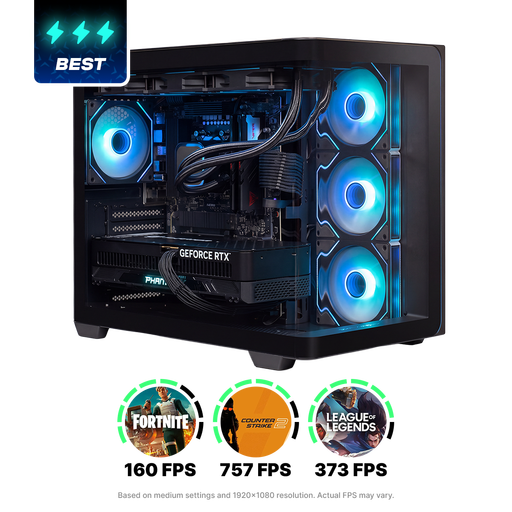 No image available
The product information describes this Windows desktop as suitable for video editing and other demanding creative tasks. Decide whether this configuration suits your project.
RTX 5090 and Ryzen 9.
32 GB RAM and 2 TB SSD.
Windows 11 Home.
 No image available
A Windows desktop to compare with the requirements of a more demanding editing workflow. Check whether the configuration suits your software and footage.
Intel Core Ultra 7 265F and 32 GB DDR5 memory.
1 TB SSD.
NVIDIA GeForce RTX 5070 with 12 GB.
Windows 11 Home.
No image available
A Windows desktop to compare with the needs of your editing project. Consider the full configuration and the software you’ll need.
Intel Core Ultra 5 225F and 32 GB DDR5 memory.
1 TB PCIe 4.0 SSD.
NVIDIA GeForce RTX 5070 with 12 GB.
Windows 11 Home.
Only if you use Premiere for a 4K or more demanding workflow are the recommendations for 4K and higher the relevant benchmark. Adobe distinguishes between specifications for HD and recommendations for 4K and higher; first check your software and source material.
Check your editing software’s requirements and compare the video output on the specific desktop with the input on the equipment at the venue. Apple lists HDMI and Thunderbolt video output for the Mac mini, but that doesn’t automatically confirm compatibility with a particular projector or sound system.
Report the fault to the retailer. According to the Dutch government, statutory guarantees are in addition to any manufacturer’s or extended warranty; in the Netherlands, there is no fixed statutory guarantee period of two years.
Check the rights to every protected file before using it. According to the Dutch government, you may need permission to use other people’s copyright-protected photos, films and music, unless an applicable licence or permission allows you to do so.
Don’t assume that you can. The Dutch Data Protection Authority explains that identifiable people in images are personal data, and sharing them outside a limited private setting isn’t covered by the household exemption. An organisation filming people or publishing footage needs a legal basis under the GDPR. Consent is one possible basis, but it isn’t automatically the only one.