
Workshop leader preparing potatoes in advance
Wants to reheat portions safely and reliably during the session. Chill them beforehand and check that the centre is hot too.


Start with a microwave function that can do the job: a potato cooked in advance must be reheated until piping hot throughout. If you also want to brown the skin, compare the grill, fan oven and combination settings, and check that your potatoes and dishes will fit. Browning is no substitute for checking the centre or storing food safely.
Wants to reheat portions safely and reliably during the session. Chill them beforehand and check that the centre is hot too.
Wants to show what a grill or fan oven does to the outside as well as reheating the potato, without confusing browning with thorough heating.
Wants to check that a freestanding appliance, the dishes being used and any built-in space are suitable for the workshop kitchen.
Suitable if: you mainly want to reheat the potato and a browned skin is not a priority.
Bear in mind: check during reheating and check the centre too; the microwave setting alone will not brown the skin.
Suitable if: you also want to brown the outside during or after reheating.
Bear in mind: browning does not show whether the centre is hot. Check which settings can be used together for each model, and which dish or accessory you need.
Suitable if: the workshop kitchen has a suitable housing unit and the appliance will also be used for baking.
Bear in mind: check the housing dimensions and ventilation clearances in the manual; the stated capacity does not guarantee that your dish will fit.
Choose the functions to suit the results you want, then check that the interior can accommodate your portions. The Netherlands Nutrition Centre advises reheating leftovers until piping hot throughout; cold spots can remain after microwave heating.
| What to consider | What should you check? | Who is this important for? |
|---|---|---|
| Heating thoroughly | The microwave setting, space to arrange portions and access to turn them during reheating and check the centre. | If I’m serving potatoes cooked in advance, I want to be sure the centre gets hot too. Around 42% of consumers put thorough, easy-to-check reheating first. |
| Browning the skin | Whether the model has a grill or fan oven function, and which combination settings and accessories are permitted. | If I want to demonstrate how to brown the outside, I need to distinguish that step from heating the centre. Around 25% of consumers give browning the skin top priority. |
| Portions per batch | Compare the interior, turntable and door opening with the potatoes and dishes you actually use. | If I’m preparing several portions during a session, I want to know in advance how best to arrange and check them. Around 17% of consumers put the number of portions per batch first. |
| Positioning | Check whether the model is freestanding or built-in, and follow the specified dimensions and ventilation clearances. | If the kitchen has little worktop space or already has a housing unit, the appliance needs to fit the available space. Around 16% of consumers put suitable positioning first. |
Grilling and heating the centre are two different things. Cold spots can remain when food is heated in a microwave.
Reheat leftovers until piping hot throughout, and check the centre too.
The capacity in litres does not tell you how many of your potatoes or workshop dishes will actually fit.
Compare the interior and turntable with the dishes you use. An awkward layout may mean you need to cook in extra batches.
The manual for the Inventum MN305C states that the appliance is not suitable for industrial or laboratory use. If you plan to use it intensively, check the conditions for the exact model.
Read the manual for your chosen model and, if you plan to use it professionally or intensively, check whether your intended set-up is permitted.
Inventum describes the freestanding MN305C as a 30-litre combination microwave with separate microwave and oven functions, a grill and combination settings.
Whirlpool lists the freestanding MWSC 833 SX as having a capacity of 33 litres, microwave power of up to 900 W and a Crisp function with a special plate.
Bosch lists the built-in CMA585GB1 as offering microwave, fan oven and grill functions, with a stated interior capacity of 44 litres.
The Dutch product information describes the MC32DG7646KKE1 as a 32-litre combination microwave with oven, grill and microwave functions, among others.
This selection includes freestanding combination microwaves with a grill or fan oven function, and a built-in combination oven with microwave. Check that each model’s set-up and interior suit your workshop.
 No image available
An option for combining microwave heating with grilling or fan oven cooking if you also want to treat the outside; check the centre separately.
Capacity: 20 litres. Functions: grill and fan oven.
 No image available
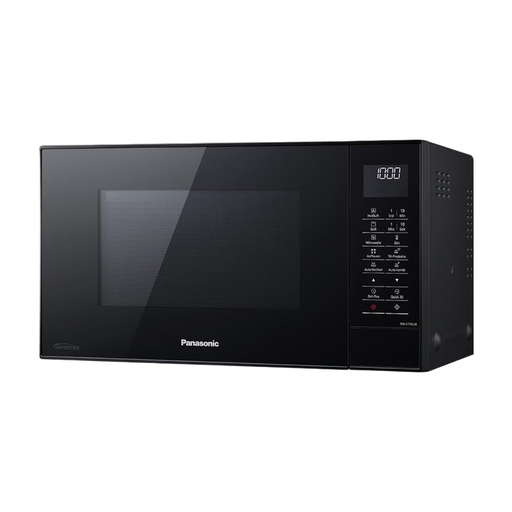
An option with microwave, grill and convection functions if you want to use another cooking setting as well as reheating; check the potato after heating.
Capacity: 27 litres. Microwave power: 1000 W. Functions: grill and convection. The product name also mentions inverter technology.
 No image available
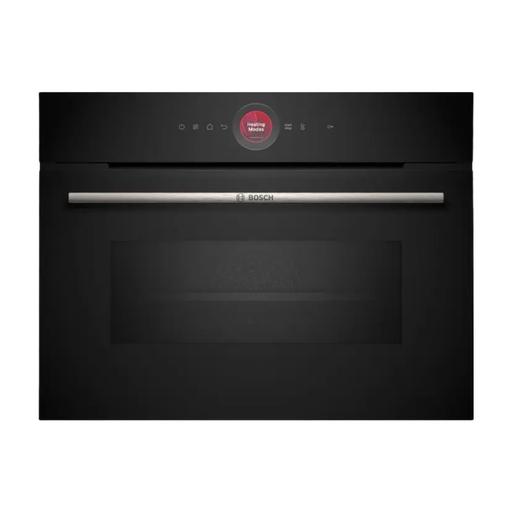
A built-in option for a workshop kitchen with a suitable housing unit; check the installation dimensions and the space your dishes need before buying.
Capacity: 45 litres. Microwave power: 900 W. Built-in model.
Keep the potatoes chilled and, when reheating, heat them until piping hot throughout. The Netherlands Nutrition Centre recommends keeping chilled jacket potatoes for up to 2 days and advises not leaving leftovers out of the fridge for more than 2 hours. If reheating a whole potato, check the centre too.
For the microwave setting, use a microwave-safe dish. Bosch lists heat-resistant dishes made from materials including glass and ceramic, and warns against using metal in microwave mode. For grill or combination settings, also check the instructions for your chosen model and the accessories you use.
That depends on the activity and how the workshop is organised. The NVWA says food businesses that prepare, process or sell food must work with a HACCP food safety plan; an applicable approved hygiene code can be used for this purpose. Whether this applies to a particular private workshop depends on how it is organised and what activities take place.
For a consumer purchase, the retailer is your point of contact for your statutory guarantee. The Dutch government says there is no fixed statutory guarantee period in the Netherlands, and a manufacturer’s guarantee is in addition to your statutory rights. For a business purchase, check which terms and conditions apply to the agreement.