
Spontaneous home baker
You want to soften butter briefly before baking without melting it, and perhaps use the same appliance as an oven afterwards.


A combination microwave is a good choice if you want to bake in the same appliance as well as soften butter. If you already have an oven and only need to warm butter, a solo microwave will do the job. Choose between freestanding and built-in models based on the space available, the external dimensions and the required ventilation clearance. Before buying, check the applicable product requirements, CE marking and EU Declaration of Conformity for the specific model.
You want to soften butter briefly before baking without melting it, and perhaps use the same appliance as an oven afterwards.
You want to combine functions, but need to check that the appliance, the doorway and the required ventilation clearance will all fit.
You already have an oven and want to weigh up whether a solo microwave is enough to soften butter.
Choose this if: you want to warm butter and then bake in the same appliance, and have a suitable place for it.
The trade-off: the appliance takes up worktop space, and you also need to follow the ventilation requirements.
Choose this if: you have a suitable built-in housing unit and want to keep the worktop clear.
The trade-off: the housing unit must be the right size and allow enough ventilation clearance. The Consumers’ Association reports that built-in models are generally more expensive than freestanding ones.
Choose this if: your oven already meets your baking needs and you mainly want to soften butter, defrost food or reheat meals.
The trade-off: a solo microwave does not add a fan-assisted baking function.
| What to consider | What should you check? | Who should pay particular attention? |
|---|---|---|
| Soft, not melted, butter | Check which low microwave power settings the exact model offers. The Netherlands Nutrition Centre recommends around 100 W as a guide for softening butter; check its texture as you go. | I want to soften butter for a baking recipe without melting it, so I can check its consistency; around 36% of consumers prioritise control over butter. |
| A suitable place to install it | Measure the available space and doorway, then compare them with the external dimensions and ventilation requirements for the exact model. Don’t put a freestanding appliance in an enclosed cupboard unless the manufacturer says it is suitable. | If I have limited cupboard space, I want to be sure that both the appliance and the necessary ventilation clearance will fit; around 29% of consumers focus mainly on placement. |
| Baking in the same appliance | Check whether the model has a separate fan-assisted or convection function, and whether your baking tin will fit. The capacity in litres alone won’t tell you whether a tin is suitable. | I want to bake in the same appliance after softening butter, so I check the baking function; around 21% of consumers prioritise this feature. |
| No unnecessary features | First decide whether you really need an extra oven function as well as a microwave. Then compare placement and any installation costs. | If I already have an oven, I don’t want to pay for features I won’t use; around 14% of consumers focus mainly on avoiding unnecessary costs. |
Melted butter can give a different result from soft, easily pressed butter in a baking recipe.
Check whether the model has a low microwave power setting, and check the butter as you go. The Netherlands Nutrition Centre recommends around 100 W as a guide.
Capacity doesn’t tell you how much worktop space or ventilation clearance the appliance needs. Even if it physically fits, it may still be unsuitable for the intended setup.
Measure the external dimensions and doorway separately, and follow the placement and ventilation requirements for the exact model.
A manufacturer’s warranty does not replace your statutory rights if a product is faulty. The Dutch government says that the Netherlands has no fixed statutory two-year warranty period, and that the retailer handles statutory guarantees.
Consider any additional warranty cover alongside the rights you already have.
The freestanding MN237CB is an example of a combination microwave with microwave, fan-assisted and grill functions.
The freestanding MCP 349 SL is a 25-litre combination microwave with a fan-assisted function.
The MC35R8058CG/EN is a larger combination microwave for anyone also considering cooking bigger oven dishes.
The models below combine a microwave function with baking functions. Compare their installation requirements and dimensions with the space you have available.
 No image available
If you’re looking for one appliance for microwave use and baking, this model combines microwave, convection and grill functions.
Capacity: 25L. Colour: Silver.
 No image available
This 20-litre combination microwave brings together microwave, grill and convection functions; check that it will fit in your kitchen.
Capacity: 20L. Colour: black. For cupboard installation, the product information specifies a mounting bracket and adequate ventilation.
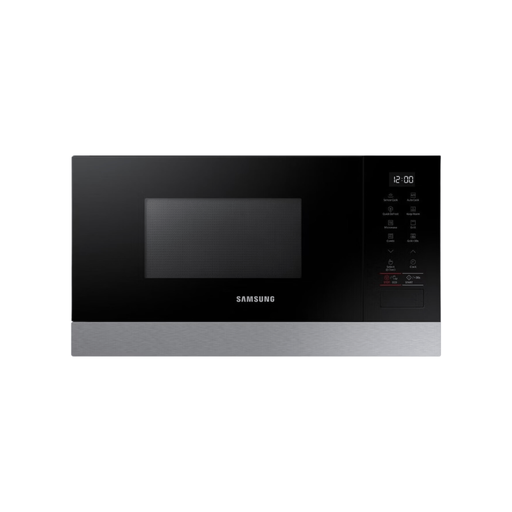 No image available
If you’re considering a built-in setup, check that the stated external dimensions and ventilation requirements suit your housing unit.
Capacity: 22L. Microwave power: 900 W. The product name mentions a ceramic interior and Slim Fry Technology.
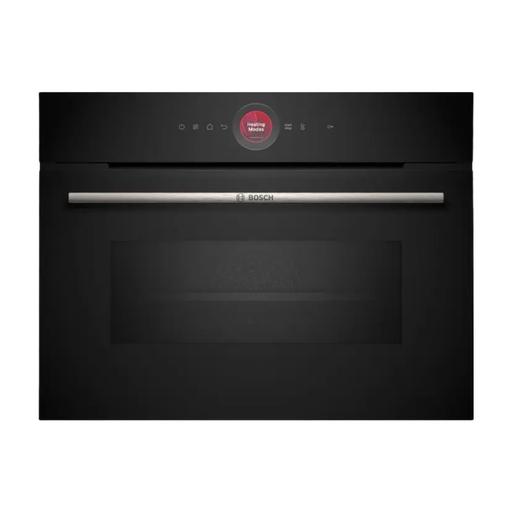 No image available
This larger built-in combination oven could suit anyone looking to combine microwave use and baking in one appliance, provided they have a suitable housing unit.
Capacity: 45L. Microwave power: 900 W. Stated housing dimensions: 45,5 × 56 × 55 cm.
Use the separate microwave function on a low setting, checking regularly that the butter is soft enough to press but not liquid or greasy. The Netherlands Nutrition Centre recommends around 100 W as a guide; check which settings your model actually offers.
Don’t assume that you can. Compare the placement and ventilation requirements for the exact model with the cupboard; a built-in combination microwave also needs a suitably sized, ventilated housing unit.
Use microwave-safe dishes, such as glass or glazed earthenware, as recommended by the Netherlands Nutrition Centre. Bosch warns that metal dishes are not suitable for microwave use. Follow the manual for the exact model when cleaning and choosing oven accessories.
If a product is faulty, the retailer must handle your statutory guarantee; the Netherlands has no fixed statutory two-year guarantee period. For distance purchases, you generally have 14 days to change your mind, subject to legal exceptions, according to the Dutch government.
For the specific model, check that it meets the applicable European product requirements and that the required CE marking and EU Declaration of Conformity are available. The Dutch government’s Ondernemersplein website explains these requirements for electrical appliances.