
Chocolate maker
You want to keep an eye on the chocolate as it melts, taking the bowl out to stir as you go. Callebaut Chocolate Academy and the Netherlands Nutrition Centre also recommend stirring during preparation.


Choose a combination microwave that lets you set the microwave function separately and easily pause cooking to stir. A high maximum power rating alone tells you little about how much control you’ll have when melting chocolate. Then compare the space available for your own bowl or dish, along with the cooking functions you’ll need for the community meal. A freestanding model needs worktop space, while a built-in model must fit your kitchen’s housing and installation requirements.
You want to keep an eye on the chocolate as it melts, taking the bowl out to stir as you go. Callebaut Chocolate Academy and the Netherlands Nutrition Centre also recommend stirring during preparation.
You may also use the appliance for dishes or oven-cooked meals. So compare the usable space and the functions you’ll need for those dishes.
Whether you choose a freestanding or built-in model depends on the space available, the dimensions of the appliance and your dish, and, where applicable, the housing.
Start with the controls you need to check on the chocolate as it cooks. Then consider space for your dish, where the appliance will go and the functions you’ll need for the rest of the meal.
| What to consider | What to look for | Who is this important for? |
|---|---|---|
| Checking on chocolate | Check the separate microwave power settings and timer, and whether you can easily stop cooking. Use a microwave-safe bowl. | I want to heat the chocolate in short bursts and stir it in between; this level of control is the top priority for around 36% of consumers. |
| Space and cooking functions | Measure your largest dish and, if the appliance has a turntable, check that the dish can rotate freely. Compare the oven and grill functions if you want to use them for other dishes. | If I also want to prepare dishes and other food for the meal, usable space and functions are key; around 29% of consumers prioritise this. |
| Placement | First choose between a freestanding and built-in model. Then compare the appliance dimensions and, for a built-in model, the installation details for that exact model with your kitchen. | I need to know whether the appliance will fit on the worktop or in a suitable housing; placement is the top priority for around 21% of consumers. |
| Controls and after-sales support | Check the control panel and user manual. If you want to know who to contact if something goes wrong, check who the seller is. | For regular use, I want to understand the settings and know who to contact if there’s a problem; around 14% of consumers prioritise controls and after-sales support. |
A higher maximum power rating doesn’t, on its own, tell you how easy it is to pause and check on the food. For chocolate, the separate settings and controls matter too.
Check the microwave power settings and timer. Follow a suitable recipe or the packaging instructions for the chocolate you’re using; Callebaut’s method for Callets™ uses short bursts at 800–1,000 W.
A capacity stated in litres doesn’t prove that your own dish will fit. If the appliance has a turntable, the dish must also be able to rotate freely.
Compare the dimensions of your dish with the interior space and the turntable diameter.
If your existing dish can’t rotate freely, you may need a different one.
An appliance’s external dimensions don’t automatically mean it can be installed in your existing housing.
Compare the installation details for the exact model with your kitchen before ordering.
If the housing isn’t a suitable fit, you may need to adapt your kitchen or choose a different model.
Dutch product information for freestanding combination microwaves, including the MN302CB.
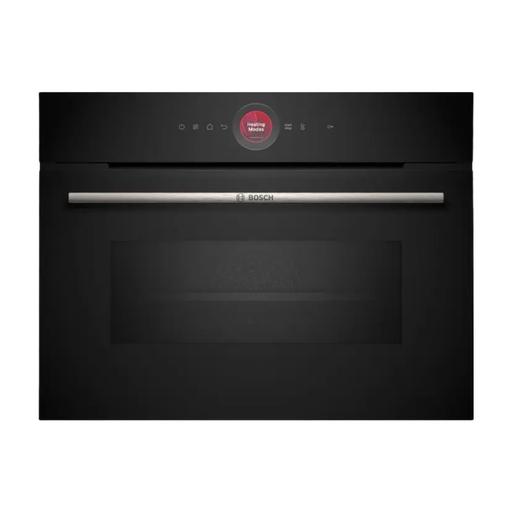
A brand to consider for built-in models, including the CMA583MS0, which has microwave, fan oven and grill functions.
Offers combination microwaves with additional cooking functions, such as the MC32DB7746KCE1.
Provides product information on combination microwaves with separate microwave, convection and grill functions, including the NN-C69KSM.
These models have microwave functions for melting chocolate, plus additional functions for other dishes. The selection includes both freestanding and built-in models.
 No image available
The separate microwave power settings and turntable are useful if you want to check on the chocolate as it cooks and prepare other dishes too.
25-litre capacity; 270 mm turntable; 10 power settings; microwave, grill and convection functions.
 No image available
This freestanding model combines a microwave function with grill and convection, making it a practical choice if you also want to use the appliance for other dishes.
20-litre capacity; glass turntable; 7 automatic programs; grill and convection functions. For installation in a cabinet, the product description specifies a suitable bracket and adequate ventilation.
 No image available
This is a built-in option if you want to use convection and grill as well as the microwave function, and have a suitable housing.
45-litre capacity; 900 W microwave power; convection and grill functions. Stated housing dimensions: 45.50 × 56 × 55 cm.
No, there isn’t one setting that suits all chocolate. For small quantities of its own Callets™, Callebaut describes a method at 800–1,000 W, stopping to stir every 15–20 seconds. For other chocolate, follow the relevant recipe or packaging instructions. When melting chocolate, take care not to use the grill or oven function by mistake.
No. Melting may be all you need if the chocolate is being used as an ingredient in a dish. For a glossy finish that sets firmly, Callebaut describes tempering as an additional step.
Use a bowl labelled as microwave-safe. The Netherlands Nutrition Centre lists glass, glazed earthenware and porcelain among suitable materials, and recommends stirring during heating, even if the appliance has a turntable. Clean the appliance according to the manual for your chosen model.
Contact the seller. According to ACM ConsuWijzer, if a product develops a fault sooner than expected under normal use, you may be entitled to a free remedy under the legal guarantee. The assessment depends on the product and the circumstances, not on one fixed guarantee period.
No. The European Commission describes CE marking as the manufacturer’s declaration that a product complies with the applicable EU product rules. It isn’t a quality certificate issued by a central EU body.