
Vandaag of morgen in huis

Kwaliteit gegarandeerd

Welkomstaanbiedingen ontgrendelen: GRATIS bezorging | Tot 80% korting | Gratis 30 dagen JoyPlus-proefperiode
Download de app
Colouring pens may seem easy to compare: choose an attractive mix of colours, check how many pens are included and place your order. But a set can disappoint if the nib isn’t right for the task, the ink bleeds through the paper or the caps are easily lost. So if you’re buying colouring pens for children, school, hand lettering or illustration, it’s worth looking beyond the packaging.
This guide helps parents, pupils, teachers and creative hobbyists compare colouring pens, felt-tip pens, brush pens and markers by their practical features.
A set of 50 colours offers plenty of variety, but it isn’t always the most practical choice for young children or beginners. A smaller set with clear basic colours can be easier to manage. Check the packaging, too: a sturdy box or case helps prevent colours from getting lost and makes the set suitable for use at school or on the go.
A fine fibre tip is suitable for lines, lettering and details. A broad or chisel tip is quicker for filling in large areas. Brush pens have a flexible tip that lets you create different line widths by varying the pressure. For young children, a sturdy, pressure-resistant tip may be more practical than a soft brush tip.
According to product information from various brands, some inks can be washed off hands and certain fabrics. However, the result depends on the fabric, how long the ink has dried and how quickly the stain is treated. If in doubt, test on an inconspicuous area first and follow the care instructions on the clothing label. Water-based ink also isn’t automatically suitable for wood, glass or painted surfaces.
For drawing and colouring on paper, water-based inks are usually a practical choice. They’re often low-odour and suitable for everyday use. Alcohol markers dry quickly and can blend well, but the ink may bleed through thin paper. Use marker paper or thicker paper, and protect the page underneath.
The surface is especially important when using metallic pens. According to the product description, STABILO Trio Deco pens are intended for white and coloured paper and card. The effect can vary depending on the colour and type of paper. Test the pen before creating a whole design.
Check the product information for the tip type and line width:
A tip of around 1 mm gives you more control over details. An XL tip of 3 mm can fill large areas more quickly, but is less suitable for small patterns.
Always check the recommended minimum age and any safety certifications, such as CE or EN 71. Small parts, such as loose caps, can pose a risk to young children. Ventilated caps may be part of the safety design, but never let children use drawing materials unsupervised.
Always replace the caps securely after use. Some manufacturers state that certain models can be left uncapped temporarily; treat this as a product specification, not a reason to leave the caps off regularly.
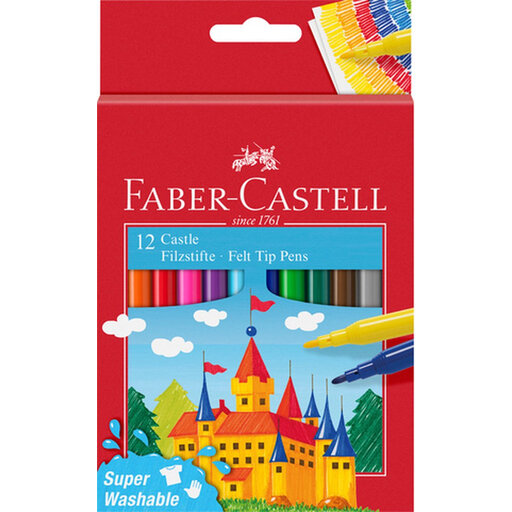
Why it suits this profile: A compact set of 12 colours for drawing, colouring and schoolwork, without having to buy a large collection straight away.
According to the product information, the sturdy tip is designed for children, and the manufacturer says the ink can be washed out of most fabrics at 30 degrees.
12 colours, EN 71 certification and a recommended minimum age of 4 years.
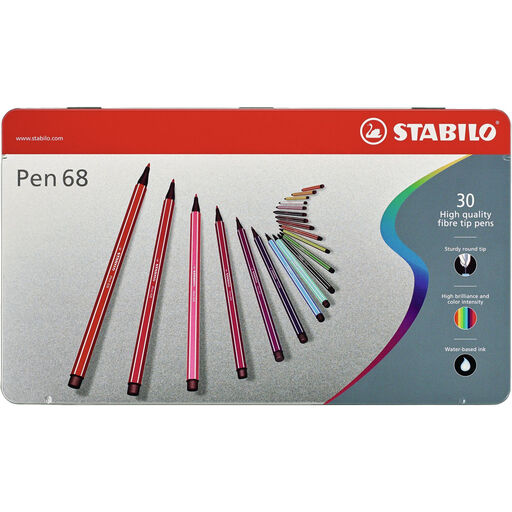
Why it suits this profile: A good choice for anyone looking for a range of colours, water-based ink and a consistent line width of around 1 mm.
The specifications mention a pressure-resistant tip and ink that can be blended with water. For watercolour effects, use thicker paper or card.
30 colours, an approximate line width of 1 mm, and suitable for drawing and colouring.

Why it suits this profile: For adult artists and hobbyists who want to sketch, blend and add details with alcohol markers.
The product information lists a brush tip of 1 to 5 mm and a fineliner tip of 0,6 mm. Bear in mind that the ink may bleed through, and use suitable paper.
24 colours, two tip shapes and alcohol-based ink, according to the product description.
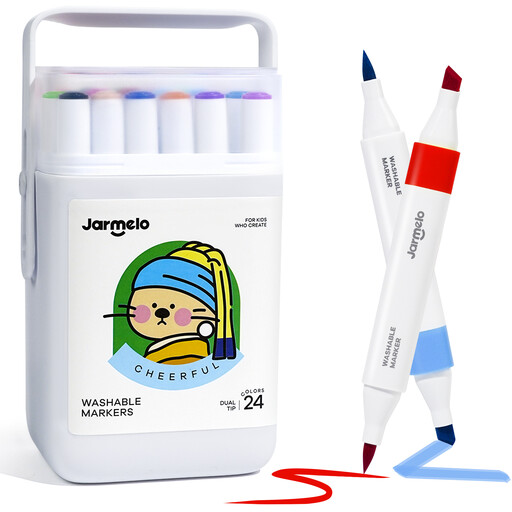
Why it suits this profile: The combination of a brush tip and chisel tip is handy for colouring, broad strokes and simple lettering.
According to the product information, the water-based ink is alcohol-free and 90% washable from skin and most fabrics. Be sure to treat stains straight away.
24 colours, two tip shapes, a storage case and a recommended age of 3 years and up.
We’ve put together a complete, up-to-date list of products that meet these strict selection criteria and the applicable European safety regulations.
Check the recommended minimum age, choose a sturdy tip and a comfortable shape, and look for clear safety information such as CE or EN 71. Washable ink can be handy, but always treat stains as quickly as possible.
Felt-tip pens usually have a fixed tip and produce a fairly consistent line. Brush pens have a flexible tip, so the line width changes depending on the pressure you apply. This makes them suitable for hand lettering and illustration, but young children may need to learn how much pressure to use.
Replace the cap straight after use, store the pens according to the product instructions, and keep them away from heat and direct sunlight. If a set is shared by several people, a case or storage box helps keep the caps and colours together.
