
Vandaag of morgen in huis

Kwaliteit gegarandeerd

Welkomstaanbiedingen ontgrendelen: GRATIS bezorging | Tot 80% korting | Gratis 30 dagen JoyPlus-proefperiode
Download de app
A box of coloured pens and fineliners may seem straightforward to choose, but the difference between a useful set and a poor purchase often comes down to the details. A tip that is too broad can make small letters unclear, ink can bleed through thin paper, and a set with lots of colours can still be impractical if the pens dry out quickly.
For children, parents, school pupils, students, hobbyists and office users, three things are particularly important: the tip, the type of ink and how the set is stored. Below, we outline the key points to consider and link them to specific product choices.
A set with 50 or more colours may seem appealing, but more colours do not automatically mean greater convenience. For summaries or everyday writing, 10 to 20 carefully chosen colours are often enough. For illustrations, hand lettering or larger drawings, a more extensive set may make sense.
Also pay attention to the colour description. “Assorted colours” indicates that the set contains a selection of colours, but not always exactly which shades are included. So check the product photo and specifications before ordering.
A fineliner such as the STABILO point 88 has a 0.4 mm metal tip. This is useful for notes, drawing lines with a ruler, sketching and adding small details. For large areas, a broader felt-tip pen is more efficient. A pen with a tip of around 1 to 3 mm applies more ink and means you do not have to spend as long colouring the same area.
Water-based ink, quick-drying ink and washable ink each have different characteristics. The result also depends on the paper. Thin school or printer paper can allow ink to show through, whereas thicker drawing paper is more suitable for colouring or techniques involving water.
According to STABILO’s own information, certain models can be left uncapped for longer periods without drying out. This is a product specification from the brand, not a guarantee that a pen will continue writing well in every circumstance. Closing the cap after use remains the safest habit.
Choose the tip based on how you intend to use it:
A metal-encased tip, as found on various STABILO fineliners, can provide extra protection when used with rulers and templates. However, do not press harder than necessary; a fine tip is designed for controlled lines.
Water-based ink is common in fineliners and many felt-tip pens. This ink is often suitable for paper and generally has little odour. For children’s colouring pens, washability can be a practical advantage. However, check the exact product information: “washable” does not mean that every stain will disappear from every fabric without pre-treatment.
Alcohol-based ink is used in some sketch markers. According to the product specification, this ink dries quickly and may become permanent once dry. It is best to use these markers on suitable marker paper, as ordinary sheets may allow the ink to bleed through.
Gel ink often writes smoothly and stands out clearly, but it needs time to dry. A quick-drying version may be more practical for left-handed users. Test the pen first on the paper you use every day.
Caps are a weak point for all felt-tip pens. A missing or poorly closed cap can cause the tip to dry out. So check:
For young children, an ergonomic shape, a sturdy tip and a convenient cap ring can be helpful. Also check the recommended age and any markings such as CE or EN 71, as stated in the relevant product listing.
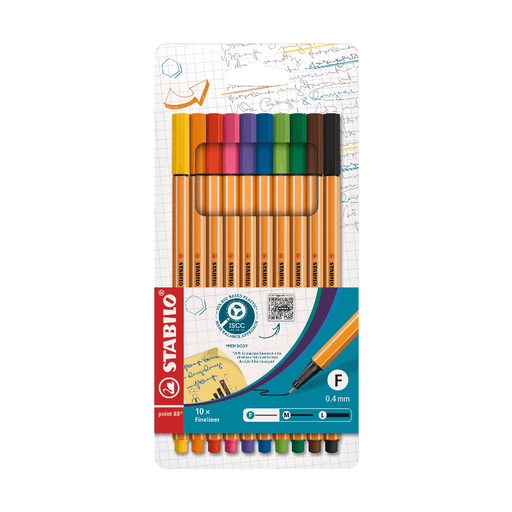
Why it suits this profile: A well-organised set for notes, schoolwork, diaries and simple sketches. The 0.4 mm tip is suitable for small details, while the resealable packaging keeps all the colours together.
The set focuses on a practical number of colours rather than an unwieldy collection. The metal tip is suitable for precise lines.
0.4 mm writing width, water-based ink, a cap that can be attached to the back and 10 different colours.
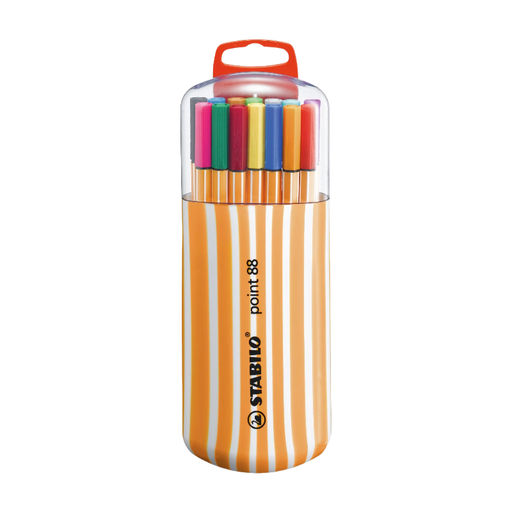
Why it suits this profile: Suitable for users who combine writing, drawing, sketching and hand lettering and want a wider choice of colours than a basic set provides.
The fixed 0.4 mm tip means you do not have to use a broad felt-tip pen for fine line work. The case provides a dedicated storage place for 20 pens.
0.4 mm tip, water-based ink, ventilated cap and colours for writing, drawing, colouring and sketching.
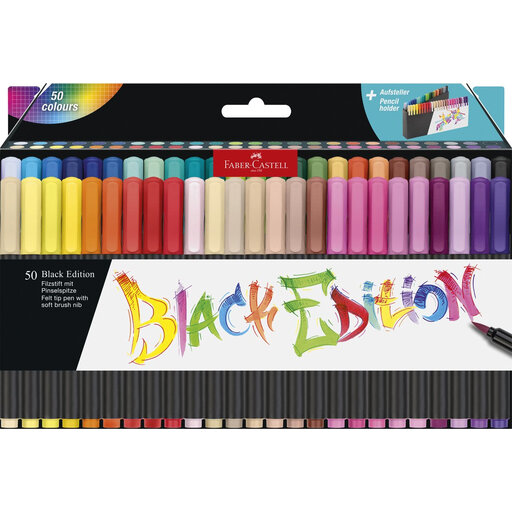
Why it suits this profile: For creative users looking for variety in brush pens, small illustrations, lettering and colouring projects. The set contains 50 colours.
The flexible brush tip is designed for variable line widths rather than fine technical writing. This helps you choose the right tip for the right project.
50 colours, soft brush tips, dye-based ink and, according to the product listing, washable ink.
We have put together a complete, up-to-date list of products that fully meet these strict selection criteria and the applicable European safety regulations.
For children, felt-tip pens with a sturdy or pressure-resistant tip are practical. The STABILO Cappi, for example, has a cap ring and an ergonomic grip according to the product information. The STABILO Trio Scribbi features a triangular shape and a resilient tip. Always check the age recommendation when buying, and use the pens on paper or card unless the packaging states otherwise.
For students and office workers, gel pens, rollerball pens and fineliners can complement one another. A mechanical pencil such as the WRITECH Up with 0.7 mm HB lead is suitable for sketching and writing when you want an erasable line. For compact black notes, a set of WRITECH gel pens with a 0.5 mm tip is an additional option.
Fineliners usually have a narrow tip for precise lines, notes and details. Coloured pens or felt-tip pens often have a broader tip and are designed for colouring, headings and larger areas. A brush pen can create different line widths by varying the pressure.
Close the cap immediately after use and store the pens according to the product instructions. Many sets stay tidier and usable for longer when kept in their original case. Avoid direct sunlight and extreme temperatures. If a pen has been left open for some time, test it first on a separate sheet of paper.
For journalling, fineliners measuring 0.4 to 0.5 mm are suitable for small text and borders. You can combine them with coloured pens for accents or brush pens for headings. Test beforehand whether the ink bleeds through the paper in your notebook.
