
Vandaag of morgen in huis

Kwaliteit gegarandeerd

Welkomstaanbiedingen ontgrendelen: GRATIS bezorging | Tot 80% korting | Gratis 30 dagen JoyPlus-proefperiode
Download de app
Coloured pens and fineliners are useful for school, journalling, sketching, hand lettering and colouring sheets. However, a large fineliner set or coloured pen set is not always as versatile as the packaging suggests. A broad tip, for example, is ideal for large areas but less suitable for small lettering. And a high colour count means little if the shades barely differ from one another.
So watch out for these three common pitfalls:
For notes, planners and technical sketches, fineliners of around 0.4 to 0.5 mm are practical. STABILO point 88 fineliners have a metal-clad 0.4 mm tip. This allows you to write small letters, draw lines along a ruler and add detail to drawings.
A medium tip of around 1 mm is better suited to colouring sheets, headings and general drawing. For larger areas, a broad tip of 2 to 3 mm works more quickly. Brush pens offer greater variety: their flexible tips allow you to create thinner or thicker lines with light or firm pressure.
Water-based ink is a sensible choice for school use, writing and general colouring. According to the product information, the STABILO point 88 and Pen 68 use water-based ink. The Pen 68 can also be used with water to create a watercolour effect, according to the manufacturer. For this, it is best to use thicker paper or card.
Gel pens are particularly suitable for journalling, colour-coding and writing. Check that the ink dries quickly if you write left-handed or often move your hand across the paper.
Alcohol markers dry quickly and are designed for illustrations and sketches. According to the product specifications, the Faber-Castell Goldfaber Sketch Marker Set has a flexible brush tip of 1 to 5 mm and a 0.6 mm fineliner tip. However, alcohol ink can bleed through thin paper. Use marker paper or place a protective sheet underneath your drawing.
A missing cap is a common cause of dried-out drawing pens. Always recap each pen after use and store the set as described in the product information: many pens remain most reliable when stored horizontally or in their original box.
For children, a sturdy tip, a good grip and clear safety information are important. Products with a CE marking or EN 71 reference contain verifiable information about applicable product and toy safety requirements, but this does not mean that every product is suitable for every age group. Also watch out for small parts and follow the recommended age guidance.
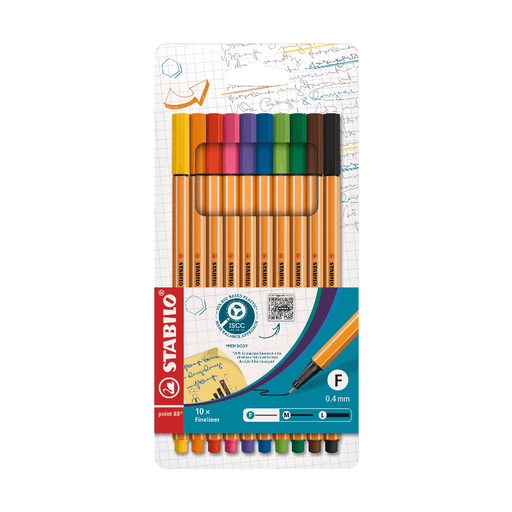
Why it suits this profile: This compact set contains ten different colours and is suitable for writing, drawing, colouring and working with a ruler or stencil. A practical starting point for school, planning and simple sketches.
You are not paying straight away for a very large set, while the 0.4 mm tip thickness is clearly suited to detailed writing and drawing.
Water-based ink, 0.4 mm metal tip and resealable case with ten colours.
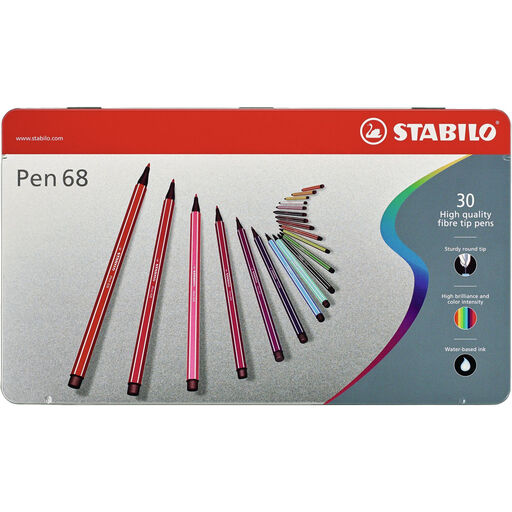
Why it suits this profile: The medium tip of around 1 mm is suitable for colouring, illustrations and bold lines. According to the product description, the water-based ink can be blended with water to create a watercolour effect.
The combination of coloured pens and water-blending techniques makes this set more versatile than one designed solely for flat colouring.
30 colours, robust tip of approximately 1 mm and metal tin for tidy storage.

Why it suits this profile: According to the product information, these alcohol markers combine a 1 to 5 mm brush tip with a 0.6 mm fineliner tip. This allows you to create both broad areas of colour and fine detail.
The two tip shapes reduce the need to buy separate brush pens and drawing pens. However, use suitable, thick paper to minimise bleed-through.
24 colours, flexible brush tip and separate 0.6 mm tip; EN 71 is listed in the product information.
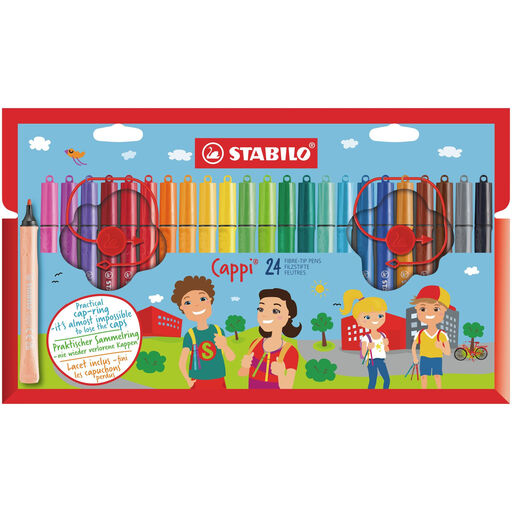
Why it suits this profile: The caps can be attached to a ring. The 1 mm medium tip, ergonomic shape and washable ink are well suited to colouring at home or on the go.
The cap ring reduces the chance of caps getting lost, a practical problem when children are using the pens. However, stains should still be treated according to the instructions.
24 colours, cap ring, ergonomic grip and CE reference in the product information.
We have put together a complete, up-to-date list of products that fully meet these strict selection criteria and the applicable European safety regulations.
For school, water-based coloured pens and fineliners are usually practical. Look for a sturdy tip, a cap that closes securely and a case that keeps the colours organised. For fine notes, STABILO point 88 fineliners with a 0.4 mm tip are suitable; for larger areas of colour, a medium or broad tip is a better choice.
Replace the cap immediately after use and check that it is firmly attached. Store the pens according to the product instructions, often horizontally or in their original packaging. Claims about how long a pen remains usable without its cap come from the brand’s product information, so treat them as product specifications and still recap the pen when you have finished.
They can, especially on thin printer paper. Alcohol markers contain quick-drying ink that can seep through paper. Use marker paper or thicker drawing paper and place a scrap sheet underneath your work. For notes, colour-coding and everyday writing, fineliners, gel pens or water-based coloured pens are generally easier to use.
