
Vandaag of morgen in huis

Kwaliteit gegarandeerd

Welkomstaanbiedingen ontgrendelen: GRATIS bezorging | Tot 80% korting | Gratis 30 dagen JoyPlus-proefperiode
Download de app
Coloured pens might seem simple to pick, but the real difference between sets comes down to the nib, the ink and what you plan to use them for. A cheap set of pens can disappoint when colours quickly fade, the nib gets squashed or the ink bleeds through thin paper. And a large set with lots of colours isn’t automatically practical if you mainly write or draw small details.
In this buying guide, you’ll learn what to look for in felt-tip pens, fineliners, brush pens, colouring pens and drawing pens. That way, you can make a more informed choice for children, school, journaling, hand lettering or creative projects.
A set of 50 colours looks appealing, but a broad nib is awkward for small letters. For notes, planners and outlines, fineliners around 0.4 to 0.5 mm are far more practical. For large areas of colour, a medium or broad nib works much faster.
So think about how you’ll use them first, and only then consider the number of colours. A smaller set with the right nib can be more useful than a big box of unsuitable pens.
According to the product information from certain brands, water-based inks can be washed from hands or most fabrics. However, the result depends on the material, how long the ink has been left to dry and how you treat the stain. For clothing, pre-treating is often a good idea.
So use children’s pens on a protective mat and treat any stains with water as soon as possible. Always check the recommended minimum age and any warnings about small parts.
Some brands claim their pens can be left without their caps for a certain amount of time. That’s a product claim from the brand, not a guarantee that every pen will keep working well in all conditions. Heat, direct sunlight and a loose cap can all shorten their lifespan.
So always cap your writing pens and colouring pens after use. Store them according to the product instructions, for example lying flat or in the box they came in.
The nib determines how much control you have:
A metal-encased nib, like on some fineliners, can be handy when you’re working with a ruler or stencil. A pressure-resistant or springy nib is better for children who press harder when colouring.
Water-based ink is often suitable for school, writing and colouring on paper. On thin paper, the ink can still bleed through, especially if you apply several layers. So test a new set on the same paper you plan to use.
Alcohol markers dry quickly and are intended for other creative applications. According to the product information from Faber-Castell, the Goldfaber Sketch Markers are water-resistant and permanent once dry. Use these markers on suitable marker paper and protect the page underneath.
For watercolour effects, some brands mention that the ink can be mixed with water. Use thicker paper or card for this, and treat this information as a suggested use from the product description, not a guaranteed result.
For children, a sturdy nib, a comfortable grip and washable ink are practical features. Also look out for:
A safety mark or age recommendation doesn’t mean supervision isn’t needed. Don’t let young children chew on caps, and check that the cap can be put back on properly.
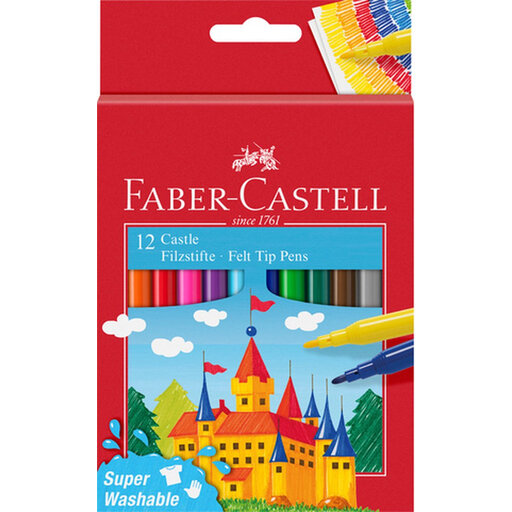
Why this fits the profile: A compact set for children from the stated minimum age of 4 years and for simple colouring and drawing activities on paper, card or wood.
You’re not paying for an unnecessarily large set. The sturdy nib is designed for regular colouring by children.
12 assorted colours; according to the product information, washable from hands and most fabrics.
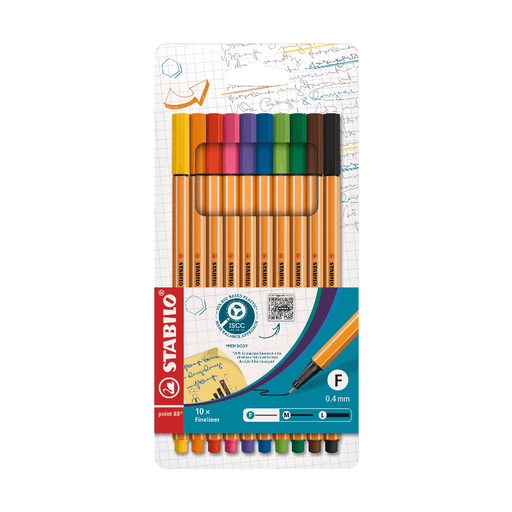
Why this fits the profile: The 0.4 mm nib suits school pupils, students and adults who want to write, underline, sketch or hand letter with precision.
The fine nib stops a broad colouring pen from being awkward for small letters and details.
Water-based ink; metal nib casing; cap can be posted on the back.
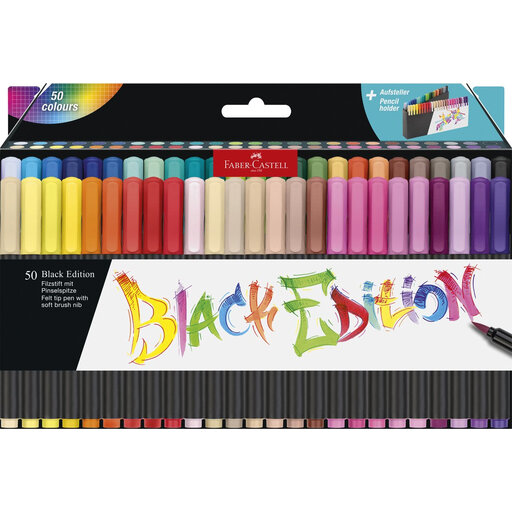
Why this fits the profile: The flexible brush pens are aimed at artists and hobbyists who want to combine thin and thick lines in lettering and small illustrations.
The nib is designed for line variation, so you don’t need several different types of pen for every level of detail.
50 colours; according to the product information, washable ink based on food colourings; suitable for light paper.

Why this fits the profile: These markers combine a brush nib of 1 to 5 mm with a 0.6 mm fineliner nib for sketching, illustrations and precise accents.
The two nib types make it clear what the set is for: sketching, filling and detailing on suitable paper.
24 colours; alcohol ink; brush nib and fineliner nib in one marker.
We’ve put together a full, up-to-date list of products that fully meet these strict selection criteria and current European safety regulations.
Look for a sturdy or pressure-resistant nib, a comfortable grip and the stated minimum age. According to the product information, some Faber-Castell and STABILO sets are aimed at children and come with washable ink. Do treat stains as soon as possible and use a protective mat.
For precise writing and sketching, fineliners of 0.4 mm are a practical choice. For broader lines, colouring and simple illustrations, felt-tip pens around 1 mm are better. Brush pens are suitable when you want to create different line widths by varying the pressure.
Put the cap back on straight after use and press it on firmly. Store the pens according to the product information, for example horizontally in the box. Avoid prolonged exposure to heat and sunlight. Even if a brand description says a pen can be left uncapped for a while, you should still close it as soon as possible.
