
Vandaag of morgen in huis

Kwaliteit gegarandeerd

Welkomstaanbiedingen ontgrendelen: GRATIS bezorging | Tot 80% korting | Gratis 30 dagen JoyPlus-proefperiode
Download de app
Coloured pens may seem simple to choose, but there are big differences between felt-tip pens, brush pens and acrylic markers. A set with lots of colours isn’t automatically practical for everyday use. Pay particular attention to the type of nib, the ink and the surface you want to use them on.
A set of 50 pens sounds appealing, but extra colours aren’t always useful. For schoolwork or simple drawings, a set of 12 colours may be enough. For illustration, hand lettering or colour gradients, a larger range can be more useful.
So also check:
A fine fibre tip works well for outlines and small details. A broader tip colours larger areas more quickly, but is less suitable for precise work. Brush pens offer more variation in line width, depending on the pressure and movement you use.
A common mistake is buying a brush pen for young children without considering its soft nib. It can become misshapen more quickly if pressed too hard. For children who press firmly on the paper, a pressure-resistant or springy nib is often more practical.
Washable pens are handy for children, but how washable they are depends on the surface, the fabric and how quickly you treat a stain. According to the product information from various brands, pre-washing may be necessary. For clothing, test the pen on an inconspicuous area first and follow the manufacturer’s instructions.
Water-based ink is usually a sensible choice for paper and school use. Acrylic and alcohol markers are designed for other applications and behave differently on clothing, furniture and porous surfaces.
Check the shape and stated width:
A round fibre tip, like the one found on many classic drawing pens, gives a predictable line. A triangular barrel can also help you hold the pen steadily. Always check the recommended minimum age. Small parts, such as caps, can pose a choking hazard.
For paper, water-based ink and ordinary felt-tip pens are often perfectly adequate. Some models can be used with water to create a watercolour effect. Use thicker paper or card to reduce ink bleeding and buckling.
Watercolour pens are especially useful when you want to blend colours with a wet brush. Acrylic markers are designed for surfaces such as wood, glass, ceramics, plastic, metal or canvas. According to Faber-Castell’s product information, some models have water-based acrylic ink and two nibs measuring 1 and 3 mm. This makes them versatile, but they need different preparation from ordinary coloured pens.
Alcohol markers dry quickly and are generally less suitable for young children or untreated furniture. For best results, use them with suitable marker paper and ensure there is plenty of ventilation.
A cap that closes securely is important for the pens’ lifespan. For children, models with a cap ring or an easy-to-spot cap are practical, as these features make parts less likely to go missing. Store metallic pens flat, as instructed in the product information. Depending on the ink, other pens may be best stored flat or tip-up.
Also check for certification marks and age information. An EN 71 or CE marking in the product details provides relevant conformity information, but it doesn’t replace checking the age recommendation and instructions for use.
The choices below are based on verifiable product details, such as the number of pens, nib type, ink type, washability and recommended age.
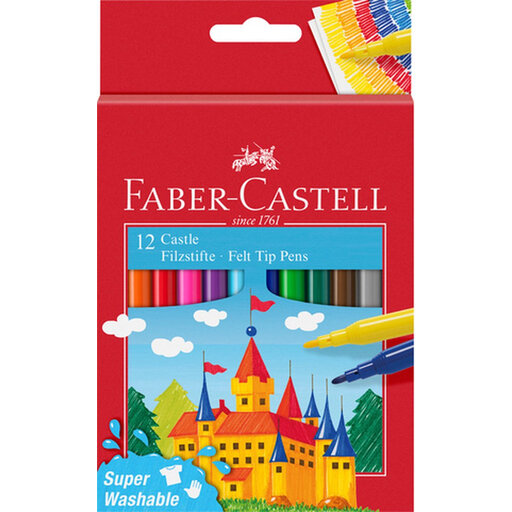
Why it suits this profile: A handy set of 12 colours for children aged 4 and over, schoolwork and simple drawings on paper or card.
You won’t pay for an unnecessarily large colour selection. The product information describes a robust nib and ink that washes off hands and most fabrics at 30 degrees.
12 colours, a robust nib, recommended for ages 4 and over, and an EN 71 marking in the product details.
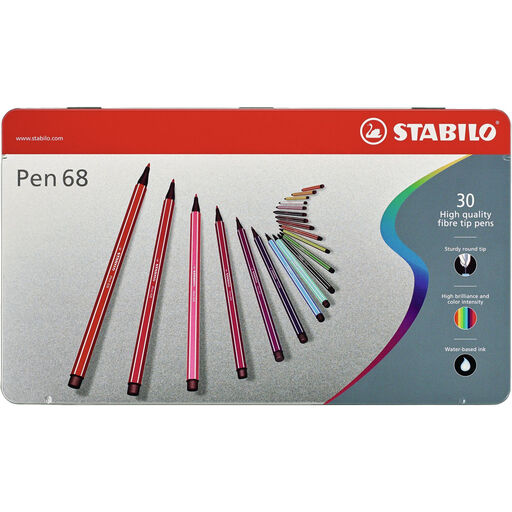
Why it suits this profile: A generous choice of colours for students, hobbyists and adults who regularly draw, colour in or experiment with colour combinations.
The 1 mm fibre tip is suited to even lines, and according to the product information, the water-based ink can be used with water to create watercolour effects.
30 varied colours, a pressure-resistant tip and odourless water-based ink, according to the product description.

Why it suits this profile: For creative adults and makers who want to work on more than just paper, including wood, glass, ceramics, canvas or plastic.
These aren’t ordinary children’s pens for paper. The product information specifically lists several surfaces, activation by shaking and pumping, and two nib sizes.
6 metallic colours, water-based acrylic ink and 1 and 3 mm nibs. The recommended minimum age is 7.
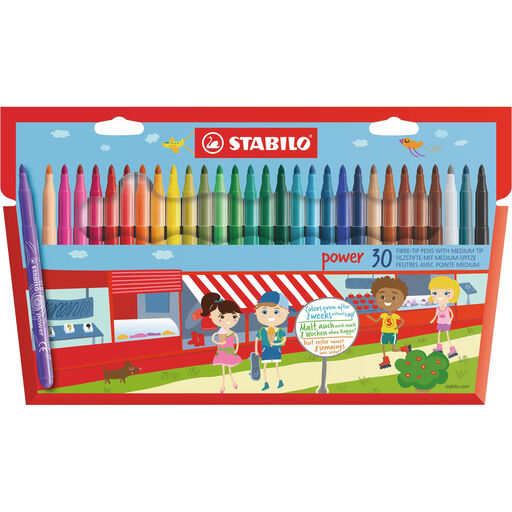
Why it suits this profile: A set for frequent colouring, with a robust tip and easy-to-clean ink.
The product information lists a pressure-resistant 2 mm medium tip and washable ink. That makes it better suited to heavy colouring than a very fine tip.
30 colours, a 2 mm medium tip and, according to the product information, up to eight weeks’ cap-off time without drying out.
We’ve put together a complete, up-to-date list of products that meet these strict selection criteria and the applicable European safety regulations.
Choose a model with an age recommendation that’s right for the child, a robust or pressure-resistant tip and, ideally, washable ink. Also check that caps and other parts don’t pose a risk to young children. According to the product information, STABILO Trio Scribbi is intended for children aged 3 and over; other sets may have a minimum age of 4, 6 or 10.
Replace the cap straight after use and check that it closes securely. Store the pens according to the product instructions, away from direct sunlight and extreme temperatures. A cap ring, such as the one on STABILO Cappi, can help stop caps going missing. Store metallic and other specialist pens as indicated on the packaging.
Felt-tip pens usually have a firm, round tip and are suitable for writing, drawing and colouring in. Brush pens have a flexible tip that lets you create thin and thick lines by varying the pressure. Brush pens are more versatile for hand lettering and illustration, while ordinary felt-tip pens are often easier to control for schoolwork and young children.
