
Vandaag of morgen in huis

Kwaliteit gegarandeerd

Welkomstaanbiedingen ontgrendelen: GRATIS bezorging | Tot 80% korting | Gratis 30 dagen JoyPlus-proefperiode
Download de app
Coloured pens are useful for notes, colour-coding, journalling and creative projects. But a set that looks good on paper can disappoint in practice. A pen that writes smoothly on printer paper isn’t necessarily suitable for hand lettering or transparent film. And a large colour range doesn’t tell you much about the nib, ink type or how long the pens will last.
Before you buy, think about what you’ll use the pens for, the nib size and how the ink behaves. This can help prevent your pens from drying out quickly, bleeding through the paper or going unused in a drawer.
A set with lots of colours may look appealing, but a smaller range of shades may be all you need for everyday use. What matters more is whether the colours suit the way you’ll use them. A few clear colours are often practical for school and the office. For drawing and journalling, a wider range of shades and different nib sizes can be more useful.
Check that the product description clearly states how many pens you’ll receive and which colours are included. “Multicolour” could mean either a set of pens in different colours or a single pen with several ink colours.
Fineliners and fine gel pens are designed for precise lines, small notes and details. Felt-tip pens with a medium or XL nib are quicker for colouring larger areas. If you use a 0.4 mm fineliner to colour in a whole page, it can take unnecessarily long and put more strain on the nib.
According to the product description for some STABILO felt-tip pens, the ink is washable, and pre-treatment is recommended. This doesn’t mean every mark will disappear from every material without a trace. If you get ink on clothing or furniture, test it on an inconspicuous area first. Claims that pens can be left uncapped for a long time without drying out also depend on storage, temperature and use. Always put the cap back on securely after use.
Nib size affects how much control you have:
A fine nib generally offers greater precision, while a wider nib lays down colour more quickly. Bear in mind that the stated writing width can vary by brand and product type.
Water-based ink is common in fineliners and felt-tip pens. It’s generally designed for paper, and the product descriptions for some models say it can be used with water to create a watercolour effect. Use thicker paper or card for this technique to help prevent ink bleeding through and the paper buckling.
Gel ink often flows smoothly and is suitable for notes, colour-coding and journalling. For important documents, check that the drying time suits your writing style. If you’re left-handed, look for descriptions such as quick-drying ink.
Overhead projector pens are a separate category. They’re designed for smooth surfaces such as transparent film, plastic, glass, metal and ceramic. Decide in advance whether you need erasable water-based ink or permanent ink. A permanent pen isn’t suitable if you want to remove the mark easily later.
An anti-slip grip or ribbed barrel can make a pen more comfortable to use during long writing sessions. For children, a triangular shape can help them hold the pen steadily. A cap ring is handy when you’re out and about, as it keeps the caps together.
Store your pens according to the product information: some models are best kept horizontally, while others should be stored upright with the nib pointing up or down. Avoid direct sunlight and extreme temperatures. These simple habits can reduce the risk of pens drying out or the ink flow becoming uneven.
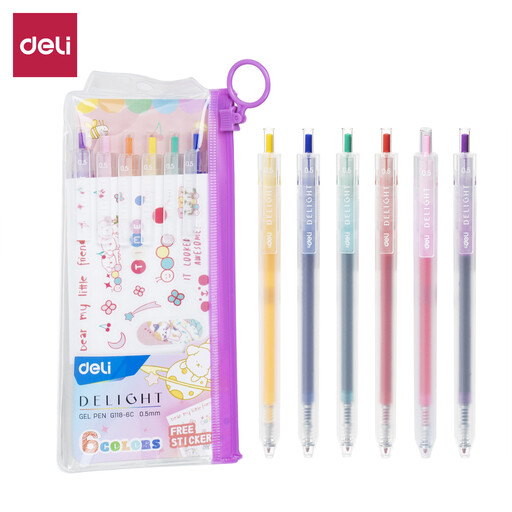
Why this suits this user: This set contains six gel pens in red, blue, yellow, green, pink and purple. It’s a handy selection for school, diaries and colour-coding, without having to buy a large set of pens straight away.
The product name specifies the 0.5 mm nib size and the exact number of pens and colours. So you don’t have to rely on a general term such as multicolour.
Six separate colours and a fine 0.5 mm nib for notes, marking and everyday use.
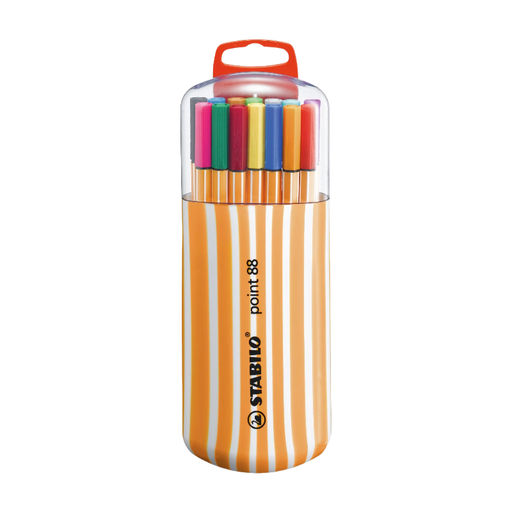
Why this suits this user: Journal writers, students and drawing enthusiasts get a wide choice of colours and a metal tip of around 0.4 mm for fine lines, sketches and adding structure to text.
The product information specifies the nib width and that the ink is water-based. This makes it clearer what the fineliner is designed for than a general claim about versatility.
A fine 0.4 mm line, a range of colours and a metal tip for writing, drawing and using with a ruler.
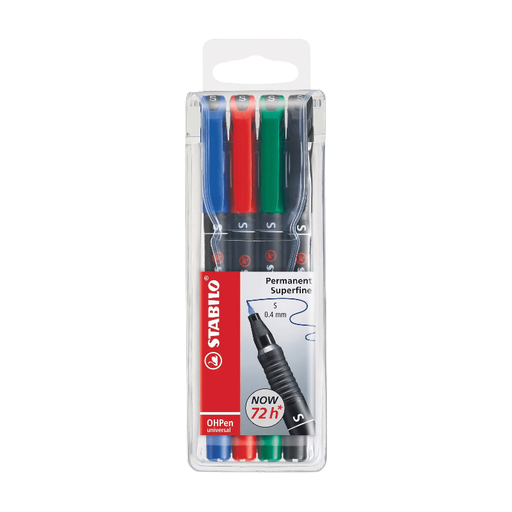
Why this suits this user: These overhead projector pens are designed for smooth surfaces such as film, plastic, glass, metal and ceramic. They’re a good fit for presentations, office work and specialist marking tasks.
The product description specifically lists the suitable smooth surfaces and permanent ink. This makes it clearer what the pen is for than a standard coloured pen.
Four colours, a superfine tip and a grip zone; suitable for smooth surfaces where standard ballpoint pens don’t adhere well.
We’ve put together a complete, up-to-date list of products that meet these strict selection criteria and the applicable European safety regulations.
Gel pens, rollerball pens and fineliners are handy for notes, revision summaries and colour-coding at school. If you write small, look for a nib of around 0.4 to 0.5 mm. Felt-tip pens with a wider nib are better for worksheets and creative projects.
Replace the cap after each use, keep the pens out of direct sunlight and follow the recommended storage position in the product description. For sets with separate caps, a cap ring can help keep them together. If a pen stops writing temporarily, try it on scrap paper first; the ink may start flowing again.
It depends on how you use them. A larger set may work out cheaper per pen if you need lots of colours, but there’s no benefit in having colours you never use. Check the price per pen, nib size, whether the pens are refillable and whether they’re suitable for the surface you’ll be writing on. For everyday writing, a smaller set of gel pens or ballpoint pens may be enough; for drawing and journalling, a wider range of colours and different nib types are often more useful.
