
Vandaag of morgen in huis

Kwaliteit gegarandeerd

Welkomstaanbiedingen ontgrendelen: GRATIS bezorging | Tot 80% korting | Gratis 30 dagen JoyPlus-proefperiode
Download de app
Coloured pens and markers are handy for school, the office, journaling, crafting and creative projects. Yet a large number of colours doesn’t always mean a great user experience. A set with 50 colours might be unsuitable for thin paper, whereas a smaller set could be much better for everyday writing.
So pay particular attention to the ink, the tip and the surface you plan to work on. Below, you’ll find out which pitfalls often lead to a bad purchase and which products suit different uses.
A pen set with multiple colours may look appealing, but the colours can be very similar. For school notes or colour-coding, you’re often better off with a clear selection of distinctly different shades. For illustrations and sketches, a larger palette can be useful though.
So check:
Alcohol markers dry quickly and can show through thin paper. They are mainly intended for sketches and illustrations on suitable marker paper. Water-based ink is usually more practical for notes, colouring pages and activities with children, but it can cause paper to warp with many layers.
Also, terms like “waterproof”, “erasable” or “washable” only have meaning within the described application. According to the manufacturer’s product description, a particular ink may be water-resistant or washable; that doesn’t mean every stain on every fabric will disappear completely.
A fineliner of 0.4 or 0.5 mm is suitable for small letters, outlines and colour-coding. A brush pen, on the other hand, has a flexible tip that lets you create thin and thick lines. A chisel tip is handy for highlighting, but less suitable for detailed drawings.
Also pay attention to the age recommendation. Some markers contain small parts or are intended for older children and adults. Always consider the warnings on the packaging when children are involved.
Choose a 0.4 mm fineliner for precise lines, a 0.5 mm tip for small writing and a 0.7 mm or 1.0 mm tip for clearer lines. A brush tip is more versatile for hand lettering, while a chisel tip is mainly suitable for highlighting and broad strokes.
Not every marker works on the same surface. Check the product information to see if the marker is suitable for paper, plastic, glass, metal, fabric, wood or canvas. Close pens properly after use and store them according to the instructions. With markers, this prevents the tip and ink from drying out more quickly.
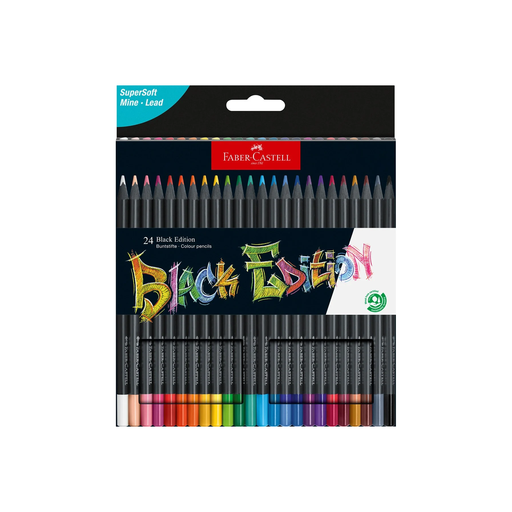
Why this suits the profile: These coloured pencils are ready to use for school, colouring pages and simple drawing projects. The set contains 24 colours and, according to the product description, is suitable for children and adults.
You choose coloured pencils without the risk of show-through from alcohol ink. The triangular shape helps with grip and the described SV bonding is intended to limit breakage of the lead.
24 colours, soft colour laydown and use on both light and dark paper according to the product information.

Why this suits the profile: For sketches and illustrations, this alcohol marker set offers a combination of a flexible brush tip and a metal fineliner tip.
The tip choice is clearly described: a brush tip from 1 to 5 mm and a fineliner of 0.6 mm. This means you can create broad areas and details with one set.
24 colours, quick-drying alcohol ink and two tip styles. The recommended minimum age is 12 years.

Why this suits the profile: These acrylic markers are intended for those who don’t just work on paper, but also want to mark wood, glass, ceramic, plastic, stone, canvas or metal.
The permitted surfaces are specifically stated. So you don’t have to use a general marker for materials it isn’t designed for.
Water-based acrylic ink, 6 standard colours, tips of 1 and 3 mm and an ink level indicator. Activation is done by shaking and pumping.
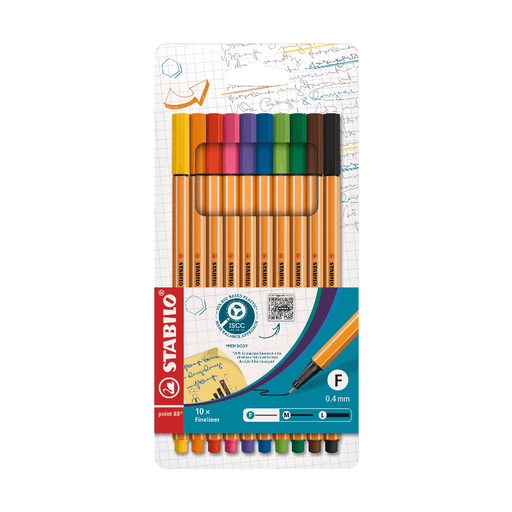
Why this suits the profile: The fine 0.4 mm tip is practical for summaries, diaries, planners, journaling and drawings with small details.
The fixed tip size makes the set predictable for precise writing. The water-based ink and metal tip are clearly stated, rather than just general terms about precision.
10 colours, a resealable case, odourless water-based ink and a metal fineliner tip suitable for rulers and stencils.
We’ve put together a full, up-to-date list of products that fully meet these strict selection criteria and comply with current European safety regulations.
For journaling, fineliners, gel pens and liquid rollerball pens are usually practical. Choose a tip of 0.4 to 0.7 mm for small letters and check that the ink dries quickly. Always test on a backing page if you’re using a thin notebook.
Put the cap back on immediately after use and store the set in a dry place, away from direct sunlight and extreme temperatures. With acrylic markers, you also need to follow the activation instructions. A marker that has been exposed to a lot of air can, despite good care, write less evenly more quickly.
That varies by product. Check the recommended minimum age, any small parts and warnings on the packaging. Water-based, alcohol-free dot markers described as washable can be practical for young children, but supervision is still advisable. Only use alcohol markers and markers with small caps according to the stated age and usage instructions.
