
Vandaag of morgen in huis

Kwaliteit gegarandeerd

Welkomstaanbiedingen ontgrendelen: GRATIS bezorging | Tot 80% korting | Gratis 30 dagen JoyPlus-proefperiode
Download de app
A box of coloured pencils and felt-tip pens seems simple to choose, until you have to decide between ordinary coloured pencils, felt-tip pens, brush pens, metallic pens and watercolour pencils. A cheap set can prove inconvenient because of tips that break easily, ink that dries out or colours that are barely visible on the chosen paper.
So don't focus only on the number of colours. The right choice depends on how you plan to use them: colouring with children, schoolwork, hand lettering, sketching or detailed craft projects.
A set containing dozens of colours sounds appealing, but check whether it really includes different shades. For drawing and colouring, several greens, skin tones and shades of blue are often more practical than a large number of almost identical colours.
A broad tip is quick to use for large areas of colour, but less suitable for small details. A fine tip is ideal for writing and outlines, while a brush tip allows you to create different line widths. So look at the tip width and tip shape, not just the product photo.
According to the product description, certain inks are washable from most fabrics or hands. This is not a guarantee for every surface or every stain. Treat stains as quickly as possible and, with young children, preferably use paper or card as the surface.
Claims about colour intensity, lightfastness or durability also come from the brand's product information. Treat them as product specifications, not as a universal guarantee for every drawing style or type of paper.
For young children, coloured pens for children with a sturdy or sprung tip are practical. According to the product description, the STABILO Trio Scribbi has a thick, spring-loaded tip and a triangular shape. This can be suitable for firm colouring, but the set is less geared towards very fine details.
A duo felt-tip pen offers greater flexibility. The Faber-Castell Duo Felt-Tip Pens have a broad tip for colouring larger areas and a fine tip for detailed work. For hand lettering, brush pens are more interesting: by varying the pressure, you can create thicker and thinner lines. However, check that the recommended age and use on light-coloured paper suit your needs.
Most felt-tip pens in this range use water-based ink. This is practical for paper and card, but ink may bleed through thin paper. Use thicker drawing paper for intensive colouring.
According to the product information, the STABILO Pen 68 has water-based, odourless ink and a tip of approximately 1 mm. The ink can be blended with water to create a watercolour effect. This does not mean that the pen replaces a fully-fledged watercolour medium; the result depends on the paper, the amount of water and the drying time.
For a genuine watercolour technique, watercolour pencils or water-soluble coloured pencils are the more logical choice. You can draw dry first and then spread the pigment with a wet brush. Pay attention to the paper thickness, as thin printer paper may start to ripple.
A triangular barrel can help provide a stable grip, particularly for children who are still learning to draw. A cap ring, as used with STABILO Cappi, helps prevent caps from getting lost. This is especially useful at school, when travelling or during a creative activity at the table.
For children's sets, check the stated age and safety marks. Product information for various sets mentions a CE mark or EN 71. Always check the current product page for the exact version. Small parts may be unsuitable for young children, so keep pens and caps out of reach of children who put them in their mouths.
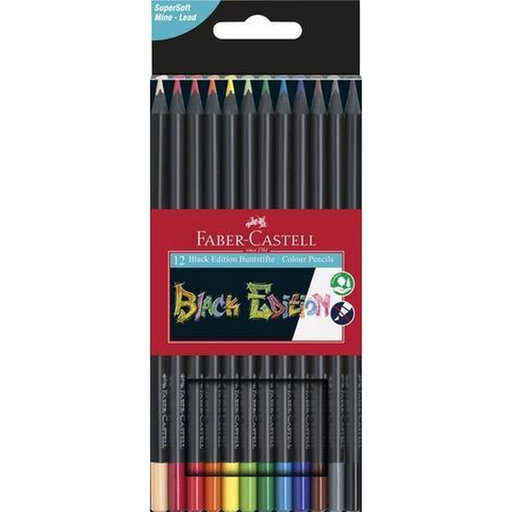
Why it suits this profile: A compact colouring set for home, school or a first drawing case. The twelve assorted colours keep your purchase simple and manageable.
The product specifications mention an ergonomic triangular shape, B hardness and a 5 mm core. This gives you more to go on than simply looking at the number of colours.
12 pencils, soft colour application and suitable for light and dark paper according to the product description.
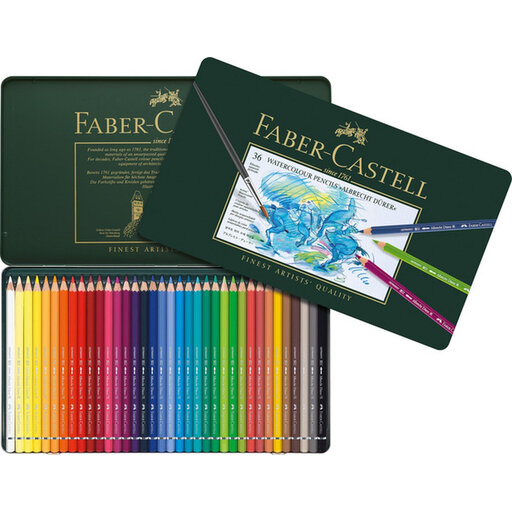
Why it suits this profile: For hobby artists and adults who want to draw dry as well as work with water.
The set is clearly described as water-soluble. This means you know in advance that you will need thicker paper and, potentially, a brush.
36 colours, a 3.8 mm HB core and a metal storage tin according to the product details.
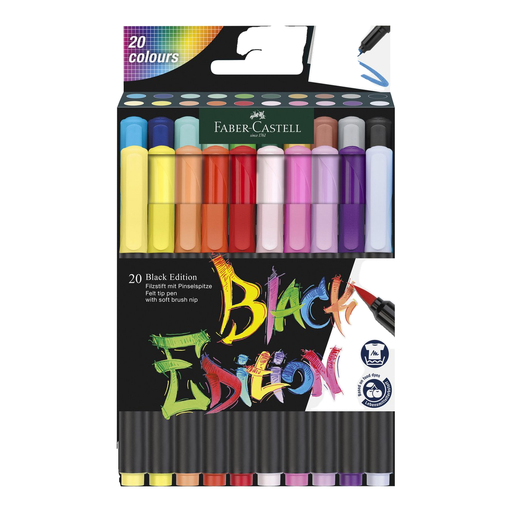
Why it suits this profile: Designed for hand lettering, small drawings and lettering where you want to create different line widths with a single pen.
The product information explicitly states that the pens are suitable for light-coloured paper, but not black paper. This helps prevent unrealistic expectations about the surface.
20 colours, a flexible brush tip and, according to the product description, washable dye-based ink.
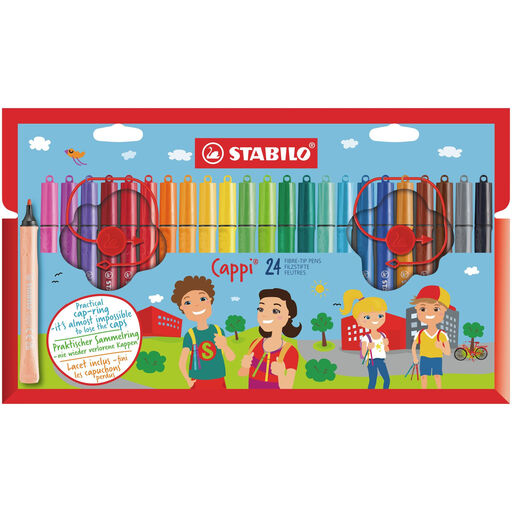
Why it suits this profile: Handy for children who colour at home and on the go, and for parents who want to keep loose caps to a minimum.
The caps can be attached to a cap ring. The product information also mentions an ergonomic grip and washable ink.
24 colours, a 1 mm tip and a shape that, according to the product description, won't roll off the table.
We've put together a complete, up-to-date list of products that fully meet these strict selection criteria and the applicable European safety regulations.
Coloured pencils offer greater control for details and shading. Felt-tip pens are quicker for colouring and provide a clear colour straight away. For young children, a sturdy tip, a comfortable shape and washable ink are important features to check.
Yes, but start with a small amount of water and use paper that is not too thin. Draw dry first, then dampen small areas and wait for the layer to dry before continuing. This makes it easier to see how much pigment you are using.
Put the cap back on immediately and check that it is closed properly. Store the set according to the product instructions: some pens can be stored horizontally, while others are more practical when kept upright. Avoid heat and direct sunlight.
