
Vandaag of morgen in huis

Kwaliteit gegarandeerd

Welkomstaanbiedingen ontgrendelen: GRATIS bezorging | Tot 80% korting | Gratis 30 dagen JoyPlus-proefperiode
Download de app
A coloured pen set may seem easy to choose, but the differences between gel pens, rollerball pens, ballpoint pens, fineliners and markers are noticeable in everyday use. A pen that writes comfortably in a diary is not automatically suitable for an exercise book, transparent film or a creative surface.
So don’t just look at the number of colours. Pay particular attention to the nib size, ink type, drying time and the surface the pen is designed for. This helps prevent colours from bleeding through the paper, the nib drying out quickly or a marker turning out to be unsuitable for your project.
A pack of 8 or 12 pens may look appealing, even though several colours are very similar. For colour-coding, clear differences between black, blue, red, green and accent colours are more important than simply having a high number of pens.
Also check the specific colour information. With some sets, the colour selection may vary from one batch to another. This is stated, for example, for the Deli 0.5 mm gel pens.
A pen with a 0.5 mm nib does not always produce a line exactly 0.5 mm wide. The final line depends on the nib design, the ink and the pressure you apply. A fine gel pen is generally suitable for small notes and journaling, while a 1 to 2 mm felt-tip pen is better for colouring and clear headings.
According to the product descriptions of various brands, quick-drying ink can reduce the risk of smudging. This is particularly relevant for left-handed writers, but the result also depends on the type of paper, writing speed and amount of ink. So test a new set first on the paper you use every day.
Also note the difference between standard writing ink, OHP markers and acrylic markers. An acrylic marker for glass or wood is not intended as a standard pen for an exercise book.
Use this guide as a starting point:
A fineliner is useful for precise lines, but check that the nib is suitable for the paper. For longer texts, many users prefer gel pens, rollerball pens or ballpoint pens.
Gel ink often feels smooth and is suitable for colour accents, bullet journals and creative notes. A retractable nib prevents you from losing a separate cap. With gel pens, however, it is important to retract the nib after use or close the cap securely.
Rollerball pens use liquid ink. According to the product description, the STABILO worker colorful has a writing width of 0.5 mm, a non-slip surface and liquid-ink technology. Liquid ink can flow smoothly, but always check for show-through when using thin paper.
Ballpoint pens are practical for forms, schoolwork and the office. According to the product specifications, the STABILO pointball colorful has a writing width of 0.5 mm and can be refilled with compatible STABILO refills. A refillable pen can be useful if you want to replace the refill rather than the entire pen.
For transparent film, plastic, glass, metal or ceramics, you need a suitable OHP marker. According to the product information, the STABILO OHPen universal is designed for smooth surfaces. Versions with erasable or permanent ink are available, so check carefully which one you are buying.
For wood, canvas, stone, ceramics and other creative surfaces, an acrylic marker may be more suitable. According to the product description, the Faber-Castell Acrylic Marker Set uses water-based acrylic ink and each marker has 1 and 3 mm nibs. The marker must be shaken and primed before use, following the stated instructions.
Store pen sets with the cap or nib securely closed, away from direct sunlight and at normal room temperature. For gel pens, the product information recommends storing them horizontally. When children are using them, always follow the small-parts warning; several sets are not suitable for children under 3 years of age.
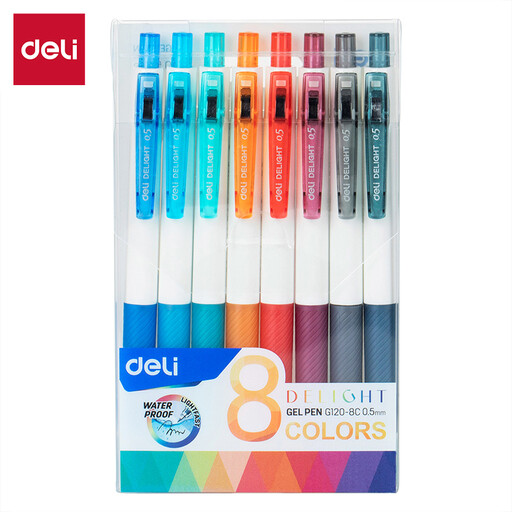
Why it suits this profile: A set of 8 colours is practical for school notes, diaries and simple journaling, without immediately having to buy several separate packs.
The product information states that it has a fine 0.5 mm nib and a rubber grip. When it arrives, check the exact colour distribution.
8 colours, 0.5 mm nib, gel ink and rubber grip according to the product specifications.
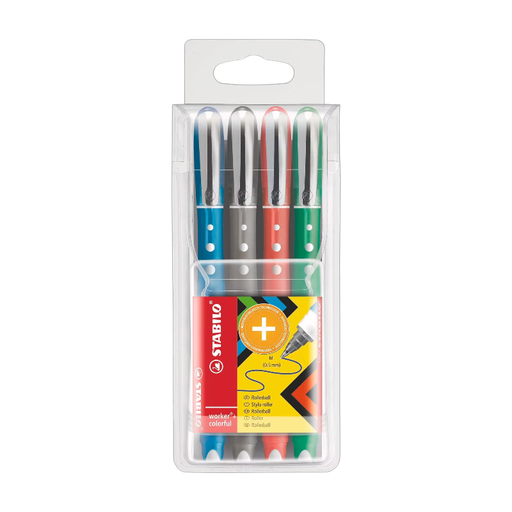
Why it suits this profile: Suitable for students and office professionals who write regularly and value a consistent line and a secure grip.
The set explicitly states that it has a 0.5 mm nib and a non-slip surface. The cap should be closed after use to limit drying out.
4 colours, rollerball ink, 0.5 mm writing width and grip along the length of the pen according to the product description.
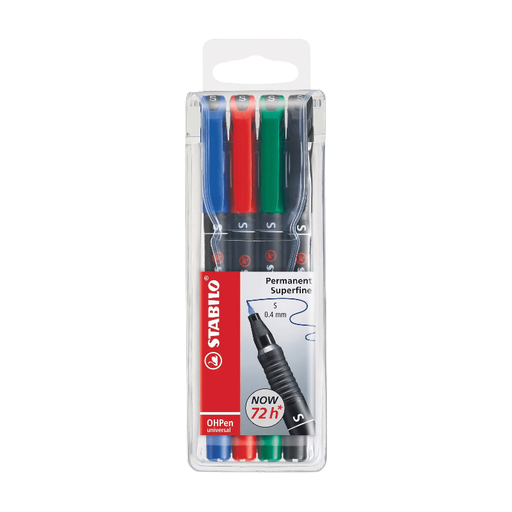
Why it suits this profile: This option is ideal for presentations, teaching materials and marking smooth surfaces such as plastic, glass or metal.
Its suitability for smooth surfaces is clearly described. Do not choose this marker for standard writing on thin paper.
4 colours, superfine nib, permanent ink and grip zone according to the product information.
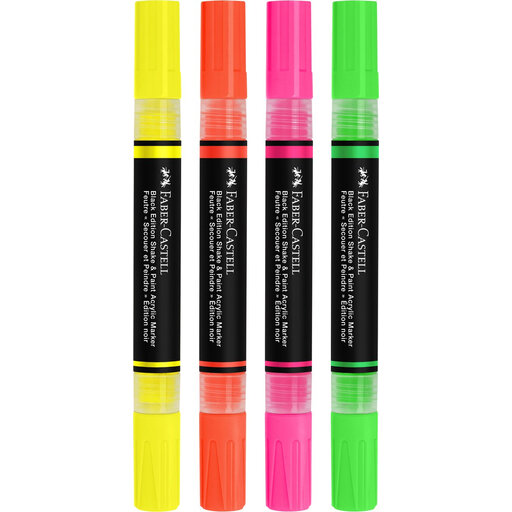
Why it suits this profile: An option for creative projects on surfaces including canvas, wood, stone, glass and ceramics, when ordinary pens are not up to the job.
The product is clearly described as an acrylic marker. This prevents you from using a writing pen on a surface it was not designed for.
4 neon colours and two nib sizes of 1 and 3 mm according to the product description; activation is done by shaking and pumping.
We have put together a complete, up-to-date list of products that fully meet these strict selection criteria and the applicable European safety regulations.
For journaling, 0.5 or 0.7 mm gel pens and fine rollerball pens are practical choices. They give you enough room for small lettering and colour-coding. Check that the ink dries quickly and test the pen on your journal paper to help minimise show-through and smudging.
Its lifespan depends on the amount of ink, how often it is used, storage and whether the cap or nib is closed. A pen that is often left open may dry out more quickly. With a refillable ballpoint pen, you can replace the refill; many gel pens and markers are designed to be disposable. The statutory guarantee for a product remains separate from normal wear and tear or an empty ink refill.
Yes, but choose the type according to the task. Ballpoint pens are suitable for forms and everyday writing, gel pens for colour-coding and notes, rollerball pens for smooth writing and highlighters for emphasising text. For transparent film or smooth materials, use OHP markers. When young children are using them, always check the age warnings and keep loose caps out of reach.
