
Reader studying colour details
You compare reproductions, details and captions. Screen colour, space for a full page and visibility in daylight all play a part in your choice.


For reading about art history in bright daylight, a colour tablet may suit you better if you want to assess colours and fine details. For extended reading outdoors and making notes, a larger colour e-ink device may be a better fit. A screen size or brightness specification doesn’t guarantee that your book will be easy to read in direct sunlight. So, view a page of your own on the device you’re considering, and weigh screen space against portability and the writing and app features you need.
You compare reproductions, details and captions. Screen colour, space for a full page and visibility in daylight all play a part in your choice.
You read outdoors for extended periods and want to highlight text or documents. You weigh reduced glare and writing features against colour reproduction and app choice.
You often take reading material with you and are happy with a smaller screen, as long as the text and images you use remain easy to read.
Start with the pages you read and the conditions you view them in. Then consider how important note-taking and portability are to you.
| What to consider | What to look for | Who is this important for? |
|---|---|---|
| Colour and bright daylight | View your own images in similar lighting; distinguish SDR brightness from an HDR peak value, and check the exact screen configuration. | If I want to assess colours and fine details outdoors, visibility and colour reproduction come first; around 40% of consumers prioritise colour and visibility in bright daylight. |
| Full-page viewing | Open a representative page and view both the image and caption; check how much zooming is needed. | When I read art books or full-page PDFs, I want to see images and captions clearly; around 30% of consumers prioritise space for a full page. |
| Reading and annotating outdoors | Try highlighting and writing in one of your own files; check whether the pen and features you want are included with that configuration. | If I read outdoors and take notes for extended periods, I want to know whether my documents work well with the pen; around 15% of consumers prioritise reading and annotating. |
| Portability and configuration | Balance screen size against portability, and check which screen version and accessories you need. | When I often take my reading material with me, I want a handy device and clarity about the configuration before buying; around 15% of consumers prioritise portability and getting the right set-up. |
Apple lists a maximum SDR brightness of 1000 nits for the iPad Pro; the 1600-nit peak applies only to HDR content. So, that HDR value doesn’t tell you how a standard book page will look.
Compare the SDR specification and check reflections using a page of your own in lighting similar to the conditions you’ll be reading in.
Kobo lists a 7-inch screen for the Kobo Libra Colour; BOOX gives a size of 10.3 inches for the Note Air4 C, and reMarkable lists 11.8 inches for the Paper Pro. How useful that space is also depends on the page layout.
Open an image with a small caption from the file you want to read, and check whether you can see enough detail without having to zoom in too much.
Apple says nano-texture glass is only available as an option on configurations with 1 TB or 2 TB of storage.
Before buying, check the screen size, storage and glass type for the exact configuration.
The iPad Pro M5 is a versatile colour tablet with an 11- or 13-inch screen.
The Galaxy Tab S12 series is worth considering if you’re looking for a large Android tablet with pen features.
The Note Air4 C is designed for reading and note-taking, with a 10.3-inch colour e-ink screen.
According to reMarkable, the Paper Pro has an 11.8-inch reflective colour screen for reading and writing.
The Libra Colour is a compact colour e-reader for those who value portability over space for a full page.
This selection includes colour tablets for viewing larger pages and compact colour e-readers for taking your reading material with you.
 No image available
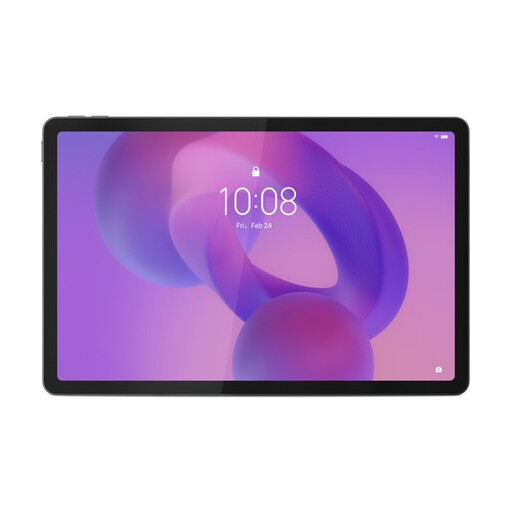
The screen space may suit viewing images and captions, but a stated brightness doesn’t guarantee readability in direct sunlight.
The screen has a resolution of 2944 × 1840, a stated brightness of 400 nits and 96% DCI-P3 colour coverage. The product description says a Lenovo Tab Pen Plus is included.
 No image available
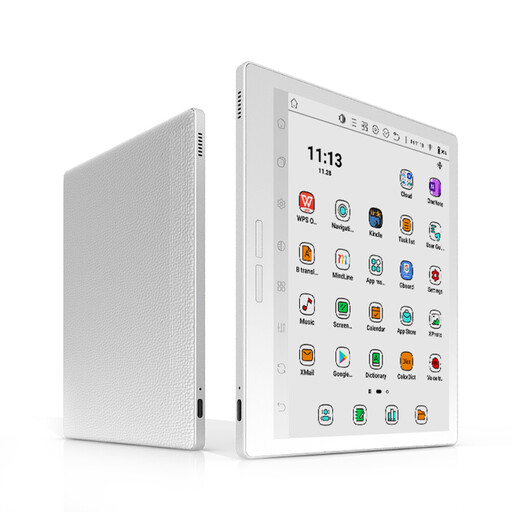
The compact size may suit text-focused reading on the go; view a full art-book page to see whether there’s enough screen space for you.
The product title lists a 7-inch colour e-ink screen, 300 ppi and a 36-level frontlight. According to the product description, a power adapter is not included.
 No image available
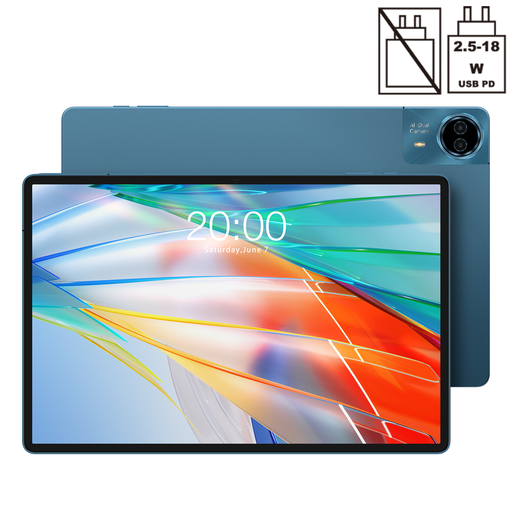
The 14-inch screen may offer space for large pages, but the product description advises against prolonged exposure to sunlight.
The product title lists a resolution of 2240 × 1400 and Android 15. The stated specifications don’t clarify the screen’s brightness or colour coverage.
 No image available
The larger screen and included stylus may suit viewing pages and taking notes; the product description advises against prolonged exposure to sunlight.
The product title lists 20GB RAM, comprising 8GB plus 12GB of virtual memory, and 256GB of storage.
 No image available
The compact e-ink format may suit reading on the go, but offers little space for full-page art books.
The product description lists Android 14 and Kaleido 3. E Ink specifies 300 ppi in black and white and 150 ppi in colour for this screen type.
Not always. Apple specifies a maximum of 1000 nits for SDR on the iPad Pro; 1600 nits is a peak value that applies only to HDR content. For books, compare the SDR specification and, if possible, assess the screen using your own material.
Open a representative page from one of your own files and view both an image and a small caption. Also try zooming and the annotation feature you want, and check whether the pen is included with the configuration you’ve chosen.
For eligible online purchases made at a distance, a 14-day cooling-off period usually applies, although there are exceptions. You’re also entitled to a product that meets legal standards. According to the Dutch government, there’s no fixed statutory warranty period in the Netherlands.