Who is this choice relevant to?

Student carrying out simple collision experiments

You’re investigating 1D or 2D collisions and don’t want to choose more hardware than your software needs. Check your course requirements too. PhET Interactive Simulations at the University of Colorado Boulder describes Collision Lab as an HTML5 simulation for several types of device.

Student using demanding 3D simulations

You want to simulate vehicle collisions or complex objects, so you’ll get more value from checking the full specification than relying on the ‘gaming’ label alone. BeamNG warns that laptop components with similar names may be slower than their desktop counterparts.

Student combining study and gaming

You’re looking for one laptop for studying, simulations and games, but you may also want to take it with you and use it in your room. Weigh up the full specification against screen size, weight and the power adapter supplied with that particular configuration.

What should you look for?

Simple browser-based experiments

Suitable for: investigating things such as mass, speed and momentum with a simple 1D or 2D simulation.

Trade-off: this type of application doesn’t automatically call for gaming hardware, but it doesn’t tell you what another study application might need.

Demanding 3D vehicle simulations

Suitable for: using BeamNG.drive or similarly demanding 3D simulations.

Trade-off: you may need more memory and graphics capability, while larger or heavier laptops can be less convenient to carry around.

What to consider What should you check? Who should pay particular attention?
Software compatibility Look up the system requirements for the exact simulation programme and check any requirements set by your course. If I mainly want to know whether my required programme will work, I’ll check the software first rather than focusing only on the type of laptop. Around 31% of consumers put programme compatibility first.
Processing power for 3D Compare the processor, RAM and dedicated GPU memory of the complete configuration. BeamNG lists desktop requirements; these aren’t a laptop benchmark. For complex collision scenes, I want to compare the full specification with the programme requirements rather than rely on a single GPU name. Around 25% of consumers give demanding 3D processing power top priority.
Portability and workspace Check the weight, dimensions and how much space the laptop and power adapter will take up on your desk. If I’m taking my laptop to lectures and using it in a small room, I’ll weigh ease of carrying against screen size. Around 25% of consumers prioritise this practical combination.
Total cost and aftercare Check whether a suitable adapter is included and what warranty terms apply. I want to know in advance what I’ll need for my intended use and what aftercare is available. Around 19% of consumers prioritise total cost and aftercare.

Common buying mistakes

  • Buying a gaming laptop before checking which programme you’ll use

    A simple browser-based experiment and a demanding 3D vehicle simulator have different requirements. Without knowing the programme’s name, it’s difficult to tell which configuration will suit your assignment.

    First, note the application you need, then check its official system requirements and any requirements set by your course.

  • Assuming a GPU name or desktop requirement guarantees laptop performance

    BeamNG warns that laptop components with similar names may be slower than their desktop counterparts. Tweakers also described differences between the gaming laptops it tested, where the GPU power budget played a part; this wasn’t a BeamNG test.

    Compare the complete laptop specification and relevant tests. Don’t infer BeamNG frame rates from tests of other games.

  • Assuming the adapter always comes with the laptop

    For one ASUS TUF Gaming A16 configuration it reviewed, ASUS states that the adapter isn’t included, while an HP OMEN listing says an adapter is supplied.

    Check the box contents and the power requirements for the exact configuration before comparing offers.

  • Treating similar model names as the same product

    The Lenovo Legion 5 15IAX11 in Notebookcheck’s ranking has a different model number from the Legion 5 15IAX10. These model names therefore don’t necessarily refer to the same configuration.

    Compare the full model number and check the specification, power adapter and warranty for the product you’re considering.

Brands to consider

ASUS

The TUF Gaming A16 is one example of a configuration that combines study and 3D gaming. Check the specification for the complete model.

  • For the configuration reviewed, ASUS lists a Ryzen 7 260, RTX 5060, 16 GB RAM, 1 TB SSD and a weight of 2,20 kg, among other details.
  • ASUS says that no power adapter is included with that configuration. These are product details, not a BeamNG performance test.

Lenovo

Lenovo describes the LOQ 15IRX10 range as aimed at students and gamers; a Legion configuration belongs to a different product range.

  • Lenovo lists Intel HX processors and RTX 50 Series options for the LOQ range.
  • Range-level information doesn’t confirm the specifications of every configuration. Check the full model number and memory details.

HP

The OMEN range includes configurations for a mix of studying and gaming.

  • For the OMEN 16-ap1678nd, HP lists 16 GB RAM, a 512 GB SSD, an RTX 5060 with 8 GB and an included 280 W adapter, among other details.
  • These product specifications don’t show whether the configuration is suitable for a particular simulation scene.

Acer

The Nitro V 16 AI is a relevant entry-level gaming range to compare in terms of exact specifications and performance.

  • Tweakers included the Acer Nitro V 16 AI ANV16-42-R8PW in processor tests.
  • Those test results don’t measure collision simulations and don’t automatically indicate the performance of other Nitro configurations.

MSI

The MSI series reviewed include various configurations; assess the full model specification rather than relying on the series name alone.

  • Tweakers has published processor tests for various models, including MSI configurations.
  • Differences between tested models don’t establish an overall MSI or BeamNG ranking.

Joybuy laptops for 3D simulations

These are gaming laptops for demanding 3D simulations. Compare their specifications with your programme’s requirements, and bear portability in mind.

MSI Titan 18 HX AI A2XWJG-492NL gaming laptop

MSI Titan 18 HX AI A2XWJG-492NL

The listed specification is worth comparing with the requirements for demanding 3D simulations. At 3,6 kg, this laptop is less practical to carry around regularly.

18-inch UHD+ Mini LED display, Intel Core Ultra 9 285HX, 64 GB DDR5, 6 TB SSD, NVIDIA GeForce RTX 5090 with 24 GB graphics memory and Windows 11 Pro.

Joybuy
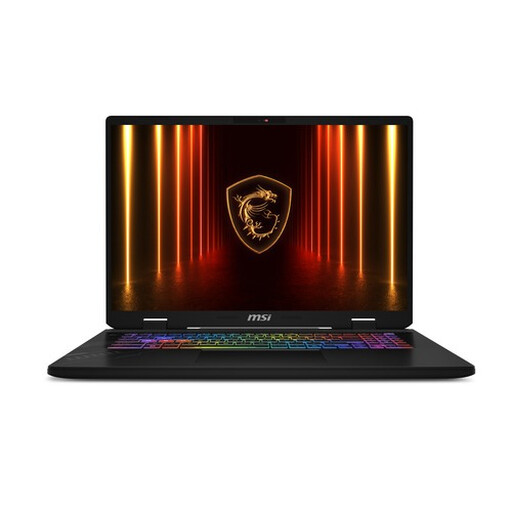
MSI Crosshair 17 HX AI D2XWFKG-071NL gaming laptop

MSI Crosshair 17 HX AI D2XWFKG-071NL

This specification is one option to compare with the requirements of a demanding 3D simulation. The 17-inch size and 2,8 kg weight make it less convenient to carry around regularly.

Intel Core Ultra 7 255HX, 32 GB DDR5, 1 TB SSD, NVIDIA GeForce RTX 5060 with 8 GB, 17-inch QHD+ display with 2560 × 1600 pixels and Windows 11 Home.

Joybuy

ASUS ROG Zephyrus G14 GA403UM-QS024W gaming laptop

ASUS ROG Zephyrus G14 GA403UM-QS024W

The 14-inch size and listed weight of 1,50 kg are worth considering if you regularly take your laptop with you. Compare the specification with your simulation’s requirements.

AMD Ryzen 9 270, NVIDIA GeForce RTX 5060, 16 GB RAM, 1 TB SSD and QWERTY keyboard.

Joybuy
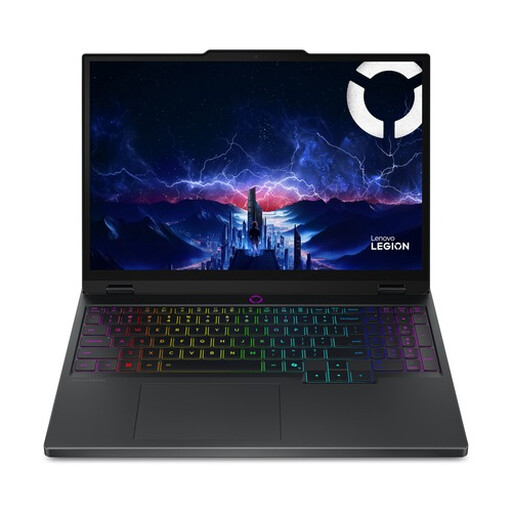
Lenovo Legion 5 15IAX10 gaming laptop

Lenovo Legion 5 15IAX10

The 15,1-inch size may suit studying. Check the memory configuration and adapter before choosing this model for a demanding simulation.

Intel Core Ultra 7 255HX, NVIDIA GeForce RTX 5070 with 8 GB, 16 GB RAM, 512 GB SSD and a 15,1-inch WQXGA OLED display with 2560 × 1600 pixels. The product description says the power adapter must be purchased separately.

Joybuy

ASUS TUF Gaming A18 FA808UP-S8011W gaming laptop

ASUS TUF Gaming A18 FA808UP-S8011W

The 18-inch size is a trade-off if you plan to carry the laptop around often. Compare the specification with your simulation programme’s requirements.

AMD Ryzen 7 260, NVIDIA GeForce RTX 5070 with 8 GB, 16 GB RAM, 1 TB SSD and an 18-inch WUXGA display. The product description says the power adapter must be purchased separately.

Joybuy

Frequently asked questions

Do I always need a gaming laptop for a collision experiment?

No, not for every collision experiment. PhET Collision Lab offers simple 1D and 2D experiments as an HTML5 simulation and lists Chromebooks, PCs and Macs among the supported device types. If your course requires a different application, its requirements will determine what you need.

How much storage space does BeamNG.drive need?

BeamNG lists 60 GB of free storage for the basic installation. Mods may need more space, so consider how much storage you want to leave available alongside the programme and your study files.

Do I need to buy a power adapter separately?

It depends on the exact configuration. For the TUF Gaming A16 reviewed, ASUS states that no adapter is included, while HP lists an adapter for the OMEN 16-ap1678nd reviewed. The European Commission says that the common charging rules have applied to laptops since 28 April 2026, and that consumers can buy a device without a new charger. Check the charging requirements and what’s included in the box.

What warranty applies if I buy as a consumer in the Netherlands?

According to the Dutch government, you’re entitled to a product that works as it should; the Netherlands has no fixed statutory warranty period. If a product is faulty, the seller must generally provide a solution. A manufacturer’s warranty or paid extended warranty is in addition to your statutory rights.

Can I return a laptop bought online?

According to the Dutch government, when you buy from a business at a distance, you’ll often have a 14-day cooling-off period. Check the terms that apply to your purchase; according to the government’s guidance, an online purchase from a private individual doesn’t fall under the same definition of distance selling.
