
Vandaag of morgen in huis

Kwaliteit gegarandeerd

Welkomstaanbiedingen ontgrendelen: GRATIS bezorging | Tot 80% korting | Gratis 30 dagen JoyPlus-proefperiode
Download de app
When looking for collagen for your skin, you can choose from powders, tablets, drinks, serums and masks. The product format does not automatically determine which option is right for you. More important factors include the amount of collagen per recommended serving, additional ingredients, allergens and ease of use.
Marketing copy sometimes makes big promises about skin elasticity, hydration or firmness. Always check the product packaging and nutritional information before placing your order.
For example, a pack may state “10,000 mg of collagen”, but this could refer to one bottle, several tablets or a full daily serving. Always compare products on the same basis: the amount of collagen per recommended daily serving.
Also pay attention to the difference between a supplement and skincare. A collagen serum is applied to the skin and does not provide a nutritional dose like a collagen supplement.
Vitamin C contributes to normal collagen formation and the normal function of the skin according to permitted European nutrition claims. This does not mean that every product containing vitamin C will automatically deliver visibly firmer skin. Hyaluronic acid occurs naturally in the body, but its presence in a product is not, by itself, a guarantee of a particular result.
So check the amount of vitamin C and hyaluronic acid, rather than just the name on the front of the pack.
Marine collagen usually comes from fish. A product containing bovine collagen is not suitable for someone who wants to avoid fish or animal-derived ingredients. “Vegan collagen” generally refers to a plant-based collagen-like peptide or ingredients that support normal collagen formation; it is not the same as animal-derived collagen.
Also check the allergen information. With marine collagen, fish is an important consideration, even when the product is supplied as a powder, tablet or liquid.
Start by checking the source: marine collagen, bovine collagen or a plant-based alternative. Then check the daily dosage:
These figures are only meaningful when you also take the recommended frequency of use and serving size into account.
A formula containing collagen with vitamin C may be appealing if you want to combine both ingredients in one daily product. According to the product information, Lucovitaal Collagen Powder contains 60 mg of vitamin C and 20 mg of hyaluronic acid per serving. The marine effervescent tablets contain 80 mg of vitamin C, 4 mg of hyaluronic acid and 100 mg of rosehip extract per tablet.
Always compare the quantities with the recommended dosage. More ingredients do not automatically mean that a product is better suited to you.
The most convenient format is the one you can use consistently:
Pay attention to storage instructions, the best-before date and the period after opening. For supplements, do not exceed the recommended daily dosage and do not use them as a substitute for a varied diet.
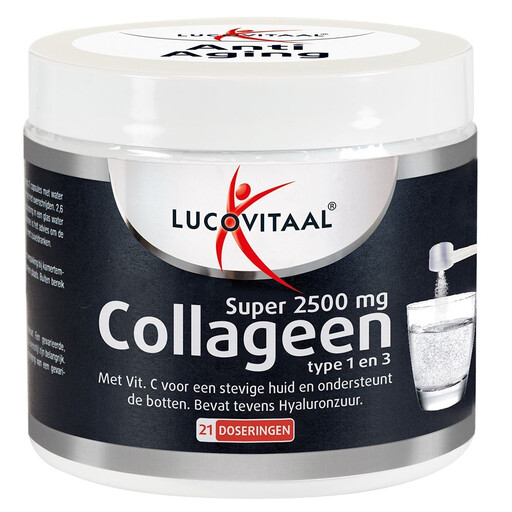
Why it suits this profile: A pre-measured powder serving can be an easy starting point for adults who want to try collagen with vitamin C and hyaluronic acid without taking several tablets every day.
The product information states the amount per serving, 21 servings and clear preparation instructions for mixing 2.6 grams with approximately 250 ml of liquid.
2,500 mg of collagen peptides, 60 mg of vitamin C and 20 mg of hyaluronic acid per serving; according to the product information, free from the 14 major EU allergens.
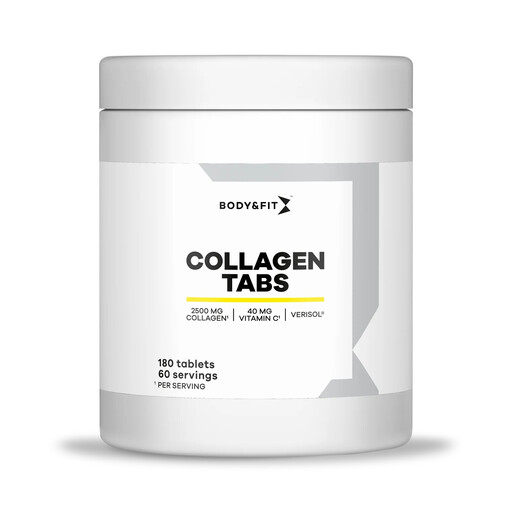
Why it suits this profile: Ideal for anyone who values a fixed dosage and a generous supply, and would rather take tablets than mix powder.
The recommended amount is clearly stated: 3 tablets per day. This means you do not have to work out the marketing claim for yourself.
180 tablets, 60 servings, 2,500 mg of Verisol collagen and 40 mg of vitamin C per daily serving.

Why it suits this profile: For anyone who wants a pre-measured liquid collagen shot to take on the go, without mixing, measuring or swallowing tablets.
The dosage is fixed per bottle. However, check the label for fish, as the product information states that it may contain fish.
30 servings of 25 ml; according to the product information, 12,500 mg of hydrolysed marine collagen per serving, supplemented with hyaluronic acid, vitamin C, biotin and vitamin D.

Why it suits this profile: A practical choice for anyone who wants to combine collagen-rich skincare directly with a daily face and neck routine.
The instructions are clear: apply 2 to 3 drops to the face and neck. Do not use this product as a replacement for a supplement.
30 ml of serum with marine collagen, amino acids, aloe vera extract and glycerine; according to the product description, its lightweight texture is suitable for use under a moisturiser.
We have put together a complete, up-to-date list of products that fully meet these strict selection criteria and the applicable European safety regulations.
An immediate visible effect cannot be guaranteed. Skin type, routine, sun exposure and age also play a role in skincare. Use a serum according to the label and do not judge a supplement solely by its advertising claims. Brand product descriptions may mention benefits, but claims based on a brand’s own research are not the same as a universal guarantee.
No. Marine collagen comes from fish and is therefore not suitable for people who want to avoid fish or are allergic to it. Always check the allergen information on the packaging. Anyone wishing to avoid animal-derived ingredients can consider a vegan collagen alternative, but check exactly what it contains: a plant-based product usually contains no animal-derived collagen.
This depends on the pack size and dosage. Lucovitaal Collagen Powder contains 21 servings, Body & Fit Collagen Tabs provide 60 servings and Swedish Collagen Deluxe Shots contain 30 bottles. Store the product according to the label, keep powders and effervescent tablets tightly sealed, and check the best-before date. This allows you to compare not only the purchase price but also the cost per daily serving.
