
Makers who want to capture colour
You want to document the whole panel clearly under artificial light and can include a grey card or colour reference in your workflow.


Start by taking a test shot with the camera you already own. For an accurate overall image, even lighting, a stable set-up and control over white balance matter more than a particular camera model. A mirrorless camera with a suitable lens and RAW shooting may suit a repeatable workflow or close-ups of fine details. Check your own lights for visible reflections or bands.
You want to document the whole panel clearly under artificial light and can include a grey card or colour reference in your workflow.
As well as an overall image, you need photos that show the texture of the paper, the edges and small details.
You need to position the camera, panel and lights in the space available, and want to check first whether your current equipment will do the job.
First, test whether your current camera can capture the panel as you want with a fixed, stable set-up. Only consider a different lens or camera if you need a different angle of view, close-ups of details or a repeatable RAW workflow.
| What to consider | What should you check? | Who is this important for? |
|---|---|---|
| Colour reproduction | Check whether the camera offers custom white balance and, for post-processing, RAW shooting. Assess a test image using a grey card or colour reference. | If you want to capture colours consistently, prioritise white balance and a reference card. Around 31% of consumers say colour reproduction is their main concern. |
| Light and reflections | Take test shots with your own lights and check for hotspots, shadows and bands. National Museums Scotland advises switching off other ceiling lights when using LED lighting to reduce the mixing of different light sources. | If your lights cause reflections or uneven illumination, you’ll want to be able to adjust their position and settings. Around 25% of consumers give controlling artificial light their highest priority. |
| Overall image and details | Measure the panel and the available shooting distance. Check that your chosen lens can capture the entire panel and the small details you want in focus. | If you need both an overall image and close-ups of small details, pay attention to framing and lens choice. Around 25% of consumers prioritise detail. |
| Space and complete set-up | Set up a test arrangement and check whether you’re choosing a camera body or a kit with a lens. Allow space for the camera, lights and a neutral background. | If your workspace is limited, you’ll want to know in advance which components will fit in your set-up and what you already have. Around 19% of consumers say the practical set-up is their main concern. |
The lens and the position of the lights both affect whether the panel fits into the frame and is evenly lit at your shooting distance.
Check exactly what’s included and, if possible, set up your equipment for a test shot first.
A suitable lens, lighting, mount or colour reference may need to be purchased separately as part of your set-up.
A resolution figure doesn’t tell you whether mixed lighting, reflections and white balance will reproduce the colours of your collage accurately.
Assess test images under your own lights, using a grey card or colour reference if needed.
Raking light can reveal texture through shadows, but it doesn’t always provide an even overview of the whole panel.
If needed, take separate images: an evenly lit overview and a shot with raking light to show the texture.
Canon Europe explains that flickering LED or fluorescent light can cause bands with certain electronic shutter settings.
Check test shots for bands and, if necessary, try another available shutter setting.
The EOS R50 is an APS-C mirrorless camera for anyone looking to choose an RF or RF-S lens to suit their shooting distance.
The Sony ILCE-6400 is an APS-C camera with an E-mount, for anyone wanting to use RAW and custom white balance in their workflow.
The X-S20 may suit anyone who also wants to use RAW shooting and in-body stabilisation beyond a fixed panel set-up.
Joybuy product options related to digital photography of collage panels.
 No image available
The product title states 18× zoom. Take a test shot to check whether you can frame the whole panel clearly and at the right size from the available distance.
The title also states 80MP and UHD. These are product claims, not independent measurements of detail reproduction.
 No image available
The product title states 12× optical zoom. Check whether this lets you frame the panel as you want from your intended shooting distance.
The title also mentions 4K video and Wi-Fi. For collage photography, use test shots to check whether the colour, sharpness and crop meet your requirements.
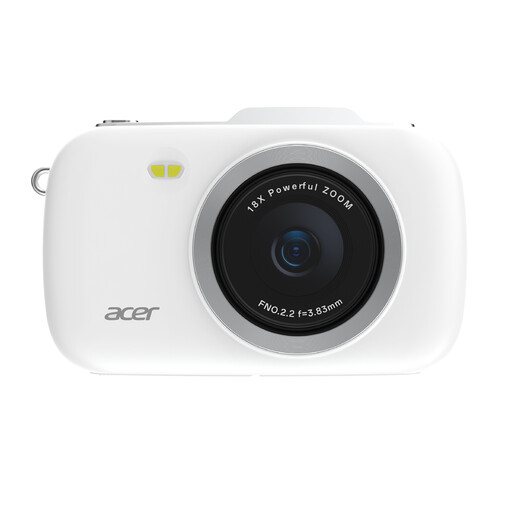 No image available
The product title states 18× zoom. Take a test shot to see whether the whole panel fits into the frame from your working distance.
The stated 80MP is a product claim, not an independent indication of the sharpness or colour reproduction of collage photos.
 No image available
The product title states 10× optical zoom. Check with a test shot whether the camera can capture the whole panel and the details you want.
The stated 56MP is a product claim and doesn’t guarantee that colours under artificial light will match the original.
 No image available
This mirrorless camera with a kit lens may suit anyone looking for an interchangeable-lens camera. Check that the zoom range is right for your panel and shooting distance.
The product description lists a 24.2 MP APS-C sensor, a Sony E-mount and a 16–50mm kit lens. These specifications alone don’t determine the colour reproduction or sharpness of your test shots.
Start with an overall shot using controlled, even lighting; a reflector or second light can brighten a darker side. If needed, also take a shot with lower-positioned raking light. Shadows reveal the texture, but the image will be less evenly lit.
First, check a test shot for bands. Canon Europe explains that flickering LED or fluorescent light can cause bands with certain electronic shutter settings; the Nikon Z50II manual covers settings to reduce high-frequency flicker. Test which available setting works with your camera and lights.
It depends on the crop you want, your shooting distance and what’s included in the set on offer. Check with the exact lens whether you can frame the whole panel, and whether you’re buying a body or a kit with a lens. For consistent colour, you could also make room for a grey card or colour reference.
When you buy as a consumer in the Netherlands, you’re entitled to a product that conforms to the agreement. The Dutch Government says you should contact the seller to resolve any problems, even if the product has a manufacturer’s warranty. For eligible online distance sales, there is usually a statutory 14-day cooling-off period, with some exceptions.
Not automatically: taking a photo of the collage yourself doesn’t automatically give you permission to publish other people’s protected work. The Dutch Government says that a private copy for personal use must not be distributed. Whether you need permission for your collage depends on the works used and the rights that apply to them.