Which type is right for you?

Cook with limited worktop space

If you want to blend cold tomato soup without leaving a large blender on the worktop, a hand blender used in a suitable bowl or pan can save space. The Consumers’ Association discusses the difference between blending directly in a container and using a separate blender jug.

Maker of small batches

If you usually make one small portion, compare the recommended filling capacity with the amount of soup you want to make. A cup’s stated capacity is not necessarily the same as its recommended fill level.

Cook for several people

If you often make soup for several people, weigh up the usable capacity of a blender jug against the extra space it takes up and the washing-up involved. For example, Philips lists a maximum capacity of 1.9 litres and an effective capacity of 1 litre for the HR2041/00.

What should you look for when choosing?

Hand blender

Right for you if: you want to blend directly in a suitable bowl or pan without leaving a separate blender jug on the worktop.

The trade-off: the Consumers’ Association says a hand blender is handy for small portions, but notes that the result can sometimes be less even than with a blender.

Personal or compact cup blender

Right for you if: you usually make a small portion and want an appliance with a small footprint.

The trade-off: check the fill line and manual; a cup’s stated capacity does not automatically tell you how much soup you can safely blend.

Jug blender

Right for you if: you regularly make several portions and want to blend them all at once.

The trade-off: according to the Consumers’ Association, a blender generally takes up more space and often creates more washing-up than a hand blender.

What to consider What to check before buying Who this matters to
Space and storage Compare the appliance’s dimensions with the space taken up by the jug or cup when it is in place. If I have limited worktop or cupboard space, I want to know where I can put the appliance after use. Around 36% of consumers put space first.
Portion size Compare the recommended filling capacity with your portion; don’t look only at the stated capacity. For one or a few portions, I don’t want to make more soup than necessary each time. Around 29% of consumers prioritise making the right amount per batch.
Consistency Check whether the manual says the appliance is suitable for liquid recipes and your ingredients. If a smooth, even soup matters most to me, I want to factor that into my choice. Around 21% of consumers put texture first.
Cleaning Check which parts can be removed and which the manufacturer says are dishwasher-safe. After making a small batch, I want to wash as few parts by hand as possible. Around 14% of consumers prioritise easy cleaning.

Common buying mistakes

  • Assuming the jug’s stated capacity is the amount of soup you can blend

    A large stated capacity does not mean you can fill the jug with soup to that level. Philips lists a maximum capacity of 1.9 litres and an effective capacity of 1 litre for the HR2041/00 blender.

    Compare the effective capacity and check the fill line on the exact model before choosing it for several portions.

    If the usable capacity is smaller, soup for several people may need to be blended in more than one batch, which means extra washing-up.

  • Assuming every compact cup blender works in the same way for soup

    Cup sizes and instructions vary by model. Tefal explicitly lists cold soup as a use for the Blend Up BL19H4F0; this use is not explicitly mentioned for the Nutribullet Original 600.

    For your recipe, check the manual, fill line and required amount of liquid. Don’t assume an appliance is suitable just because it is compact.

  • Focusing only on motor power

    Power alone doesn’t tell you which appliance best suits your portion size, available space or cleaning preferences. For the Braun MultiQuick 5 MQ50001M, the manufacturer lists 1000 W in the description and 750 W in the technical specifications.

    First choose the type of appliance that suits the way you’ll use it. If power is important to your decision, check the documentation for the exact model.

Brands to consider

Braun

The MultiQuick 5 MQ50001M is a hand blender for blending in a suitable container, without the need for a separate blender jug.

  • Braun lists 21 speed settings and a measuring beaker included.
  • The manufacturer lists both 1000 W and 750 W for this model; check the model documentation if the power rating will affect your choice.

Bosch

The ErgoMixx MSM66110 is a hand blender for anyone who values blending directly in a container and having a removable blending foot.

  • Bosch specifies 600 W, two speed settings and a removable metal blending foot. The dimensions are 393 × 55 × 62 mm.
  • Check that the included parts suit your container and cleaning preferences. Bosch makes the claims about blending performance.

Tefal

The Blend Up BL19H4F0 is a compact cup blender that Tefal explicitly says can be used to make cold soup.

  • Tefal lists 400 ml and 700 ml cups, removable blades and dishwasher-safe bottles.
  • The cup size doesn’t automatically tell you the safe maximum fill level. Follow the fill line and manual; descriptions of programmes and performance are Tefal’s claims.

Nutribullet

The Original 600 NB603DG is a personal blender with a 700 ml cup, designed for small, liquid batches.

  • Nutribullet specifies a 600 W motor base and dimensions of 343 × 140 × 140 mm.
  • The product page doesn’t mention a specific tomato soup test. Check the fill line and manual for your recipe; the claim about producing a smooth result comes from the manufacturer.

Philips

The 3000 Series HR2041/00 has a blender jug for anyone who wants to make several portions or blend liquid recipes.

  • Philips specifies 450 W, one speed plus a pulse setting, a maximum capacity of 1.9 litres and an effective capacity of 1 litre.
  • A blender jug may take up more space and create more washing-up than a hand blender. Philips makes the claim about blending quickly to a smooth consistency; it is not an independent test of the model.

Joybuy products for cold soup

This selection includes hand blenders for blending soup in a suitable container and compact blenders for smaller batches. Before making cold tomato soup, check the manual, filling capacity and cleaning instructions for each model.
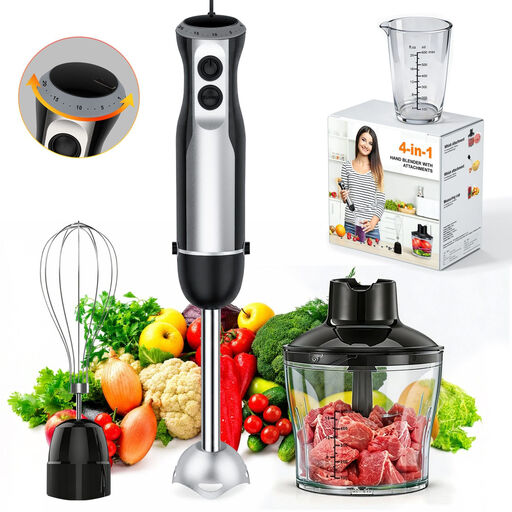
1000 W 4-in-1 hand blender

1000 W 4-in-1 hand blender

A hand blender can be handy if you want to blend soup directly in a suitable bowl or pan.

The product name lists 20 speed settings and a turbo function.

Joybuy

Royalty Line 800 W hand blender, stainless steel

Royalty Line 800 W hand blender

A hand blender is an option if you want to blend soup in a suitable container without using a separate blender jug.

The product name lists a stainless steel finish and variable speed control.

Joybuy
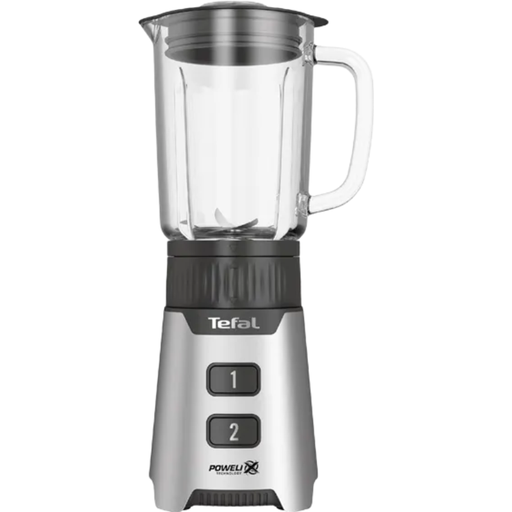
Tefal BL16GE30 mini blender, 400 W

Tefal BL16GE30 mini blender, 400 W

A compact blender may suit smaller batches; check the manual for the permitted amount of cold soup.

The product name lists a 700 ml capacity and a portable design.

Joybuy

Ochama 600 W 4-in-1 hand blender with chopper and measuring beakers

Ochama 600 W 4-in-1 hand blender

This hand blender may suit anyone who wants to blend soup directly in a suitable container.

The product name lists a 500 ml chopper and an 800 ml measuring beaker. Check the manual for instructions on using these accessories.

Joybuy
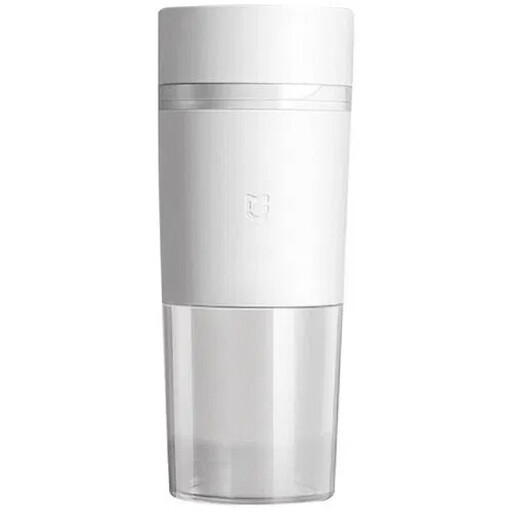
Xiaomi Portable Blender EU

Xiaomi Portable Blender EU

This portable model may appeal if a compact set-up is important; first check whether the manual allows you to blend cold soup.

The instructions warn against blending hot liquids.

Joybuy

Frequently asked questions

Does a blender also need to heat the tomato soup?

No, not for cold tomato soup. Do check that the specific model is suitable for the ingredients and quantity you want to blend; Tefal explicitly lists cold soup as a use for the Blend Up BL19H4F0.

What should you check before first use and when cleaning?

Follow the manual for the exact model for assembly, fill limits and cleaning. For the Nutribullet Original 600, the manufacturer instructs you to rinse the blade with soap and water and put the cups on the top rack of the dishwasher; don’t assume these instructions apply to other models.

What are your rights if a blender bought online disappoints or develops a fault?

For most online purchases from a business, the Dutch government says you have a 14-day cooling-off period; the applicable terms and exceptions still matter. If a product is faulty, contact the seller. The Netherlands has no fixed statutory guarantee period: what you can reasonably expect from a product is taken into account.

What rules apply in the Netherlands to parts that come into contact with soup?

The European Commission states that materials placed on the European market for contact with food must comply with Regulation (EC) No 1935/2004. The Netherlands Food and Consumer Product Safety Authority also refers to the Commodities Act Decree on Packaging and Consumer Articles. These rules alone do not confirm that a specific model complies with them.

How should you store leftover cold soup?

The Netherlands Nutrition Centre advises keeping prepared leftovers in the fridge for no more than two days, preferably in clean, well-sealed containers.
