
Creator of coin close-ups
You film engravings and metal in close-up and want to adjust the direction of reflections. Adaptalux describes coins as small, reflective subjects with plenty of detail.


For close-ups of individual coins, a continuous light that you can position precisely is a sensible choice. If you’re touring several locations, you’ll also want to consider how easy the light is to carry and power. To keep portfolio images comparable, keep the light in as consistent a position as possible. Test the angle and any diffusion on your own coins: more light won’t necessarily prevent reflections.
You film engravings and metal in close-up and want to adjust the direction of reflections. Adaptalux describes coins as small, reflective subjects with plenty of detail.
You want to film coins in similar lighting conditions, so you’re looking for a fixed lighting set-up and adjustable white light. Littleton Coin Company highlights the importance of consistency when lighting coins.
You move between coins, tabletop overviews and locations, so portability, mounting and power are important considerations. Aputure and Ulanzi’s technical information covers portable lights and battery power, among other features.
Choose this if: you film individual coins close up and want to adjust the light angle for each one.
Trade-off: flexible arms give you more positioning options, but check which arms, power supply, controls and diffuser are included in the set you choose.
Choose this if: you use the same tabletop set-up for coins and wider shots, and want to match the white light to other lighting.
Trade-off: check what power supply, mounting and diffusion are included with each version; the listed specifications won’t tell you how the light will look on your coins.
Choose this if: you often move between filming locations during your tour or don’t have access to a mains socket everywhere.
Trade-off: battery life can vary depending on the brightness setting. Also check the mounting, diffusion and exact model version.
Adaptalux explains how light positioning affects reflections in coin close-ups, while Littleton Coin Company highlights the importance of consistent conditions when comparing coins.
| Consideration | What to check before buying | Who is this important for? |
|---|---|---|
| Reflections and relief | Check whether you can adjust the light angle and whether a suitable diffuser is available or included; take a test shot with your own coin. | For close-ups, I want to control shine and relief without being stuck with one fixed light angle; around 33% of consumers prioritise controlling reflections and relief. |
| Consistent appearance | Compare the white-light settings on the exact model version, and keep the light position and camera settings as consistent as possible between shots of different coins. | When I compare coins in my portfolio, I want to be able to repeat the shooting conditions; around 27% of consumers prioritise a consistent, true-to-life appearance. |
| Moving between locations | Check the stated battery life at your preferred setting, charging options and whether the mounting works with your own set-up. | When I move between locations during a tour, I don’t want to rely on having a mains socket every time; around 20% of consumers prioritise filming on the move. |
| Close-ups and overviews | Check which beam or modifier options are available, and consider whether you’ll mainly film individual coins or the whole work surface too. | For my tour, I want to switch between coin details and a tabletop overview; around 20% of consumers prioritise being able to shoot different types of frame. |
With metal, visible highlights also depend on where the light is positioned in relation to the coin and camera.
Check that you can direct the light and diffuse it if needed. Assess the result with a test shot of the close-up you want to create.
Ulanzi describes a white VL49 and a separate VL49 RGB. Similar model names don’t mean their light settings and accessories are interchangeable.
Compare the full version name, listed lighting specifications and package contents before choosing a light.
Godox lists batteries for the LC30Bi as optional, while Adaptalux describes arms and diffusers as separate components.
Check the contents of the exact version, including the power supply, mounting and any diffuser, before planning your set-up.
A modular system with continuous LED arms that you can position flexibly for macro photography.
The LC30D and LC30Bi are compact continuous lights; the LC30Bi is the version with adjustable white light.
According to Aputure’s technical specifications, the Ace 25x is a portable bi-colour LED panel with a built-in battery.
The VL49 range includes a fixed-white VL49 and a separate VL49 RGB.
SmallRig describes the RM120 as a portable RGB video light supplied with a diffuser.
The Joybuy products below include ring lights and video lights, including compact models. For each version, consider whether it suits close-ups, tabletop overviews or filming in different locations, and check which safety and compliance information applies to the exact device.
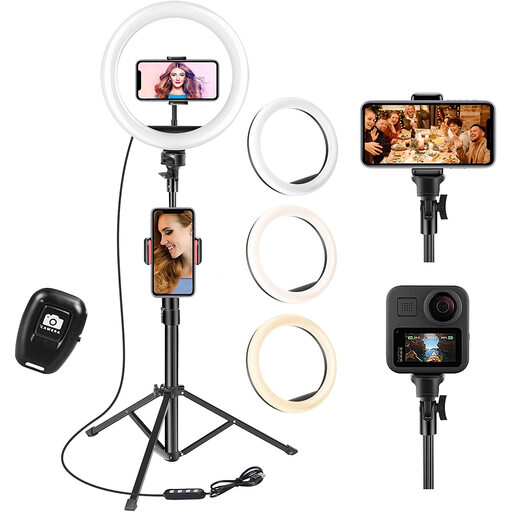 Image unavailable
A ring light with a tripod for anyone who wants to set up the light in a fixed position.
10 inches; 63-inch tripod; remote control; 3 colour temperatures and 10 brightness levels.
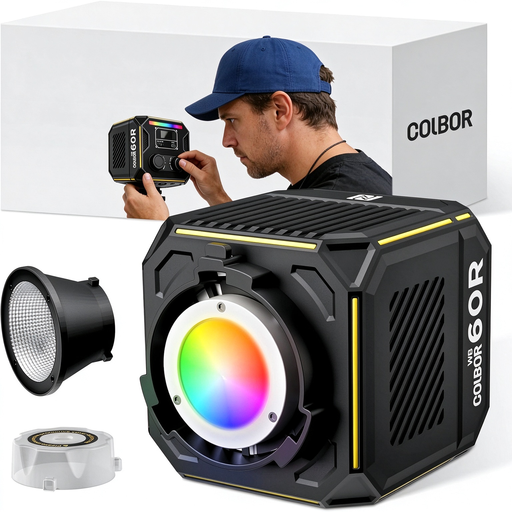 Image unavailable
A portable video light with a built-in battery for anyone who wants to move the light between filming locations.
60 W; RGBCW; built-in 59 Wh battery; bi-colour range of 2700–6500 K.
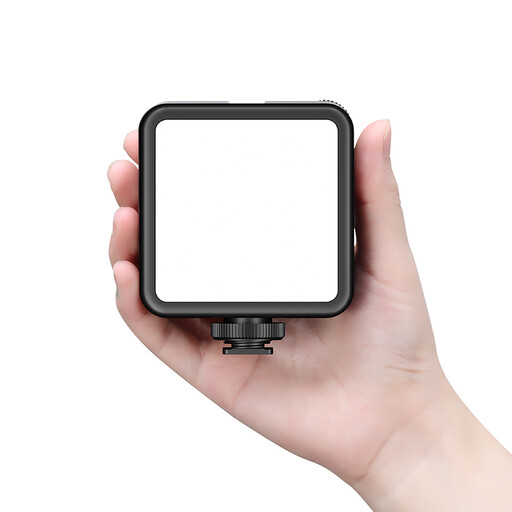 Image unavailable
A rechargeable video light for anyone who wants to carry a separate light between set-ups.
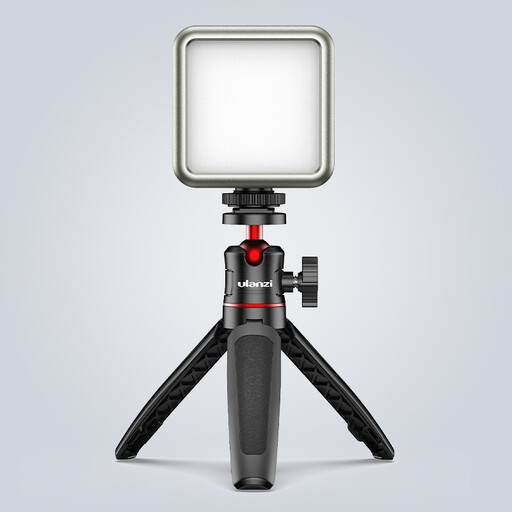 Image unavailable
A compact light with adjustable colour temperature for anyone who wants to use different light colours while filming.
RGB; 2000 mAh battery; 2500–9500 K; dimmable; rear magnet.
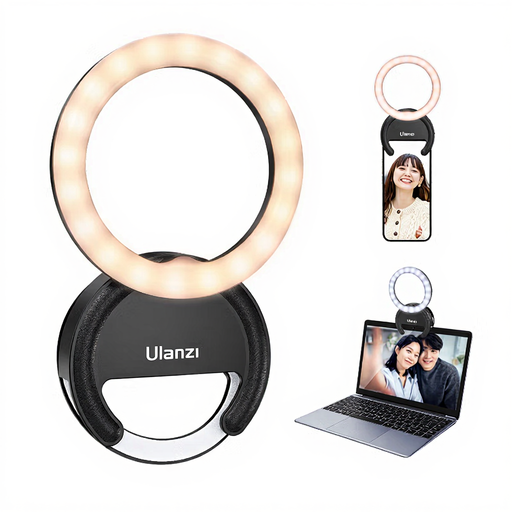 Image unavailable
A compact phone ring light for anyone looking for a small light source for video recording.
4 inches; 3 colour temperatures from 3000–7000 K; 5 brightness levels.
No, a diffuser doesn’t always prevent reflections. Visible reflections also depend on the position of the light, so try different angles and assess the shot using one of your own coins.
Keep the light source in as consistent a position as possible when you want to compare coins. Adjust the light angle deliberately if you want to highlight the relief on a particular coin.
Check what mounting, diffuser and power supply are included with the exact version, and whether they suit your set-up. Manufacturers may offer accessories separately or list them as optional.
Check the requirements that apply to the exact type of device. Business.gov.nl explains that electrical and electronic equipment placed on the market in the Netherlands must comply with the applicable European rules. If CE marking is required for the light, check the relevant compliance information too.
For online consumer purchases, you generally have a statutory cooling-off period of up to 14 days after delivery, although exceptions may apply. You’re also entitled to a product that meets reasonable expectations; ACM ConsuWijzer explains that the seller is your point of contact if there’s a fault.