
Detail-focused coin photographer
Wants to capture inscriptions and relief clearly, and pays attention to magnification and the space in front of the lens. Nikon explains these considerations for the NIKKOR Z MC 50mm f/2.8.


If you want to get started without a separate lens, compare compact cameras with a documented macro mode. For capturing tiny details, a mirrorless camera with a suitable macro lens is another option. With either setup, check the magnification of the lens you’ll actually use and make sure there’s enough room for lighting. NGC lists lighting, camera support and the camera with lens as separate elements of coin photography.
Wants to capture inscriptions and relief clearly, and pays attention to magnification and the space in front of the lens. Nikon explains these considerations for the NIKKOR Z MC 50mm f/2.8.
Wants to photograph several coins in a consistent way and is looking for a setup where the lighting, camera support and focus can be adjusted again and again. NGC and PCGS describe lighting and a stable camera setup as elements of coin photography.
Wants to take close-ups without choosing a separate lens straight away, but needs to check that the macro mode and available space for lighting suit their setup. OM Digital Solutions describes the TG-7’s close-up function.
A good fit if: you want one camera for both full-coin shots and close-ups, without changing lenses. According to OM Digital Solutions, the TG-7 can photograph subjects from as close as 1 cm in close-up mode.
Bear in mind: that shooting distance doesn’t tell you how much room will be left for lighting. Try the setup with a coin arranged as you plan to photograph it.
A good fit if: you want to choose a lens suited to fine details and different portfolio shots. Options include a Canon EOS R50 with a suitable RF macro lens, a Nikon Z50II with the NIKKOR Z MC 50mm f/2.8, or a Sony E-mount camera with the FE 90 mm F2.8 Macro G OSS.
Bear in mind: magnification depends on the lens you use; it doesn’t automatically come with the camera body or kit. Nikon lists approximately 5 cm of space in front of the MC 50mm at its closest focusing distance. Check what’s included in your chosen kit, too.
NGC lists lighting, camera support and the camera with lens as separate elements of coin photography. So think beyond magnification: consider where to position the light and how to keep your framing steady.
| What to consider | What should you check? | Who should pay extra attention? |
|---|---|---|
| Fine details | Check the maximum magnification of the lens you’ll use, or exactly how the macro mode works. Don’t compare a shooting distance directly with a 1:1 magnification specification. | If I want to show small inscriptions or relief, the lens needs to capture those details in the framing I want. Around 36% of consumers put magnification and coin detail first. |
| Reflections and shine | Test the light’s position with the coin itself, and check that the camera and light source fit in your setup. Camera support helps keep the framing steady. | If I want to control reflections, I need to be able to move the light without constantly changing the framing. Around 29% of consumers prioritise lighting and reflections. |
| A repeatable workflow | Check whether the model supports focus bracketing or focus stacking, and whether images are combined in-camera or afterwards. Stable support can help keep the setup consistent. | For a portfolio of coins framed in a similar way, I want to be able to set the focus and position consistently. Around 21% of consumers focus mainly on a repeatable workflow. |
| A complete kit | Check the exact contents of the kit and the magnification specification of the supplied lens. Also allow for lighting and camera support. | If I want to put together a usable setup straight away, I need to know exactly which lens and other components are in the box. Around 14% of consumers prioritise a complete kit. |
Magnification is a feature of the lens. A Canon EOS R50 kit may include a different lens from the separately described RF macro lens.
Check the exact kit contents and the maximum magnification of the lens you’ll actually use.
A separate macro lens and camera support may be additional parts of your setup.
Nikon lists approximately 5 cm between the front of the NIKKOR Z MC 50mm f/2.8 and the subject at the closest focusing distance. This space may matter when positioning your lighting.
Before buying, check that the lens, camera support and lighting will fit around your coin.
Alongside the camera and lens, NGC lists lighting and camera support as elements of coin photography. So changing the camera body alone won’t answer the question of where to position the light on the coin.
Try different light positions and a stable setup with a representative coin.
You may also need separate lighting or support equipment, in addition to the camera and lens.
The Tough TG-7 is a compact option with a fixed lens and close-up mode for anyone who wants to get started without a separate macro lens.
The EOS R50 has an RF mount and can be paired with a separate lens suited to the magnification you need.
The Z50II can be paired with the separate NIKKOR Z MC 50mm f/2.8 if you’re looking for a Z system with documented macro magnification.
An E-mount camera can be paired with the separate FE 90 mm F2.8 Macro G OSS.
These product picks are cameras whose product names mainly describe them as being for vlogging, video or general photography. For coin photography, check for yourself what magnification and focusing options the camera and lens you choose offer.
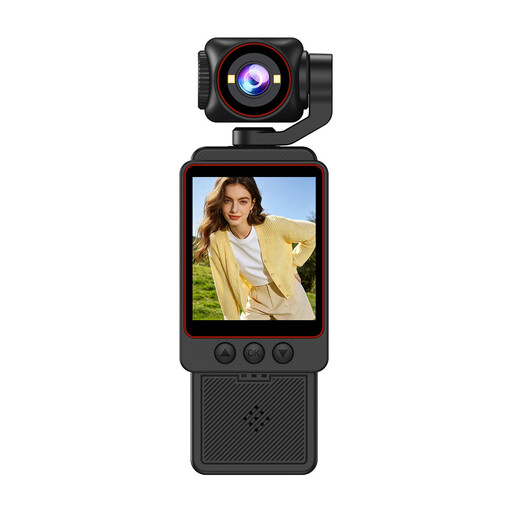 No image available
The product name describes this as a portable vlogging camera. Check whether the camera and lens you use are suitable for the coin details you want to capture.
The product name lists 2K and a 360° rotating lens.
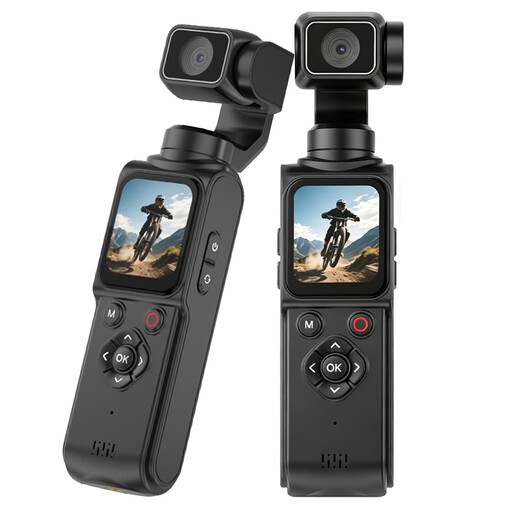 No image available
The product name mentions vlogging, travel and sport. For coin photography, it’s worth checking the focusing options and the framing you want in advance.
The product name lists Wi-Fi, 64 MP, a 330° rotating lens, a 1.72-inch touchscreen, a tripod and Type-C.
 No image available
The product name describes the W6 as a camera for photography and vlogging. Optical zoom isn’t the same as a stated macro magnification, so check its close-up capabilities for capturing coin details.
The product name lists 12× optical zoom, 4K, Wi-Fi and 64 MP.
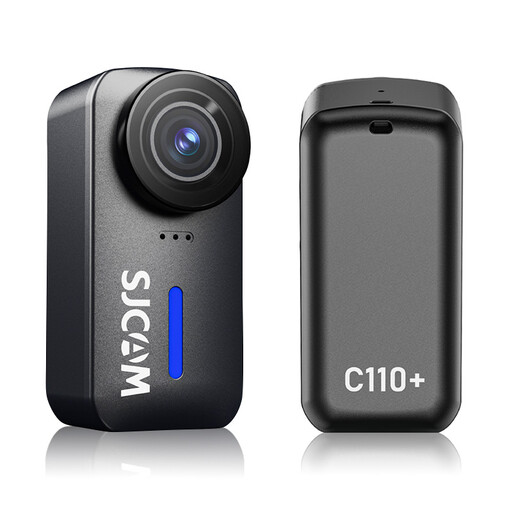 No image available
The product name mentions vlogging and outdoor sports. For a coin portfolio, check separately whether the close-up view meets your needs.
The product name lists 20 MP photos, a 170° field of view, an f/1.8 aperture and gyro stabilisation.
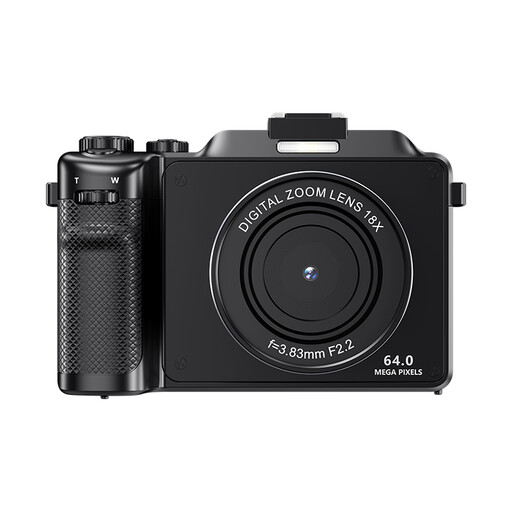 No image available
The product name describes this camera as suitable for beginner photographers. For coin details, check its close-up capabilities rather than treating digital zoom as macro magnification.
The product name lists autofocus, a flash and 18× digital zoom.
The product information warns that digital zoom can reduce image quality.
No. The 1 cm in the TG-7 manual describes a shooting distance; Nikon and Sony list 1:1 or 1.0× as the maximum magnification for specific lenses. So don’t compare these specifications as if they mean the same thing.
Set up the camera on a stable support and, if needed, take shots at different focus points so you can combine them. PCGS describes this technique for coins. Check whether focus bracketing, in-camera combining or post-processing is available for the model you’re considering.
When you buy online as a consumer from a business, you generally have a 14-day cooling-off period; according to the Dutch government, this rule doesn’t apply to purchases from private individuals. The Netherlands doesn’t have a fixed statutory warranty period, and the retailer is your point of contact if a product is faulty. Before buying, check the terms that apply to the sale in question.
This depends, among other things, on which side of the coin is shown and how the image is published. EUR-Lex lists photographic reproduction of the design on the common side as a permitted form. According to the European Commission, national sides are subject to the rules of the issuing country. Check the applicable rules for the specific coin and type of publication.