
Sellers of coins with fine details
You want to show small lettering, wear or relief clearly. Compare the magnification of the complete camera-and-lens combination, not just the megapixel count.


Choose a compact camera with a built-in macro mode if you want to get started without changing lenses. A mirrorless camera gives you more choice of magnification, but the camera body alone won’t determine how large coin details appear in the frame. Check the magnification of the exact lens, and make sure there’s room for your lighting at the chosen shooting distance. Light and reflections matter with shiny coins, whatever type of camera you use; PCGS notes that ambient light and reflections can affect your photos.
You want to show small lettering, wear or relief clearly. Compare the magnification of the complete camera-and-lens combination, not just the megapixel count.
You want to manage reflections and colour casts so your photos give a recognisable impression of the coin. As well as the camera, think about the position of your lighting and keeping the white balance consistent.
You want to photograph both sides in a consistent, repeatable way. A fixed camera setup, tripod and consistent lighting may therefore influence your choice.
Suitable for: anyone who wants to take both general and close-up photos without choosing a separate lens.
Trade-off: the fixed lens limits your ability to use a different lens later.
Suitable for: anyone who wants to choose the magnification and lens to suit the smallest coin details.
Trade-off: check the mount and whether the required macro lens is included in the purchase.
| What to consider | What should you check? | Who is this most relevant to? |
|---|---|---|
| Small coin details | Compare the maximum magnification of the exact lens or built-in macro mode. Nikon specifies 1:1 for the separate NIKKOR Z MC 50mm f/2.8; Canon specifies up to 1.4× for the separate RF 100mm F2.8L Macro IS USM. | If I want to show small inscriptions or signs of wear, I look at the magnification of the complete setup. Around 36% of consumers give detail reproduction top priority. |
| Reflections and colour | Test with a shiny coin to see whether you can adjust and repeat your lighting position, white balance and camera angle. PCGS notes that ambient light and reflections can affect coin photos. | If you want to manage reflections and colour differences, you’ll also need to adjust the lighting setup to suit the coin. For around 29% of consumers, this is the main priority. |
| Consistent, repeatable photos | Check that you can position the camera steadily above the subject and repeat the lighting and settings. Canon recommends using a sturdy tripod for focus stacking to prevent movement between images. | When photographing lots of coins, I want to capture both sides from a similar setup. Around 21% of consumers particularly value a repeatable workflow. |
| Complete starter kit | Check which lens is actually included and what magnification it offers. A camera body or kit zoom doesn’t automatically have the same capabilities as a separate macro lens. | If I want to get started without choosing a separate lens, I check what’s included in the kit and which macro mode or magnification is available. Around 14% of consumers prioritise a simple, complete starter setup. |
Magnification depends on the lens or built-in lens, not the camera body alone. A high resolution doesn’t, by itself, tell you how large the smallest coin detail will appear in the frame.
Check the exact bundle and the lens’s maximum magnification before placing your order.
With a mirrorless camera, a suitable macro lens may need to be bought separately.
The Canon RF-S 18-45mm has different magnification figures from the separate Canon and Nikon macro lenses. A macro lens’s specifications don’t automatically apply to a kit zoom.
Compare the stated figures for the exact lens and focusing mode. If possible, take a test photo of the smallest detail you want to show.
With a shiny coin, the position of the light and reflections can affect how the surface looks. A different camera won’t automatically remove this effect.
Test the lighting position and camera angle with a shiny coin, then check whether its details and surface are still recognisable.
A repeatable setup may also require suitable lighting and a stable support.
The TG-7 is a compact camera with a fixed lens and a Microscope mode, for anyone who wants to get started without interchangeable lenses.
The EOS R50 is a mirrorless camera body with an RF mount; the lens you choose also affects magnification.
The Z50II is a mirrorless camera for which a compatible Z-mount macro lens needs to be considered separately.
The α6400 is an APS-C mirrorless camera with an E-mount; the FE 90mm F2.8 Macro G OSS is a separate lens.
The Joybuy cameras below are general-purpose photography options. For each model, check whether the lens or macro function is suitable for the coin details you want to capture.
 Image unavailable
If you’re considering this camera for coin photos, first check whether the lens can capture small details at a sufficient size.
The product title lists 5K, 80 MP and 18× zoom, but doesn’t specify the type of zoom.
 Image unavailable
For coin photos, only consider this option if the lens can also take the close-ups you need; check this before you buy.
The product title lists 4K video, 64 MP and 12× optical zoom.
 Image unavailable
If you’re looking at this pocket camera for coin photography, check whether the lens can capture the level of detail and framing you need.
The product title lists 4K, 44 MP and 16× zoom, but doesn’t specify the type of zoom.
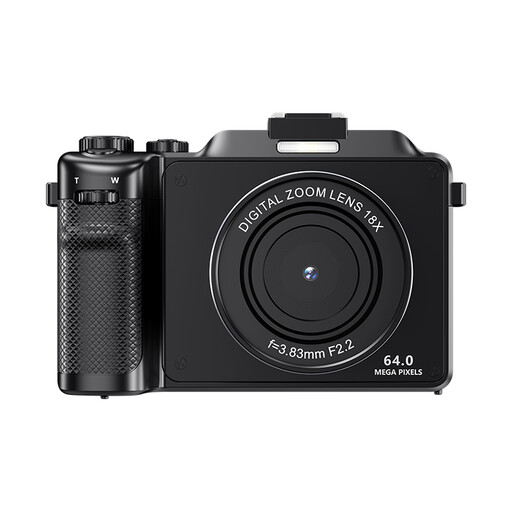 Image unavailable
For coin close-ups, it’s important to check the framing you need without relying solely on digital zoom.
The product title lists 4K, 64 MP and autofocus. According to the product description, the 18× digital zoom reduces image quality.
No. Check the magnification of the exact lens: Canon specifies a maximum of 0.14–0.16× for the RF-S 18-45mm with autofocus and, depending on the focal length, 0.21–0.26× with manual focusing. The maximum magnification of 1.4× applies to Canon’s separate RF 100mm F2.8L Macro IS USM.
Use a fixed camera setup and keep the lighting as consistent as possible. Check the white balance again if the light changes; for focus stacking, Canon recommends using a sturdy tripod to prevent movement between shots.
Check whether the lens, tripod and lighting you need are included in the kit. According to the Dutch government, consumers who buy online generally have a statutory 14-day cooling-off period; this consumer cooling-off period doesn’t apply to business purchases. Consumers are also entitled to a statutory guarantee. For a business order, check the applicable sales and service terms.
Make sure the photo doesn’t give a misleading impression of the coin for sale. The Netherlands Authority for Consumers and Markets states that information about an offer must not mislead consumers, including by leaving out relevant information or presenting it in a way that could be misunderstood. Make sure the coin’s condition is recognisable; you don’t need a specific camera model to do this.