
Catalogue user working with lots of search results
You want to work with filters, results, photos and input fields in a clear, organised way. Numista describes additional catalogue filters; a QHD monitor is one screen option to compare.


Choose a monitor that lets you view catalogue results, coin photos and collection details comfortably; an adjustable 27-inch QHD monitor is a good starting point. Consider 4K if viewing photo detail is a priority, or USB-C if you want to connect a compatible laptop with a single cable. Search filters come from the catalogue software, not the monitor.
You want to work with filters, results, photos and input fields in a clear, organised way. Numista describes additional catalogue filters; a QHD monitor is one screen option to compare.
You enlarge images to compare visible details and want to decide whether 4K is worthwhile. A higher screen resolution cannot reveal details that are missing from the original photo.
You regularly connect a laptop and want to consider adjustability, video ports and, potentially, USB-C power delivery. Check that your laptop supports the video and charging features you need; HP, for example, lists power delivery for the 527pu.
The monitor determines how you view the catalogue, but the search features themselves are part of the catalogue software.
| What to consider | What to look for | Who should prioritise this? |
|---|---|---|
| Clear view while searching | Consider screen size and resolution together; try your own window layout and text size. | If I want to see filters, results and input fields at the same time, the layout needs to remain readable at my chosen text size. Around 33% of consumers prioritise a clear overview when searching catalogues. |
| Detail in coin photos | Compare QHD and 4K using your own photos, and check that your computer supports the resolution you choose. | When I enlarge photos, I want to compare details without expecting the screen to add information that isn’t in the original photo. Around 25% of consumers give photo detail top priority. |
| Working posture | Check the adjustment options on the exact model and make sure the screen, desk and seating position work well together. | For longer cataloguing sessions, I want to be able to adjust the monitor to suit my workspace. Around 25% of consumers start by choosing a monitor that supports a comfortable working posture. |
| Laptop and peripherals | Check video output, charging power, available ports and the cables you’ll need. | If I want to connect my laptop and peripherals easily, the connection needs to be compatible with what my laptop supports. Around 17% of consumers prioritise connecting their laptop. |
Search fields and filters are part of the catalogue software. A higher-resolution monitor won’t change these features.
First, check whether the catalogue lets you search for the coin features you need. Then choose a screen layout that suits the way you work.
For the Philips 27E1N1600AE/00, Philips lists 120 Hz, while the Joybuy listing for this model states 100 Hz.
Ask for clarification about the refresh rate for the exact model before taking this specification into account.
A USB-C port on the monitor doesn’t confirm which video and charging features your laptop supports.
Check the connection options on both devices and choose a suitable cable. You may also need a separate video or power cable.
The models listed from Dell include 27-inch monitors with different resolution options.
The 27E1N1600AE/00 is a 27-inch QHD model with USB-C, according to the Dutch product information.
The LG 27UP850K-W is a 27-inch 4K IPS model for anyone who values photo display quality.
The HP Series 5 Pro 527pu is a QHD monitor with USB-C for a laptop setup.
This selection includes 4K monitors for anyone who values photo detail, as well as models for a QHD or larger laptop workspace. The product features below are based on the Joybuy listings; check the connections and exact version to make sure they suit your setup.
 No image available
An option for viewing coin photos on a 4K screen; the original photo determines which details are visible.
Listed features: 3840 × 2160 pixels, 60 Hz, HDMI, DisplayPort and a height-adjustable stand.
 No image available
A 4K option for anyone combining catalogue work with viewing high-resolution coin photos.
The product name lists 3840 × 2160 pixels and 4K Ultra HD.
Check the laptop and monitor features separately if you want to use USB-C for video or charging.
 No image available
A 4K model to consider if you want to view coin photos at a high screen resolution.
The product name lists 3840 × 2160 pixels, 4K Ultra HD, LCD and the colour silver.
Check the exact connections and whether the combination supports charging your laptop.
 No image available
The wide screen may suit anyone who wants to view catalogue sections side by side; it isn’t a 4K option for photo detail.
The product name lists WQHD, 21:9, 100 Hz and 90 W Power Delivery.
Check that your laptop supports video over USB-C and that the charging power suits your needs.
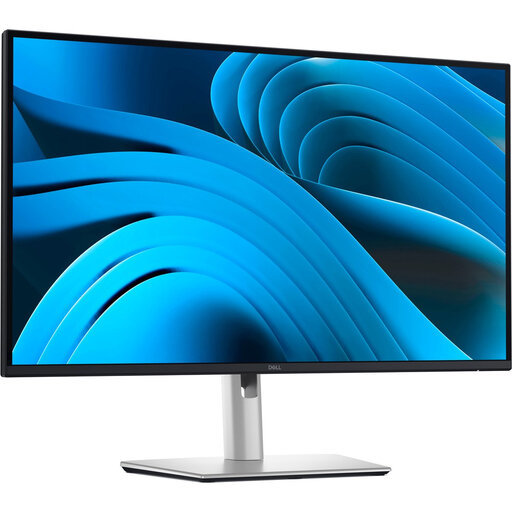 No image available
A QHD option for anyone who wants to view catalogue results and collection details on a work monitor.
The product name lists 2560 × 1440 pixels and Quad HD.
Check the connections on the exact version and the video capabilities of your laptop.
No, search filters come from the catalogue software; the monitor displays that software. Numista describes additional filters in its catalogue. Check there whether you can search for the coin features you need.
4K is worth considering if you regularly enlarge photos and your computer supports the resolution. More pixels on screen won’t add details that aren’t in the original photo.
Check whether your laptop supports video over USB-C and whether the charging power meets your needs. HP lists up to 100 W of power delivery for the 527pu; that specification alone doesn’t confirm that your laptop is compatible.
Check the adjustment options on the exact model and set the screen position to suit your workspace. Arboportaal warns that prolonged screen work can be associated with health complaints; an adjustable monitor is no substitute for varying your posture and tasks.
In the Netherlands, online consumer purchases are generally covered by a statutory 14-day cooling-off period after delivery; ACM ConsuWijzer lists some exceptions. This is separate from your statutory rights if a product, when used normally, doesn’t do what you can reasonably expect it to do.
According to the European Commission, electronic displays, including computer monitors, are covered by the EU energy label, with ratings from A to G. Compare the model information and stated energy consumption; the label rating doesn’t tell you whether a monitor is suitable for your catalogue work.