
Vandaag of morgen in huis

Kwaliteit gegarandeerd

Welkomstaanbiedingen ontgrendelen: GRATIS bezorging | Tot 80% korting | Gratis 30 dagen JoyPlus-proefperiode
Download de app
A coffee table does more than shape the look of your living room. It also needs to suit the available floor space, the height of your sofa and the way you use the room. A round coffee table, for example, can work better in a compact seating area, while a lift-top coffee table is handy if you regularly work or eat on the sofa.
There are a few common pitfalls to watch out for. Marketing photos can make a table look more spacious than it really is. Materials are also sometimes described as ‘wood’ when they’re actually MDF, chipboard or engineered wood with a wood-effect finish. And extra storage may be less practical if shelves are hard to reach or the lift mechanism doesn’t suit the way you use the table.
A modern or industrial-style table may suit your interior, but check the dimensions first. Measure not only the space where the table will go, but also the distance to your sofa, armchairs and cabinets. Leave enough room to move around, especially in a living room where several people will be walking through.
For a round coffee table, check the diameter. An 80 cm model may look spacious in a product photo, but can still take up quite a lot of floor space in a small seating area.
Always check the material specification. Engineered wood, MDF and chipboard aren’t solid wood. That doesn’t automatically make them unsuitable, but they do need to be used with care. For example, avoid prolonged contact with moisture and, if the product information recommends it, clean the table with a soft, slightly damp cloth.
For a wooden coffee table, check the thickness of the top, the finish and the base. A thick top alone doesn’t tell you how stable the table will be overall; the joints and base construction matter too.
A coffee table with storage is handy for books, remote controls and accessories. But be sure to check the dimensions of the shelves and compartments. A table with shelves is only really useful if you can easily reach your belongings and don’t overload the structure.
For a lift-top coffee table, also check how high the top lifts, how much space the mechanism needs and whether your fingers could come into contact with moving parts.
Compare at least these measurements:
For a coffee table for small spaces, a compact design, rounded corners or an extra shelf can be practical features. A side table may be an alternative if you mainly need a spot for a lamp, book or cup.
The product information should clearly state whether the furniture is made from solid wood, MDF, chipboard, engineered wood or a combination with metal. Also check:
According to the product description, the shelves of the Tribesigns side table are made from 1.5 cm thick E1 chipboard, and the metal frame can support up to 13.6 kg. Use figures like these as a guide and never exceed the stated load capacity.
A lift-top can make your living room more versatile. According to the product specification, the top of the URBAN MEUBLE model adjusts from 48 to 63 cm. The table also has two open shelves and a concealed storage compartment. During assembly, check that the mechanism is fitted correctly and keep your fingers away from moving parts.
If you’re mainly looking for a bedside table or compact side table, a drawer and an open shelf may be more useful than a large lift mechanism.
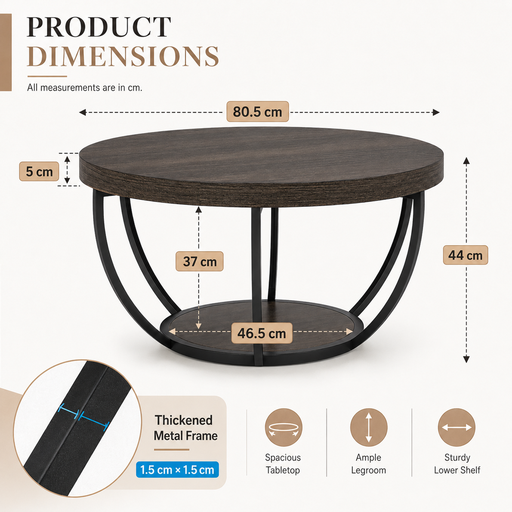
Why it suits this buyer: The round shape and 80 cm size work well in a standard seating area. The lower shelf provides space for books, magazines or accessories without the need for an extra cabinet.
The product description lists the diameter, the dimensions of the lower shelf and the 5 cm thickness of the top. This makes it easier to decide in advance whether the table will fit.
Round 80 cm table top; two-tier design; metal base; assembly hardware and instructions included.
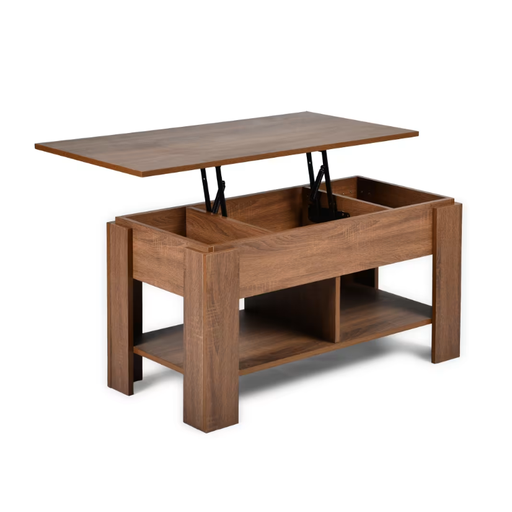
Why it suits this buyer: This model is ideal if you want one table for different occasions: as a coffee table, a workspace or an extra serving surface in the living room.
The adjustable height and different storage compartments are clearly specified. During assembly, though, take note of the warning about moving parts and the recommended load capacity.
Dimensions: 96 x 50 cm; lift-top adjusts from 48 to 63 cm; two open shelves and one concealed compartment; protective plastic feet.
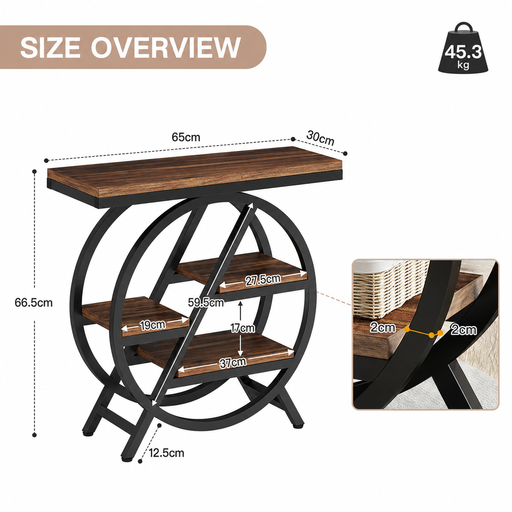
Why it suits this buyer: This side table works in the living room, bedroom or home office. Its three tiers are suitable for books, a lamp, plants and everyday accessories.
The product description specifies the shelf thickness, load capacity and adjustable feet. This gives you more to go on than a general claim about stability.
Three storage tiers; geometric metal frame; adjustable feet; load capacity of up to 13.6 kg according to the product description.
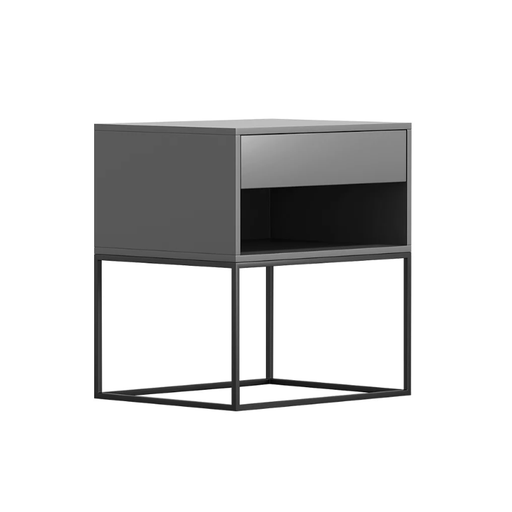
Why it suits this buyer: If you don’t need a large coffee table, you can use this model as a bedside table or a small side table. It measures 50 x 40 x 55 cm.
The layout is clear: one drawer and one open shelf. This lets you see in advance what you can store away and what you can keep within easy reach.
One drawer and one open compartment; metal base; engineered wood top; partial assembly required; suitable for a compact interior.
We’ve put together a full, up-to-date list of products that meet these strict selection criteria and the applicable European safety regulations.
Compare its height with your sofa seat. A table around seat height is usually practical for drinks, snacks and remote controls. If you want to work at the table, a lift-top model may offer more flexibility. Always check the exact height in the product details.
Choose a model whose length, width or diameter suits the available floor space. A round coffee table has no sharp corners and can work well in a compact seating area. A narrow table with shelves makes use of vertical space, while a side table takes up less floor space.
Follow the manufacturer’s care instructions. A soft, slightly damp cloth is enough for many models. Avoid abrasive cleaning products and prolonged exposure to moisture, especially with MDF, chipboard and engineered wood. After assembly, check regularly that the screws and joints are still secure.
