
Vandaag of morgen in huis

Kwaliteit gegarandeerd

Welkomstaanbiedingen ontgrendelen: GRATIS bezorging | Tot 80% korting | Gratis 30 dagen JoyPlus-proefperiode
Download de app
Limescale builds up in a coffee machine faster than many people expect. In areas with hard tap water in particular, mineral deposits can accumulate in water channels, the heating element and valves. This can cause the machine to run more slowly, make more noise or produce coffee with a different flavour.
A suitable coffee machine descaler helps with regular maintenance, but not every descaling product is suitable for every machine. If you focus only on a low price or a large bottle, you could still end up buying the wrong product.
A limescale cleaner for tiles, taps or showers is not automatically suitable for a coffee machine. Such products may contain fragrances, surfactants or other ingredients that are not intended for internal water circuits. Only use a product whose description or instructions explicitly state that it is suitable for coffee machines.
Products such as Antikal, Blue Wonder or a general kitchen descaler are intended for surfaces. They are therefore not automatically an alternative to a coffee machine descaler.
Using more descaler does not automatically produce better results. A concentration that is too high can leave residues behind or put unnecessary strain on components. A dosage that is too low may not remove enough limescale.
Always follow the instructions from both the machine manufacturer and the descaler label. Also check the number of rinsing cycles required. After descaling your coffee machine, all the liquid must have been removed from the system before you make coffee again.
A 900 ml bottle may seem like good value, but the number of applications is more important than the total volume. For example, the De'Longhi EcoDecalk DLSC500 states a volume of 500 ml for five applications. The De'Longhi EcoDecalk Mini consists of two 100 ml bottles, intended for two separate treatments according to the product information.
Compare the price per descaling cycle and check whether the pack suits how often you use it.
First check the brand and type of coffee system:
A branded product is not necessarily essential, but your machine’s instructions take priority. For example, according to the product information, the Philips Saeco descaler CA6700/10 was developed for Philips and Saeco coffee machines. According to the specifications, the JURA descaling tablets are intended for JURA fully automatic machines.
A liquid descaler is practical when you need to dilute a specified amount. The liquid disperses immediately in the water tank, but it requires accurate measuring and careful handling.
Coffee machine descaling tablets are compact and easy to store. They usually need to dissolve in water first. Check how many tablets are needed per cycle. According to the product details, the JURA pack containing nine tablets requires three tablets per cycle, providing three treatments.
Descalers contain acids. Therefore, check the hazard warnings and safety precautions on the packaging. When using concentrated liquids, consider wearing gloves and eye protection, keep the product out of the reach of children and never mix it with other cleaning products.
The De'Longhi EcoDecalk products state that they contain lactic acid of plant origin. The “100% ecological” qualification is a claim from De'Longhi’s product information and should not be confused with a universal guarantee about environmental impact. When choosing an eco-friendly descaler, also consider the packaging, dosage and number of applications.
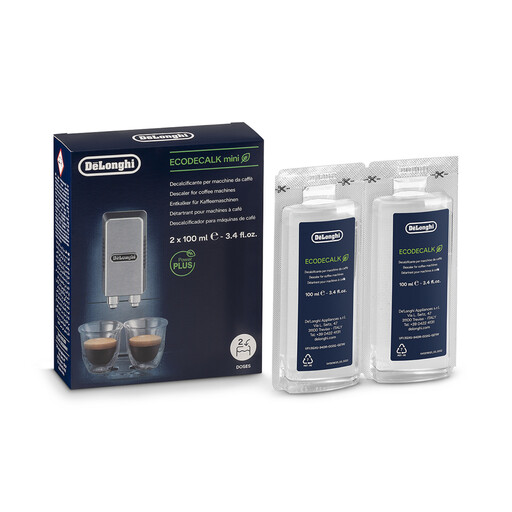
Why it suits this profile: The two 100 ml bottles are convenient if you only descale your espresso machine or filter coffee machine occasionally and do not want to store a large bottle.
The individual portions reduce the risk of measuring incorrectly. However, always check the dosage in your machine’s instructions.
Liquid formula; pack containing 2 x 100 ml; suitable for De'Longhi systems and, according to the product information, other coffee machines too.
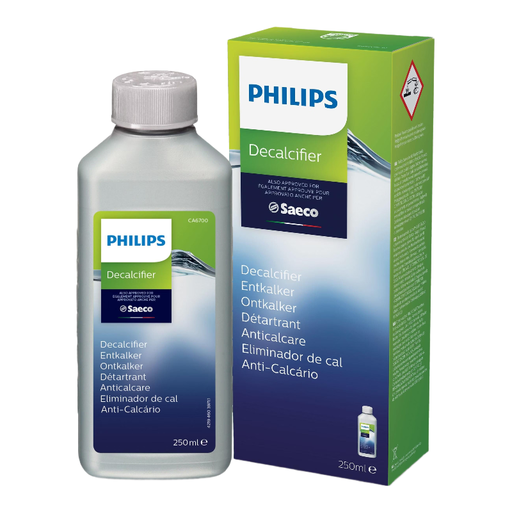
Why it suits this profile: This brand-specific option is ideal for owners of a Philips or Saeco machine who want to follow the recommended maintenance routine.
Its intended use is clearly defined for Philips and Saeco coffee machines. This makes it less likely that you will confuse a surface cleaner with a machine maintenance product.
250 ml liquid descaler; developed for Philips and Saeco coffee machines; clear instructions to rinse with clean water afterwards.
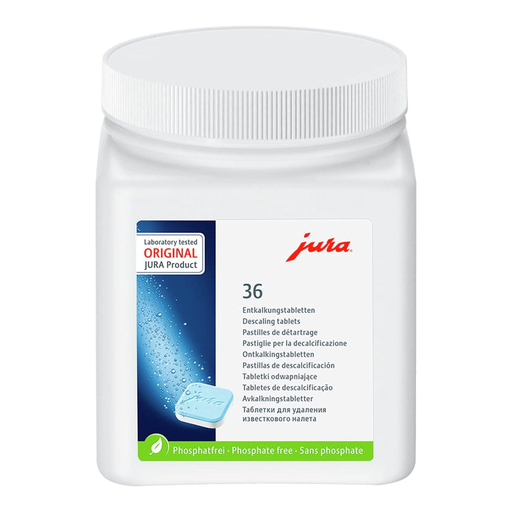
Why it suits this profile: The pack contains 36 tablets and, according to the product specifications, is sufficient for 12 descaling treatments on compatible JURA fully automatic machines.
The fixed tablet format makes the number of doses easy to manage. Only use these tablets when your JURA instructions specify this type of maintenance.
36 tablets; 12 applications according to the product details; phosphate-free formula according to JURA product information.
We have put together a complete, up-to-date list of products that fully meet these strict selection criteria and the applicable European safety regulations.
When using a liquid descaler that may cause skin or eye irritation, wear suitable protective equipment. Keep the product in its original packaging, tightly closed and out of reach of children and pets.
This depends on the water hardness, the number of cups made per day and the manufacturer’s instructions. A machine that is used heavily every day in an area with hard water will generally need maintenance more often than one used occasionally. Follow the machine’s alerts and the maintenance schedule in the instructions.
This is not always permitted. Vinegar can leave a strong smell, and manufacturers may advise against using it because of its composition or its possible effect on components. It is best to use a product explicitly intended for your coffee machine.
This varies by pack size and the number of applications. Compare the price per cycle, not just the price per bottle or box. Tablets provide a fixed dosage, while liquid can be convenient when the instructions specify a particular amount. Also consider storage, rinsing time and compatibility with your machine.
