
Vandaag of morgen in huis

Kwaliteit gegarandeerd

Welkomstaanbiedingen ontgrendelen: GRATIS bezorging | Tot 80% korting | Gratis 30 dagen JoyPlus-proefperiode
Download de app
A coffee machine for home or the office may seem easy to choose at first glance. However, capsule machines, espresso machines and fully automatic bean-to-cup machines differ significantly in terms of use, maintenance and cost per cup. A low purchase price may, for example, come with limited settings, while a machine with lots of features may require more cleaning.
Joybuy Product Recommendation Officer helps you assess the key differences in practical terms. This prevents you from making your decision based solely on the number of bar, a shiny housing or a long list of programmes.
An espresso machine with 15, 19 or 20 bar sounds impressive, but this figure does not tell you everything about the result in your cup. The grind, amount of coffee, temperature and extraction time are at least as important. A higher figure does not automatically mean that a machine is better suited to you.
Use the pump pressure mainly as a technical indication. Also consider how you dose your coffee and which settings the machine offers.
A coffee maker with a milk frother may use different systems:
If you mainly drink black coffee, you may be paying unnecessarily for an elaborate cappuccino system. For daily latte macchiatos, however, it can save time.
With a coffee capsule machine, you are not only paying for the appliance. Capsules are convenient, but the price per cup and the choice of system determine your monthly costs. A Nespresso coffee machine, for example, works with Nespresso Original or Vertuo capsules; these systems are not interchangeable.
A bean-to-cup machine uses coffee beans and can therefore give you more freedom over flavour and grind. An espresso machine with a portafilter uses ground coffee and involves more steps, but lets you choose the coffee and dosage yourself.
A coffee capsule machine is suitable when you want to make a particular type of coffee at the touch of one or two buttons. Compact models often have a water tank of around 0.6 to 1 litre. This saves space, but does mean refilling it more often.
Pay attention to the capsule size, available coffee flavours and waste disposal. A machine with automatic switch-off can be practical in an office or a busy household.
A semi-automatic espresso machine, also known as a portafilter machine, is ideal for users who want to dose, tamp and froth the milk themselves. Before buying, check:
A pressure gauge, adjustable steam wand and fast heat-up are practical features, but they do not replace the right grind size and suitable coffee.
A fully automatic coffee machine grinds the beans immediately before brewing. Do not just look at the number of drink programmes; focus especially on the components you use every day. A removable brewing unit, accessible coffee grounds container and clear descaling alerts make maintenance easier to manage.
A coffee machine with an integrated grinder is useful if several people drink coffee at different strengths. Check how many grind settings are available and whether the machine also accepts ground coffee.
Do not just measure the space on the worktop; also allow for room above the machine to fill the beans or water. For a small flat, a compact coffee machine with 0.6 litres of water may be sufficient. A household or office will benefit more from a 1.7- or 1.8-litre tank.
Check whether the water tank, drip tray, brewing unit and milk components are removable. An automatic cleaning function is useful, but does not mean that manual cleaning is unnecessary. Wipe the steam wand clean immediately after use and always follow the instructions when descaling.
If you mainly drink espresso and lungo, two programmes may be all you need. For cappuccino, latte macchiato and hot milk, you will need a steam wand or automatic milk system. Also consider cleaning: with some systems, the components are dishwasher-safe, while others need to be rinsed by hand.

Why it suits this profile: This bean-to-cup machine combines an integrated ceramic grinder, touch controls and a 1.8-litre water tank. The strength and volume can be adjusted.
You are not tied to capsules and can adjust your coffee to suit your taste. The brewing unit is removable; check the care instructions for dishwasher-safe components.
15 bar pump pressure, 12 grind settings, ceramic grinder and classic milk frother according to the product information.
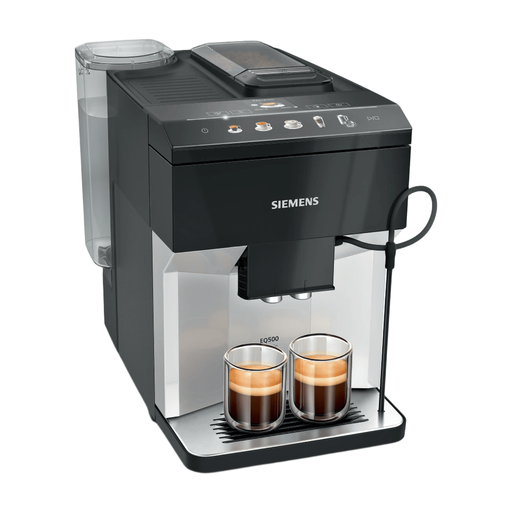
Why it suits this profile: The oneTouch controls are designed for users who want to prepare different coffee specialities without having to dose manually each time.
The machine does more than simply state the pump pressure: it also offers an integrated grinder, milk function and removable brewing unit for everyday use.
Ceramic grinding discs, cappuccinatore, oneTouch function and a stated noise level of 69 dB.

Why it suits this profile: This model is designed for households where several black and milk-based drinks are prepared every day.
The milk tank is removable and the machine indicates when descaling is needed. This makes maintenance easier to plan, but does not eliminate it altogether.
1.8-litre water tank, 250-gram bean hopper, 13 grind settings and automatic milk-system cleaning according to the product specifications.
We have put together a complete, up-to-date list of products that fully meet these strict selection criteria and the applicable European safety regulations.
This depends on the water hardness, how often it is used and the type of machine. Follow the alert on the display or the intervals stated in the manual. A water filter can help to limit limescale build-up, but does not always replace the descaling programme.
This varies depending on the coffee beans, capsule brand and number of cups made each day. Compare the cost per cup over several months. Also include filters, descaler and any milk components in your calculations.
Its lifespan mainly depends on use, cleaning and descaling. A machine with removable components is generally easier to maintain yourself. Also check the statutory guarantee and available service information before placing your order.
