
Vandaag of morgen in huis

Kwaliteit gegarandeerd

Welkomstaanbiedingen ontgrendelen: GRATIS bezorging | Tot 80% korting | Gratis 30 dagen JoyPlus-proefperiode
Download de app
A coffee table may seem like a simple purchase, until you realise that the tabletop is too large, the height does not suit the sofa or there is nowhere to store remote controls. Marketing terms such as “solid”, “water-resistant” and “sturdy” also mean little if the exact materials, dimensions and weight capacity are not specified.
So watch out for these three common pitfalls:
Do not just measure the spot where the coffee table will stand. Also consider the distance from the sofa, armchairs and cabinets. In many living rooms, around 40 to 50 cm of space around the table is comfortable, allowing you to sit and move around without feeling cramped. Also check the height:
For small flats, a narrow rectangular coffee table, an approximately 80 cm square coffee table or a round coffee table will often be easier to accommodate than a large model.
A wooden coffee table may be made from solid wood, MDF, chipboard or a combination of these materials. So check the product details rather than relying on the photo alone. MDF and engineered wood can provide an even finish and are often easy to clean. Solid mango wood or other solid wood, on the other hand, has a more natural grain pattern; variations in colour may be part of the material.
Always check:
A claim such as “water-resistant” should be interpreted in practical terms: wiping up a spilt drink is not the same as prolonged exposure to moisture or cleaning with harsh products.
Many models require assembly. Check whether the packaging includes the hardware, tools and instructions. With a two-tier table, the connections between the tabletop, shelf and frame should be firmly secured. A lift mechanism requires extra care: assemble it fully according to the instructions, keep your fingers away from moving parts and do not exceed the recommended load.
For consumers in the Netherlands, faulty products are covered by the statutory guarantee under EU consumer law and Dutch consumer law. An additional manufacturer’s warranty, such as the stated 18 months for a specific model, is separate from these statutory rights.
The following models differ clearly in shape, material, dimensions and functionality. This allows you to choose a living-room coffee table based on your own space and how you intend to use it.
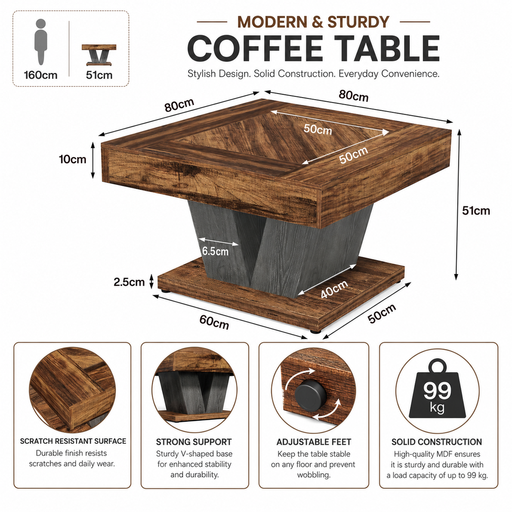
Why it suits this profile: This 80 cm square coffee table provides a useful surface for drinks, books and decorations without requiring a large living room. The included components and instructions are designed for self-assembly.
The dimensions and load capacity of up to 100 kg are clearly stated. Adjustable feet help compensate for contact with the floor and minor unevenness.
MDF tabletop with a wood-effect finish, wooden frame, square shape and a stated maximum load of 100 kg.
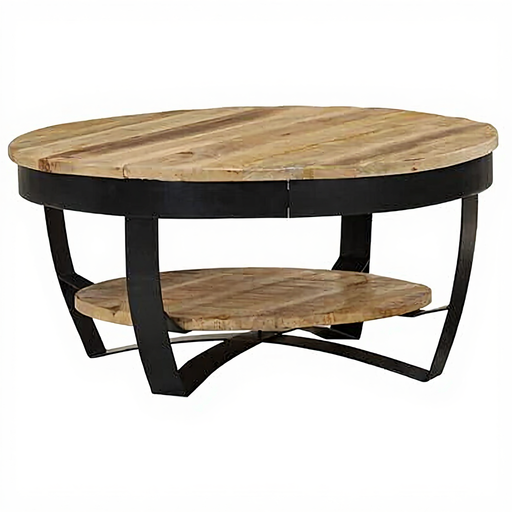
Why it suits this profile: If you are looking for an industrial-style coffee table with a natural appearance, this compact model combines solid raw mango wood with a powder-coated steel frame.
The product description identifies the wood and steel separately. However, bear in mind that natural variations in grain and colour are possible with this material.
Solid raw mango wood, steel frame, rectangular shape and an additional shelf for storage.
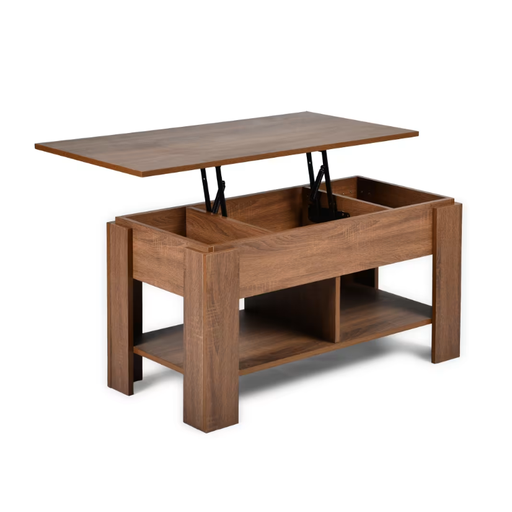
Why it suits this profile: Combining a living-room coffee table with a work surface makes this model suitable for people working from home, flats and smaller spaces. According to the product specification, the tabletop adjusts from 48 to 63 cm.
The storage is not limited to an open shelf: there are two open compartments and one concealed compartment. Before use, check that the lift mechanism has been assembled correctly.
Dimensions of 96 × 50 cm, height of 48–63 cm, two open shelves and one concealed storage compartment.
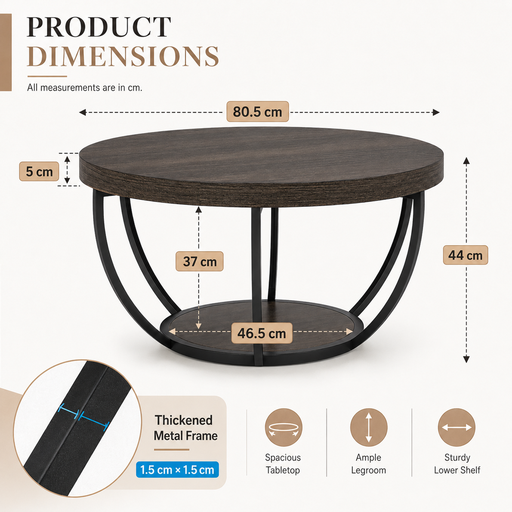
Why it suits this profile: A round coffee table has no sharp corners and can work well in a seating area with several chairs or a corner sofa. The second tier provides additional space for books or accessories.
The dimensions of the top and lower shelf are specified. This allows you to check in advance whether the furniture will fit and how much storage space is available.
80 cm round tabletop, two-tier construction, wooden finish and metal base.
We have put together a complete, up-to-date list of products that fully meet these strict selection criteria and the applicable European safety regulations.
A coffee table usually requires little maintenance, but the right approach depends on the finish. For wood-effect, MDF, melamine and painted surfaces, use a soft, lightly damp cloth. Wipe up any spilt liquid immediately and avoid abrasive cleaners. With solid wood, the colour and grain may vary from one item to another; a coaster is recommended under hot cups or vases.
After assembly, check that all screws are tight. On a two-tier coffee table, a loose connection may cause it to wobble over time. Use protective caps under metal legs to help prevent damage to hard floors. A steel side table or patio table is not automatically suitable for being left outdoors permanently; follow the manufacturer’s care instructions.
Choose a height that is usually level with or slightly lower than the sofa seat. For many standard sofas, this means approximately 40 to 50 cm. A lift-top coffee table is adjustable, but check that the tabletop will not hit the sofa or wall when opened.
First measure the available floor area and walkway. An 80 cm round coffee table, an 80 cm square model or a narrow table with integrated storage may be suitable. A coffee table with a shelf or two tiers makes use of vertical space without requiring a larger tabletop.
That depends on what you want to store. Open shelves are useful for books and baskets, while a concealed compartment can be suitable for remote controls and small items. Check the clear height, depth and load capacity of each level before ordering.
