
Vandaag of morgen in huis

Kwaliteit gegarandeerd

Welkomstaanbiedingen ontgrendelen: GRATIS bezorging | Tot 80% korting | Gratis 30 dagen JoyPlus-proefperiode
Download de app
A coffee table may seem like a straightforward purchase, until you discover that many models do not suit the available space, wobble easily or offer less storage than the product photo suggests. A low coffee table can be awkward next to a high sofa, while a large living room table can make a small seating area feel cramped.
So do not focus solely on colour and style. The following pitfalls are common:
A good choice therefore starts with how you intend to use the table: for coffee and books, as a workspace, as a side table next to the sofa or as a piece of furniture with extra storage.
First, measure the space between the sofa, armchairs and television. As a practical guideline, leave around 40 to 50 cm of clear space around the coffee table for walking and sitting. Also check the following:
A wooden coffee table may be made from solid wood, MDF, chipboard or a wood-effect finish. These are different materials with different properties. So check the exact product specification rather than focusing only on the colour or grain.
A sturdier appearance does not automatically mean that a table can support a particular weight. Check the stated maximum load capacity and look out for:
A brand’s claim regarding water resistance, scratch resistance or durability should be treated as a product claim. According to a brand’s own research, such properties may be substantiated, but the conditions of use and maintenance remain decisive. For everyday care, use a soft, slightly damp cloth and avoid harsh cleaning products unless the manufacturer advises otherwise.
A coffee table with storage helps keep remote controls, magazines and small home accessories from being left scattered around. However, pay attention to the design:
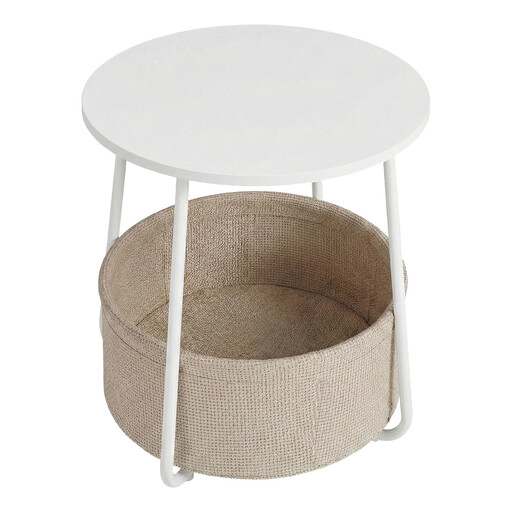
Why it suits this profile: Measuring 45 x 50 cm, this compact round side table takes up very little floor space and fits next to a sofa, armchair or bed. The fabric basket provides room for lightweight everyday items.
The diameter and height are clearly stated, so you can check in advance whether the table will fit. Four adjustable feet help compensate for minor unevenness.
The table has a chipboard top, U-shaped steel legs and a stated load capacity of 35 kg. According to the product description, assembly is straightforward.
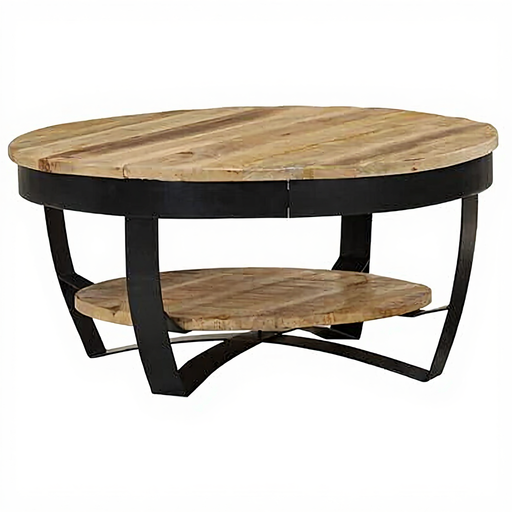
Why it suits this profile: This model is aimed at anyone who values a natural, industrial look and solid wood. It can also be used as an accent or side table.
The material is described specifically: solid raw mango wood with a powder-coated steel base. The wood grain and colour may vary from one item to another.
The model measures 65 x 65 x 32 cm and has an additional shelf. Its low profile suits a seating area where a low coffee table is preferred.
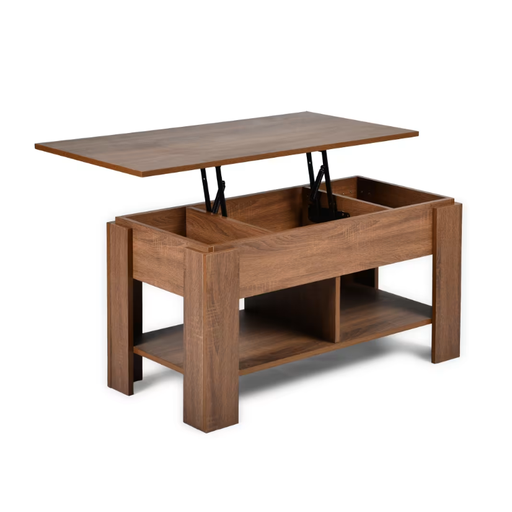
Why it suits this profile: Combining a coffee table, workspace and storage, this design is practical for flats, home offices and living rooms where one piece of furniture needs to serve several purposes.
The adjustable height is specified as 48 to 63 cm. The table also has two open compartments and one concealed storage compartment. Take care with the moving parts during assembly.
The MDF model measures 96 x 50 cm and has metal hinges and cross-bracing. The surface can be wiped clean with a soft, damp cloth.
An industrial coffee table with a metal frame and wood-effect finish suits a robust interior. A model such as the 80 cm LANTINE table combines an MDF top with a wooden frame and states a load capacity of up to 100 kg in the product description. Always check whether this weight must be distributed evenly.
If you have little space beside the sofa, a 3-tier side table could be a good option. The Tribesigns table has three shelves, a geometric metal frame and dimensions suitable for use as a bedside table, sofa side table or accent table. A console table is more practical for a hallway or a position behind the sofa. Narrow models with multiple tiers provide space for keys, plants and decorations without completely blocking the passageway.
A folding bamboo table can be useful when you need a temporary surface on a balcony, patio, in a bedroom or in an office. As no maximum load is specified for this model, it is best not to place heavy equipment on it.
We have compiled a complete, up-to-date list of products that fully meet these strict selection criteria and the applicable European safety regulations.
Measure the seat height of your sofa and armchairs. A table level with or slightly below the seat is generally practical for drinks and accessories. Choose a lift-top model if you regularly want to raise the table top for working or eating.
As a practical guideline, allow around 40 to 50 cm between the table and the sofa or armchairs. Less space may be possible in a small living room, but check that drawers, doors and walking routes remain unobstructed.
A round coffee table or compact side table takes up less visual and physical space. Choose a model with a basket, shelf or closed compartment if you also want storage. Measure the space beforehand and compare those measurements with the complete product specifications.
