
Vandaag of morgen in huis

Kwaliteit gegarandeerd

Welkomstaanbiedingen ontgrendelen: GRATIS bezorging | Tot 80% korting | Gratis 30 dagen JoyPlus-proefperiode
Download de app
A coffee table for the living room might seem like a straightforward purchase, until you start thinking about walking space, seat height, materials and storage. A table can look compact in photos but turn out to be too large for a flat. Marketing terms such as “industrial”, “sturdy” or “water-resistant” can also be vague without detailed product specifications.
So, pay particular attention to these three common pitfalls:
The shape affects how easily you can move around the table and how well it sits alongside your sofa.
Before buying, measure the space between your sofa, armchairs and cabinet. Remember to allow for doors, drawers and the route to the window or balcony. It’s not just the tabletop dimensions that matter: check the overall height and the position of the legs too.
A wooden coffee table may be made from solid wood, MDF, engineered wood or chipboard with a wood-effect finish. So, check the material description rather than relying on the product photo alone.
Look out for:
According to the product description, the rectangular LANTINE model has an E1 chipboard core with a faux-marble finish and metal legs. E1 is a formaldehyde emissions class for wood-based panels; always check the latest product specifications and seller information before buying.
A coffee table should stay stable when you use it every day for cups, books or a laptop. Look for a stated maximum load capacity, a sturdy base and adjustable feet if you have delicate flooring.
A round or square table with a two-tier design can be practical, but check that there’s enough space on the lower shelf. Also check:
A “modern coffee table” or industrial coffee table mainly describes its appearance. The technical details will tell you whether the furniture suits your everyday needs.
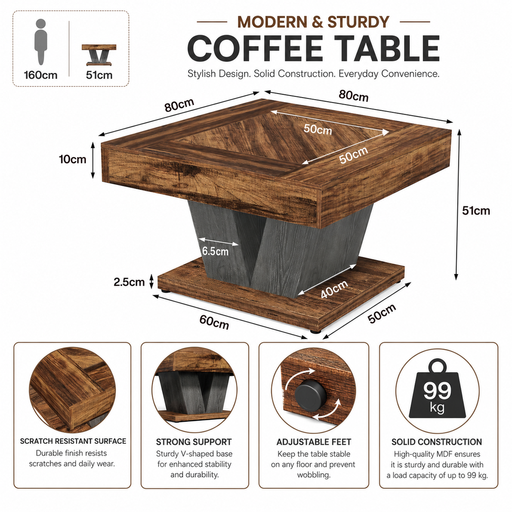
Why it suits this type of buyer: At 80 cm wide, it’s a good fit for many smaller living rooms and flats. The square shape gives you space for drinks, books and decorations without taking up a large area of floor space.
The product description states a load capacity of up to 100 kg, an MDF tabletop and adjustable feet. That gives you more specific information than a style description alone.
80 cm wide, adjustable foot pads and, according to the product description, includes assembly fixings and instructions.
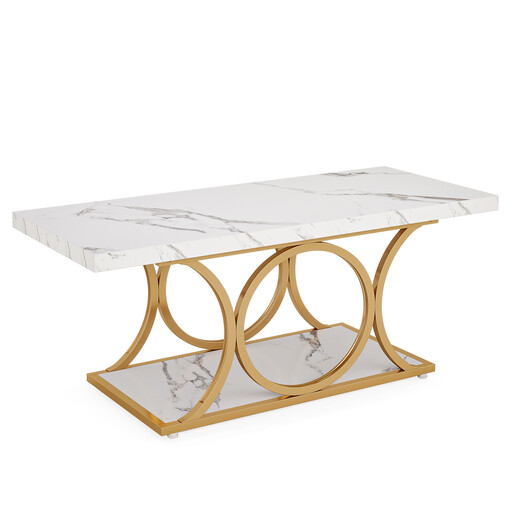
Why it suits this type of buyer: This rectangular coffee table works well with a longer sofa. It pairs a white-and-gold look with an extra shelf for living room accessories.
The product description specifies the panel thickness and metal frame, as well as a water- and scratch-resistant melamine surface. Be sure to use the table within its stated load capacity.
120 cm long, two tiers and, according to the product information, takes around 30 minutes to assemble.
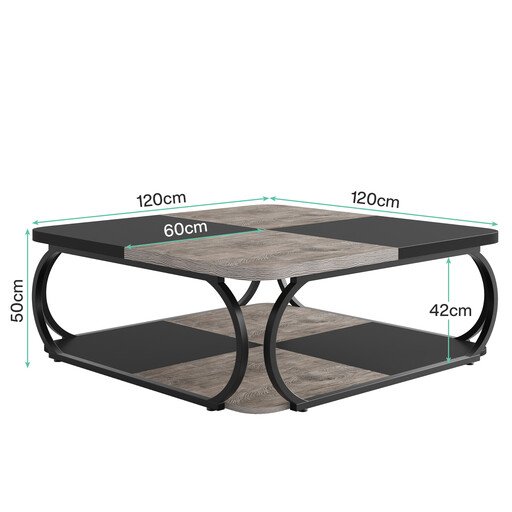
Why it suits this type of buyer: Its generous square shape and two tiers make it practical for a large seating area, regular visitors or a household where you want to keep plenty of things close to hand.
The dimensions are clearly specified, and the product description mentions a curved metal frame and a lower shelf. Before buying, check that 100 x 100 cm will fit your available walking space.
Two-tier design, 100 cm wide and a combination of wood effect and metal in black and rustic grey.
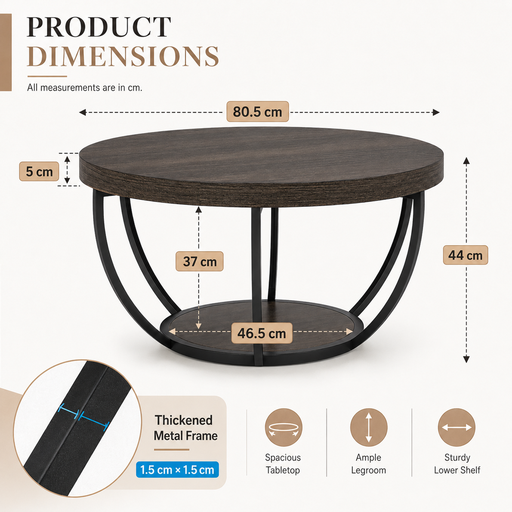
Why it suits this type of buyer: The round shape works well in a seating area with different chairs and can make it easier to move around the table than a model with sharp corners.
The product information specifies a 5 cm-thick tabletop, a metal base and a lower shelf. This gives you a clearer picture of the construction than an offer focused solely on design.
80 cm diameter, two storage tiers and assembly hardware, according to the product description.
A coffee table is generally easier to keep looking its best if you wipe up spills straight away. Use a soft, slightly damp cloth and avoid abrasive cleaners unless the manufacturer advises otherwise. Don’t place hot cups directly on a tabletop with a plastic or melamine finish.
When assembling the table, first tighten all the connections by hand and then check that the frame is straight. Fully tighten everything only once the parts are correctly aligned. After a few weeks of use, check the screws again, particularly if you move the table every day.
We’ve put together a complete, up-to-date list of products that meet these strict selection criteria and the applicable European safety regulations.
Ideally, leave around 40 to 50 cm between the coffee table and your sofa or armchairs. This gives you room to sit down and get up without constantly bumping into the tabletop or base. Measure your walking route before choosing a 100 or 120 cm model.
It depends on your layout. A round coffee table often works well in a compact or more informal seating area. A square coffee table makes efficient use of a symmetrical seating area and provides a large central surface. With either shape, check the diameter or width, rather than relying on the photo alone.
Its lifespan depends on the materials, assembly, load and care. A sturdy metal frame, securely tightened connections and protection from moisture can help reduce wear. Always check the care instructions and maximum load capacity for the model you choose.
