
Vandaag of morgen in huis

Kwaliteit gegarandeerd

Welkomstaanbiedingen ontgrendelen: GRATIS bezorging | Tot 80% korting | Gratis 30 dagen JoyPlus-proefperiode
Download de app
A coffee table seems like an easy purchase, until your living room is full of remote controls, books, toys and coffee cups. A model that looks spacious in the product photo may turn out to be too large for your seating area. Thin materials, unclear load ratings or a fiddly lift mechanism can also lead to disappointment.
If you’re buying a coffee table, it pays to look beyond colour and style. Focus on the dimensions, storage, construction and the way you plan to use the table. Below are the key points to consider and a few popular choices for different living situations.
A modern or industrial coffee table can match your interior yet still be impractical. Measure the space between your sofa, armchairs and TV unit in advance. Also allow enough room to walk around. A table measuring 100 x 100 cm clearly needs more space than a rectangular model of 96 x 50 cm.
The term “coffee table with storage” doesn’t always tell you how much you can actually store. Check whether it’s an open shelf, drawer, concealed compartment or a combination. Open sections are handy for magazines and baskets; a closed compartment keeps remotes and small accessories out of sight.
Wood effect, MDF, chipboard and solid wood all behave differently. A solid mango-wood coffee table can show visible colour and grain variations. With MDF or chipboard, the finish matters, especially around edges and joints. Also check whether assembly is required, how many people are recommended, and whether the necessary fixings are included.
Measure not just the length and width, but also the height. A lower table works well with a deep sofa, while a higher one can be more comfortable if you often use the table for meals or work.
Look at the material composition of each part. A metal frame can add strength, but stability also depends on the joints and the surface beneath. For example, the 5five Tasso lists a maximum load of 40 kg. According to the product information, the LANTINE 80cm states a load capacity of up to 100 kg. Use such figures as a guide and don’t sit or stand on the table unless the manufacturer explicitly allows it.
A multifunctional coffee table can offer more than just a tabletop. A lift-top model can raise the work or dining surface, while a shelf or drawer keeps the living room tidier. For moving parts, check whether careful assembly is required and keep fingers clear of hinges while adjusting.
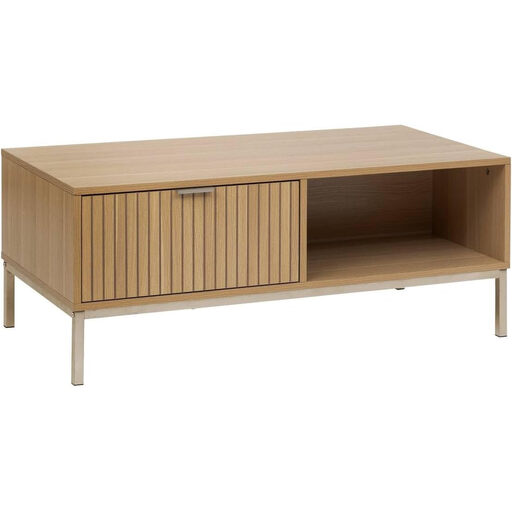
Why it fits this profile: The wood-effect finish, metal legs and multiple storage options suit anyone who wants a living room table without complicated extra features.
The 100 x 50 x 40 cm dimensions and the stated maximum load of 40 kg make comparisons easier than relying on lifestyle photos alone.
Lower shelf and drawer; FSC claim; self-assembly for one person with an indicated assembly time of around 60 minutes.
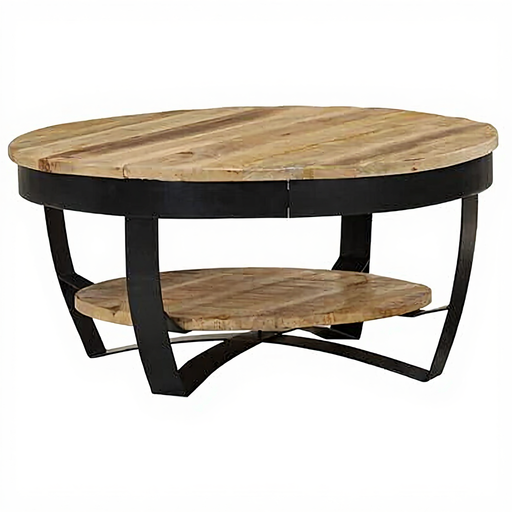
Why it fits this profile: This compact model is for those who value solid wood, an industrial look and a role that goes beyond being “just” a coffee table.
The product information states solid raw mango wood and a powder-coated steel base. Colour and grain variations are to be expected.
Solid mango wood; metal shelf for extra storage; suitable as a coffee table, side table or accent table.
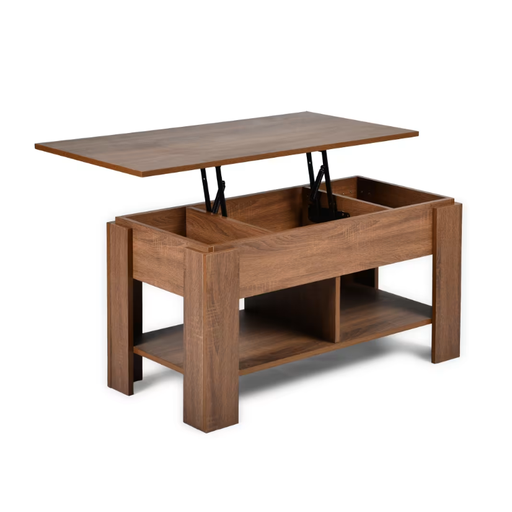
Why it fits this profile: The adjustable top is practical for a flat, home office or living room where one table needs to do it all.
The product description lists two open shelves and one concealed storage compartment. The lift-top is adjustable from 48 to 63 cm; correct assembly of the mechanism remains essential.
Dimensions of 96 x 50 cm; adjustable height; both open and closed storage; plastic protective feet as per the product information.
Place the table on a level floor and check all fixings after assembly. For wood-effect or lacquered finishes, use a soft, slightly damp cloth. Avoid abrasive or aggressive cleaners. Put hot pans on a trivet and use coasters for glasses to minimise rings.
For families with children, rounded corners and a stable base are practical considerations. A round coffee table can be easier to move around in some seating areas, while a square coffee table offers more surface space. Always consider the room layout, not just the available floor space.
We’ve compiled a complete, up-to-date list of products that fully meet these rigorous selection criteria and the applicable European safety regulations.
A height of around 40 to 50 cm is common. The right size depends on your sofa’s seat height and how you use the table. If you work or eat at the table, you may prefer a higher or adjustable model.
Yes, provided you match the dimensions to your walking space. A slim model with a shelf or concealed compartment makes the most of the space without needing an extra cupboard. Measure the table including any protruding parts and leave enough room to walk past the sofa.
That depends on the material, assembly, load and care. Solid wood can have visible grain and colour variations and needs gentle, regular cleaning. With MDF and chipboard, it’s important to avoid prolonged contact with moisture. Also check the warranty and returns policy before you order.
