
Filter coffee brewers
You want to track the weight and brewing time as you pour. A timer or a coffee-to-water ratio display could be useful.


Choose based on what you want to monitor while brewing: a standard digital kitchen scale may be enough if you only need to weigh your coffee dose, while a coffee scale with a timer is useful if you also want to track weight and brewing time. A finer display increment on its own does not prove that measurements are more accurate or consistent; the Consumentenbond assesses these as separate test criteria.
You want to track the weight and brewing time as you pour. A timer or a coffee-to-water ratio display could be useful.
You weigh small doses and want to check that the scale fits your set-up. As well as the display increment, consider measurement quality.
You want one scale for both coffee and everyday ingredients. In that case, you may not need a coffee timer.
Choose this if: you mainly weigh coffee doses and want to use the same scale for cooking or baking.
Keep in mind: according to Beurer, the KS 19 Black has no time display. Its 1 g display increment on its own says nothing about accuracy when weighing small doses.
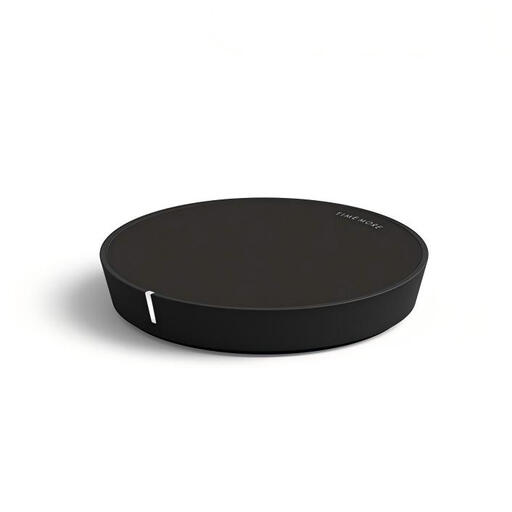
Choose this if: you also want to track brewing time when making filter coffee or espresso. Timemore lists an automatic timer and a 0.1 g display increment for the Basic 2.0.
Keep in mind: check that the weighing platform fits beneath your brewing set-up and that the capacity can accommodate both the vessel and its contents.
Choose this if: you want to track a coffee-to-water ratio or pouring flow rate when making filter coffee. Hario describes a ratio function for the Polaris, while Acaia lists a real-time flow-rate indicator for the Pearl.
Keep in mind: these extra displays are less useful if you only weigh your coffee in advance. Check the exact version and the features you want to use.
| What to consider | What should you check? | Who is this important for? |
|---|---|---|
| Weight and brewing time | Check whether the scale has a tare function and a timer, and whether the display remains easy to read with your jug on the platform. | If I want to track both water and brewing time while making filter coffee, I want that information in one place. Around 40% of consumers say tracking weight and brewing time when making filter coffee is their main requirement. |
| Small coffee doses | Compare the display increment and minimum detection weight; a display increment does not prove actual accuracy. | For espresso, I want to be able to read small doses and know whether the scale fits my set-up. Around 30% of consumers prioritise weighing small doses. |
| Shared kitchen use | Check the maximum capacity, tare function and screen visibility with the bowl you usually use. | If I want to use the same scale for coffee and other ingredients, the total weight must stay within its capacity. Around 20% of consumers prioritise using their scale for different kitchen tasks. |
| Controls and maintenance | Check the button layout, automatic switch-off, cleaning instructions and the type of battery or charging connection. | If I mainly want a scale that's easy to read, clean and power, these practical points matter more than extra brewing features. Around 10% of consumers prioritise ease of use. |
The smallest displayed increment and the accuracy or repeatability of measurements are different properties. The Consumentenbond tests accuracy and consistency separately.
Think of the display increment as a product specification. For claims about actual measurement quality, look for test results for the exact model.
A general-purpose kitchen scale, such as the Beurer KS 19 Black, has no time display according to Beurer. This can be inconvenient if you want to track the time while brewing.
Decide in advance whether you only want to weigh doses or also see the time and weight while brewing. If the scale has no timer, you may need a separate one.
A high capacity doesn't tell you how small an amount the scale can display, how easy it is to use or whether you'll still be able to see the screen with a bowl on it.
Compare capacity and display increment, and check the tare function, button layout and readability with your own vessel.
The Basic 2.0 is a coffee-specific model for anyone who wants to track weight and time while brewing.
The KS 19 Black is a general-purpose digital kitchen scale for anyone who wants to weigh coffee and other ingredients on the same scale.
The Coffee Scale Polaris is designed for anyone who wants to follow a set coffee-to-water ratio while brewing.
The Pearl is a coffee scale for anyone who also wants to track pouring flow rate when making filter coffee.
This selection includes coffee scales for espresso and filter coffee, plus a general-purpose digital kitchen scale for shared use.
 No image available
Ideal if you want to track ratios, flow rate and brewing time while making espresso or pour-over coffee.
Listed features: coffee-to-water ratio, water flow rate and timer. Units can be switched between ounces and kg.
 No image available
A good choice if you want to track the ratio, water flow rate and time while making espresso or pour-over coffee.
Listed features: coffee-to-water ratio, water flow rate and timer. Units can be switched between ounces and kg.
 No image available
A general-purpose digital kitchen scale to consider if you want to use the same scale for coffee and other kitchen tasks.
Material: stainless steel. Dimensions: 17 x 13 x 2 cm.
 No image available
Well suited to pour-over coffee if you want to track weight, time and flow rate while brewing.
Listed display increment: 0.1 g. Listed capacity: 2,000 g. Do not immerse; clean with a damp cloth.
No. The display increment describes how the screen is divided; it doesn't automatically indicate actual accuracy or consistency. The Consumentenbond assesses these measurement properties separately.
Place a suitable bowl or holder on the scale and use the tare function to reset the display to zero before adding coffee. Keep the total weight of the holder and its contents within the stated maximum capacity.
In the Netherlands, contact the seller to find a solution if a product is faulty. There is no fixed statutory guarantee period that applies to every product; what you can expect depends, among other things, on the product and the information provided.
For many purchases made remotely from a business, you have a 14-day cooling-off period. The Dutch government also lists exceptions, so check which terms apply to your purchase.
Don't assume that household scales are suitable for this purpose. The Dutch government has requirements for approved measuring instruments used in fair trade. If you sell by weight as a business, check which approval is required for that use.
Take used batteries to a designated collection point, such as a shop that sells batteries. You can take an unwanted electrical appliance to a recycling centre or, when buying a similar new appliance, hand it in through a take-back scheme.