
Detail photographer
You want to capture latte art, crema and small finishing touches up close. The close-up capabilities of the specific lens matter more than the camera body alone.


Start with the framing: a versatile zoom lens may suit wider drink compositions, while fine latte art or crema calls for close-up capabilities in the specific camera-and-lens combination. Also consider your shooting angle and how much control you have over light and reflections. A different camera body alone won’t solve changing light conditions.
You want to capture latte art, crema and small finishing touches up close. The close-up capabilities of the specific lens matter more than the camera body alone.
You photograph the same drink or style regularly for a cohesive portfolio and want to be able to reproduce the lighting, colour and reflections.
You switch between a cup, a worktop and overhead shots, and want a manageable camera setup for those angles.
Trade-off: close-up capabilities still depend on the lens you already own.
A good fit if: you switch between a whole cup, the worktop and different camera angles. Canon lists a maximum magnification of 0.25× for the RF-S 18-45mm zoom lens.
Trade-off: a different lens may be needed for very small details; check which lens is included in the kit.
A good fit if: you want to fill the frame with small details and are happy to use a separate lens. Nikon lists 1:1 magnification for the NIKKOR Z MC 50mm f/2.8, and Fujifilm lists 1:1 for the XF30mmF2.8 R LM WR Macro.
Trade-off: a macro lens won’t necessarily be included in a camera kit; also check the mount and the space in front of the lens for your lighting setup.
A good fit if: you don’t want to carry separate lenses and the fixed lens suits your intended compositions. The OM SYSTEM TG-7 manual describes shooting from 1 cm away in close-up mode.
Trade-off: the lens cannot be changed. A distance of 1 cm is also not the same measure as a magnification ratio of 1:1.
| Consideration | What should you check? | Who is this important for? |
|---|---|---|
| Close-ups of small details | Compare the magnification of the specific lens or the close-up mode. Canon lists a maximum of 0.25× for the RF-S 18-45mm; Nikon and Fujifilm list 1:1 for the separate macro lenses mentioned above. The TG-7 manual specifies a shooting distance from 1 cm. | I want to fill the frame with crema, milk foam or small decorations. Around 36% of consumers put magnifying details first. |
| Light, reflections and colour | Check whether you can set the exposure and white balance, and take test shots with your own glasses and cups. Canon points out that window light changes with factors such as direction, time of day and weather. | I want to take recurring drink photos with similar lighting and colour. Consistent light and colour are the top priority for around 29% of consumers. |
| Framing and shooting angle | Check the zoom range or angle of view of the supplied lens, and whether the screen and your setup suit your desired camera angle. Nikon describes the Z50II as having a vari-angle screen. | I switch between a whole cup, the worktop and an overhead shot. Flexible compositions are the top priority for around 21% of consumers. |
| Size of the complete setup | Compare the camera with the lens you need, and consider whether a fixed lens or interchangeable lens suits your photography. The OM SYSTEM TG-7 has a fixed lens. | I want to take photos in different locations without carrying lots of equipment. A compact, portable setup is the top priority for around 14% of consumers. |
The magnification figures mentioned apply to specific lenses. A camera kit may include a standard zoom rather than the macro lens you want for small details.
Check exactly what the kit includes and compare the lens magnification with the smallest details you want to photograph.
A suitable macro lens may need to be purchased separately as part of your setup.
The TG-7 manual specifies shooting from 1 cm away in a close-up mode, while macro lenses are often described by their magnification ratio. These figures don’t mean the same thing.
Compare test shots of your intended framing and check that there’s enough room for the lighting.
Canon points out that the direction of window light, the time of day and the weather can all change the lighting conditions.
Take comparable test shots with the cups and reflective surfaces you use for your portfolio, in the lighting conditions you usually shoot in.
In the Netherlands, your statutory right to a product that works properly is not the same as the length of a manufacturer’s warranty. ACM ConsuWijzer and the Dutch government explain that your statutory rights may still apply after a warranty period has ended.
If there’s a fault, contact the seller and consider any additional warranty terms separately from your statutory rights.
The EOS R50 uses an RF mount. The RF-S 18-45mm is a standard zoom; the RF 35mm F1.8 Macro is a separate lens.
The Z50II is a mirrorless camera; the NIKKOR Z MC 50mm f/2.8 is a separate macro option with a Z mount.
The X-S20 is a mirrorless camera with RAW shooting. The XF30mmF2.8 R LM WR Macro is a separate lens for close-ups.
The ZV-E10 II uses interchangeable E-mount lenses. The 16-50mm zoom and the E 30 mm F3.5 Macro are different lens options.
The TG-7 is a compact camera with a fixed lens and built-in close-up mode, for anyone who doesn’t want to carry a separate macro lens.
This selection includes cameras with zoom lenses and compact models. For each version, check whether the lens, angle of view and close-up capabilities suit your complete drink compositions and the details you want to capture.
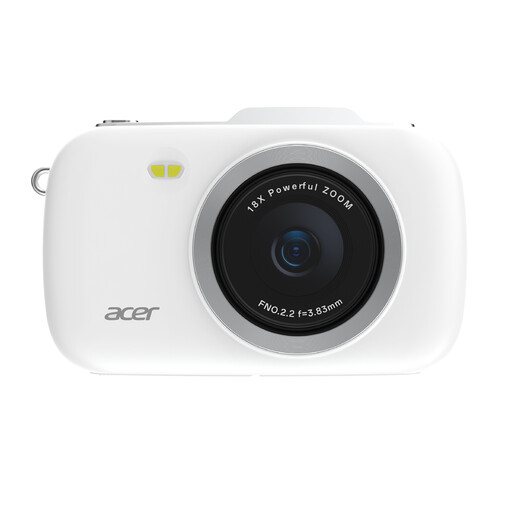 No image available
The zoom makes this model an option if you want to try different framings; check whether it can capture your smallest details close up.
The product title lists 18× zoom; the product description mentions autofocus.
 No image available
This compact model may suit you if you’re looking for a small camera; check that the controls and framing work for your still-life drink photography.
The product title lists a 1-inch CMOS sensor and a rotating touchscreen.
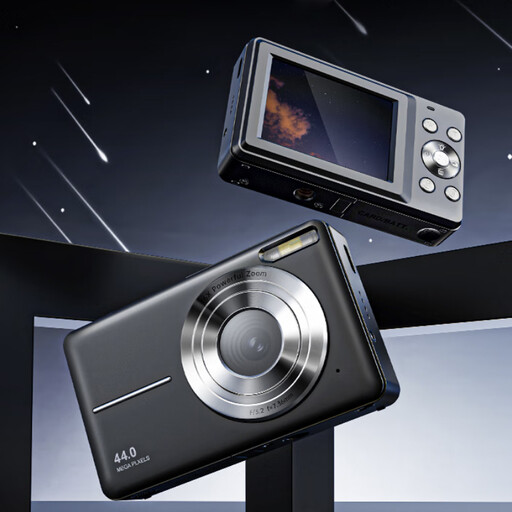 No image available
This portable model may suit you if you want to carry a compact camera; use test shots to check whether the framing also works for small coffee details.
The product title lists 16× zoom; the product description mentions autofocus and digital zoom.
 No image available
The zoom lens may suit you if you want to frame both a cup and a wider composition; check whether it can capture your smallest details close up.
The product title lists a 16-50mm zoom lens.
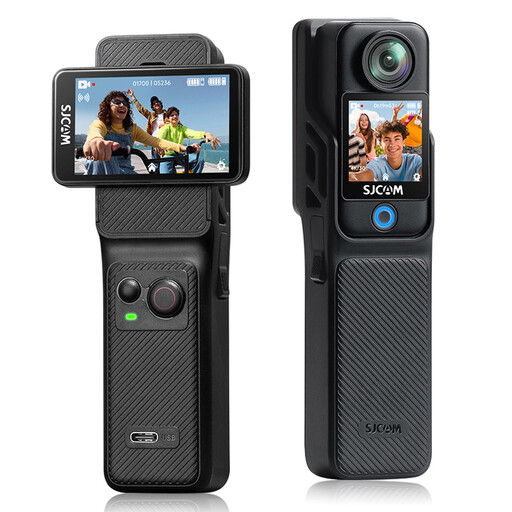 No image available
This compact action camera may suit you if you’re looking for a small camera; use test framing to assess whether the angle of view works for your cups and details.
The product title lists photos up to 16MP and a 154° angle of view.
Not necessarily for a photo of the whole cup. If you want small details to fill the frame, compare the magnification of the specific lens: Canon lists 0.25× for the RF-S 18-45mm and 1:2 for the separate RF 35mm Macro; Nikon lists 1:1 for the separate Z MC 50mm.
Try using a fixed camera position and check focus and the direction of the light with test shots. For macro food photography, Nikon describes using a tripod to prevent camera shake and position the plane of focus precisely. Also take account of the available light and the space in your setup.
Check whether the version includes just a body, comes with a standard zoom or also includes the macro lens you want to use. Compare the lens mount and magnification with your intended framing, and separately consider what you need for a stable lighting setup.
Contact the seller. According to ACM ConsuWijzer, your right to a product that works properly applies for as long as you could reasonably expect it to; if a fault develops through normal use sooner than expected, the seller must offer an appropriate remedy at no cost. A manufacturer’s warranty does not replace this statutory right.
Check the privacy rules first. The Dutch Data Protection Authority considers identifiable people in photos to be personal data, so the GDPR is relevant when taking and publishing these images. This specific consideration does not apply on that basis to photos of drinks alone, with no identifiable people.