Who is this choice relevant to?

Coffee creator with a fixed photo setup

If you regularly photograph drinks against the same dark background, you’ll want to be able to set the exposure and framing consistently. Adobe recommends a controlled environment with good lighting and an uncluttered background as a starting point for product photography.

Coffee close-up photographer

If you want to capture foam, crema or droplets in close detail, focus on how close the lens can focus and how much magnification it offers. Those capabilities depend on the lens, not just the camera body.

Photographer who wants to work quickly

If you take coffee photos in different locations, a camera with a fixed lens may appeal if you don’t want to change lenses. With a compact camera, the lens is built into the camera, as the Consumers’ Association explains.

What should you look for when choosing?

Compact camera with a fixed lens

Choose this option if: you want to pick up a complete camera and start shooting quickly, without changing lenses.

The trade-off: you won’t be able to replace the lens later, so check its focusing distance and aperture at the zoom setting you plan to use.

Mirrorless camera with an interchangeable lens

Choose this option if: you regularly set up the same scene or might want to choose a lens for coffee close-ups later.

The trade-off: a body or standard zoom doesn’t automatically make a macro kit; check the mount and the lens actually included in the kit.

Your current smartphone and a better setup

Choose this option if: you mainly photograph one fixed scene in manageable lighting and want to work out what you need a separate camera to do.

The trade-off: you won’t automatically get the lens choice offered by a mirrorless camera. First assess the lighting, framing and level of detail in your own photos.

What to consider What to look for when buying Who should pay particular attention?
Lighting and dark backgrounds Check the adjustable aperture and the maximum aperture of the exact lens. Also plan to light the scene from the side or behind. When I photograph a light-coloured drink against a dark background, I want to be able to light the cup and background deliberately. Around 36% of consumers give control over lighting and atmosphere top priority.
Close-up details Compare the lens’s maximum magnification and focusing distance; make sure there’s enough room in front of the lens for your lighting setup. When photographing foam or crema, I want to focus up close without the lens getting in the way of my lighting setup. Around 29% of consumers prioritise close-up details.
Repeatable photo series Check that you can set the exposure and angle of view for your regular setup, and allow room for a stable arrangement. For a recurring series, I want to be able to repeat the framing and exposure every time. Around 21% of consumers prioritise a consistent photo series.
Working quickly with compact kit Weigh up a fixed lens against interchangeable lenses. With a compact camera, check the focusing distance and aperture at each zoom setting. When I’m shooting in different locations, I want to get started quickly and carry as little separate kit as possible. Around 14% of consumers prioritise working quickly with compact kit.

Common buying mistakes

  • Assuming a camera body is a complete close-up setup

    Magnification and maximum aperture depend on the lens you use. The body alone doesn’t determine these characteristics.

    Read the exact kit contents, then compare the mount, maximum magnification and focusing distance of the included or planned lens.

  • Assuming a dark background means you don’t need directional lighting

    The drink still needs to be clearly lit against a dark background. Adobe describes controlled lighting as part of product photography, while Nikon recommends side or backlighting for food photography.

    First decide where the light should come from and test the scene before choosing a camera body on its own.

  • Assuming every zoom setting is equally suitable for close-ups

    On the Sony RX100 VII, the maximum aperture and minimum focusing distance vary between wide-angle and telephoto settings.

    Check the specifications for the zoom setting you’ll use to frame your cup.

  • Assuming consumer rights automatically apply to a business purchase

    ACM ConsuWijzer makes clear that consumer protection doesn’t automatically apply when an agreement is used mainly or exclusively for business purposes.

    Before buying, decide whether you’re purchasing as a consumer or mainly for business, and check which terms apply to your purchase.

Camera brands and models to consider

Canon

The EOS R50 is an APS-C mirrorless camera with an RF mount. Canon lists both a standard zoom and separate lenses for close-ups.

  • Canon specifies a maximum magnification of 0.5× for the separate RF 35mm F1.8 MACRO IS STM lens.
  • According to Canon, the RF-S 18-45mm standard zoom achieves a maximum of 0.25× in manual focus mode; these two lenses are not interchangeable descriptions of a kit.
  • According to Canon, the EOS R50 doesn’t have sensor-shift stabilisation.

Nikon

The Z50II is a DX mirrorless camera. You’ll need to consider a separate lens if you want to capture small coffee details.

  • Nikon specifies 1:1 magnification for the separate NIKKOR Z MC 50mm f/2.8 lens.
  • At its closest focusing distance, Nikon specifies around 5 cm between the front of the lens and the subject, which can make it harder to position your lighting.
  • The Z50II body doesn’t mean that this macro lens is included.

Fujifilm

The X-S20 is an APS-C mirrorless camera with an X mount, for those who value RAW shooting and in-body image stabilisation.

  • Fujifilm specifies RAW shooting and five-axis sensor-shift stabilisation for the X-S20.
  • According to Fujifilm, the separate XC15-45mm zoom has a maximum magnification of 0.24× at the wide-angle end.
  • If you want to photograph small details, check which lens is included in the kit on offer.

Sony

The RX100 VII is a compact camera with a fixed zoom lens, for anyone who doesn’t want to change lenses.

  • Sony specifies a 1.0-type sensor and a 24–200 mm angle of view in 35 mm equivalent.
  • According to Sony, the maximum aperture ranges from f/2.8 at the wide-angle end to f/4.5 at the telephoto end.
  • According to Sony, the minimum focusing distance from the front of the lens is around 8 cm at the wide-angle end and around 100 cm at the telephoto end. You may need a different zoom setting to shoot up close.

Joybuy cameras for this style of photography

This Joybuy selection focuses on portable cameras for anyone looking for a compact camera for photography and travel.

KOMERY G7 5K camera, white

KOMERY G7 5K – white

A portable point-and-shoot camera for anyone looking for a camera to take on the go.

The product name lists 5K, 80 MP and 18× zoom.

Joybuy
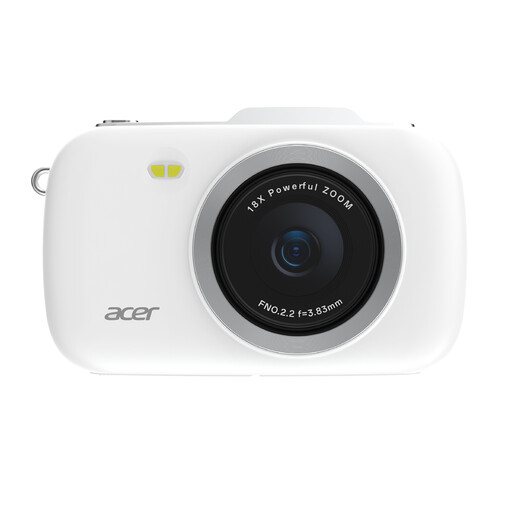
KOMERY G7-A 4K camera, white

KOMERY G7-A 4K – white

A portable point-and-shoot camera for anyone looking for a camera to take travelling.

The product name lists 4K, 80 MP and 18× zoom.

Joybuy
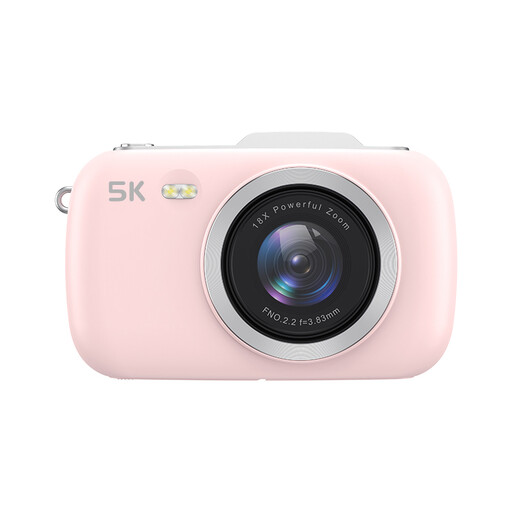
KOMERY G7 5K camera, pink, without SD card

KOMERY G7 5K – pink, without SD card

A portable point-and-shoot camera for anyone looking for a camera to take on the go.

The product name lists 5K, 80 MP and 18× zoom. An SD card is not included.

Joybuy

Songdian pocket camera, pink

Songdian pocket camera 4K 44MP – pink

A pocket camera for anyone looking for a portable camera for photos and video.

The product name lists 4K, 44 MP and 16× zoom.

Joybuy

Frequently asked questions

Should you always use the widest aperture for a dark background?

No, not always. A wider aperture lets in more light, but reduces the depth of field. If you want both the rim of the cup and the milk foam to be in focus, try a narrower aperture and adjust the exposure or setup.

How do you set up a simple, repeatable coffee scene?

Start with a plain, dark background and light from the side or behind. Keep the framing steady and check each shot to make sure the bright areas of the drink retain detail. A controlled lighting setup can help when you’re shooting a series.

Does a mirrorless camera normally come with a macro lens?

No, you can’t tell from the camera’s name. Check the exact kit contents and lens mount: Canon and Nikon describe the close-up lenses mentioned here as separate lenses.

What should you know about your rights when buying in the Netherlands?

For online consumer purchases in the Netherlands, you generally have a statutory cooling-off period of up to 14 days after delivery. ACM ConsuWijzer also states that your statutory guarantee applies alongside any manufacturer’s warranty. If a purchase is mainly for business use, consumer protection doesn’t automatically apply.
