What should you consider when choosing?
Professional fully automatic machine
A good fit when: you regularly serve lots of coffee and the model’s stated capacity matches the expected daily demand.
Bear in mind: the purchase or rental cost, installation, cleaning, servicing and how busy the machine will actually be at peak times.
Domestic machine with a manual steam wand
A good fit when: demand for coffee is low and spread out, and someone can take responsibility for frothing the milk.
Bear in mind: frothing milk manually takes time, and a volunteer will need to clean the steam wand after use.
Domestic machine with automatic milk preparation
A good fit when: guests regularly ask for milk drinks and simple drink options are important for volunteers who take turns operating the machine.
Bear in mind: an automatic cleaning programme does not necessarily eliminate all the steps that need to be done by hand.
Estimate both the number of cups per gathering and demand during the busiest half-hour. Only compare stated daily capacities once you have separately assessed the brewing speed and the steps involved for each model you are considering.
| What to consider |
What to look for when buying |
Who should give this more weight? |
| Peak-time capacity |
Estimate cups per event and during the busiest half-hour; ask about cycle time and the steps involved. |
I want to avoid guests having to wait a long time after their meal. Around 33% of consumers say capacity during serving peaks is their top priority. |
| Cleaning and operation |
Ask a volunteer to try selecting a drink, emptying the containers and following the recommended cleaning routine. |
If different volunteers will use the machine, I want a routine everyone can follow. Around 27% of consumers prioritise ease of maintenance. |
| Milk drinks and allergens |
Decide whether you need to serve milk drinks, who will clean the milk system and what allergen information applies to your organisation. |
I want to offer guests cappuccino and organise the extra steps properly. Around 20% of consumers say milk drinks are their top priority. |
| Maintenance and servicing |
Compare maintenance products, the time needed for cleaning and the service terms for the intended buyer and use. |
For regular gatherings, I want to know what maintenance and repair arrangements apply. Around 20% of consumers prioritise running costs and servicing. |
Joybuy coffee machines for a community meal
These bean-to-cup machines are domestic options for volunteers, with manual or automatic milk preparation.
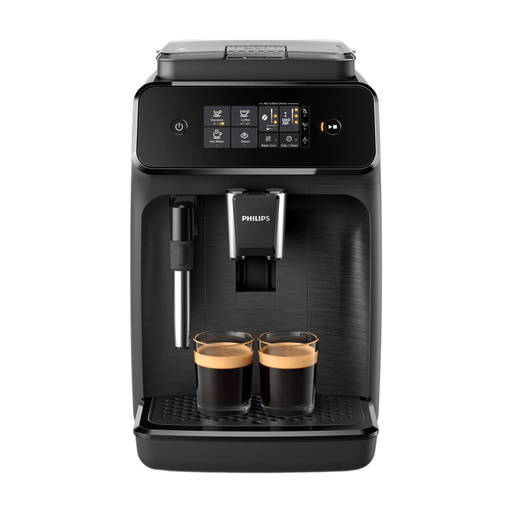 Image unavailable
Philips 1200 Series EP1220/00
An option if a volunteer can froth milk manually and is happy to clean the brewing group themselves.
The product information lists a Pannarello steam wand and a removable brewing group.
Joybuy
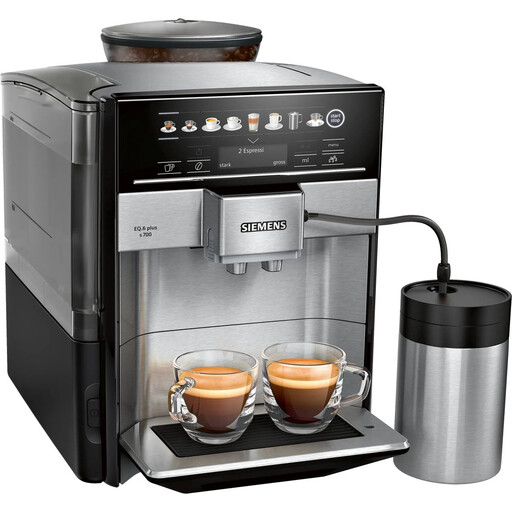 Image unavailable
Siemens TE657M03DE EQ.6 Plus s700
An option to compare if volunteers taking turns are looking for automatic milk preparation and one-touch operation.
The product information lists preparation for two cups at once and AutoMilk Clean. Follow the other cleaning instructions for parts that come into contact with milk too.
Joybuy
 Image unavailable
De'Longhi Rivelia EXAM440.55.G
An option if guests choose milk drinks and having a choice of different beans is important.
The product information lists automatic milk preparation, two milk drinks at once and two interchangeable bean containers.
Joybuy
 Image unavailable
Philips 5500 Series EP5547/90 LatteGo
An option for gatherings where guests can choose from a range of coffee and milk drinks.
The product information lists 20 coffee varieties and a LatteGo system that can be rinsed under the tap or cleaned in the dishwasher.
Joybuy
 Image unavailable
De'Longhi ECAM290.61.SB Magnifica Evo
An option if automatic milk preparation and serving orders one after another are important.
The product information lists a 1,8 l water tank, a 250 g bean container, a removable brewing group and preparation for two cups at once.
Joybuy
Frequently asked questions
Is a maximum of 50 cups a day enough for coffee after a meal?
Not necessarily. WMF states this daily maximum for the 950 S, but the figure does not tell you how many cups the machine can make at the busiest time. Estimate peak demand separately before choosing a model.
What needs cleaning after preparing milk drinks?
Clean the parts that come into contact with milk in line with the manual for the model you choose. The Consumentenbond advises removing milk residue and describes separate cleaning steps, so do not rely on an automatic rinse cycle alone.
Does a repair café need to register with the NVWA to serve a community meal?
You cannot determine this from the description alone. The NVWA states that food businesses must register, so establish whether the specific activities and organisation fall into that category. If the relevant rules for preparing, processing or selling food apply, the organisation must also follow a HACCP food safety plan or an approved hygiene code.
What does using milk in coffee mean for allergen information?
If the organisation falls under the rules for offering unpackaged food, it must inform guests about allergens present. The NVWA describes written information and, subject to certain conditions, information given verbally. Before serving, establish which ingredients and information apply to the drinks on offer.
Do consumer returns and protections apply if the association buys the machine?
Do not assume they do. According to Business.gov.nl, consumer law generally does not apply to sales to businesses. Check who is legally making the purchase and read the relevant warranty, returns and service terms before paying.


