What should you look for when buying?
Domestic machine, mainly for black coffee
Suitable for: modest use, if the organisation has agreed the intended use with the seller and a volunteer can handle the daily tasks.
Trade-off: frothing milk by hand takes extra effort; De’Longhi warns that non-domestic use may affect the warranty.
Domestic machine with milk-based drinks
Suitable for: a menu where visitors regularly ask for cappuccino and volunteers can clean the milk system.
Trade-off: milk makes cleaning and allergen information part of the routine. Also check the dimensions and accessibility of your chosen machine.
Professional fully automatic machine
Suitable for: regular busy periods, when the expected demand and use by multiple volunteers need to be matched to the setup.
Trade-off: capacity, features and service depend on the configuration you choose. A professional model isn’t necessarily needed for occasional use.
First, estimate how many drinks you expect to serve at a busy event and how much space you actually have. Then compare the machines’ operation, cleaning requirements and terms of use.
| Concern |
What to look for when buying |
Who should give this more consideration? |
| Positioning and access |
Measure the width, depth and height; check how easy it is to reach the reservoir, drip tray and parts that need cleaning. |
In a small coffee corner, I want to know whether I can fill and clean the machine without moving the whole setup. Positioning is the main concern for around 25% of consumers. |
| Busy periods and number of drinks |
Note how many drinks you expect to serve at peak times and discuss the intended use with the seller. |
If lots of visitors arrive at once during a repair afternoon, I want to choose a machine suited to that level of demand and its terms of use. Peak demand is the top priority for around 25% of consumers. |
| Cleaning by volunteers |
Check the cleaning instructions for the specific model and agree who will be responsible after each event. |
When different volunteers take care of the coffee, the cleaning routine needs to be manageable for everyone. Cleaning is the main buying concern for around 20% of consumers. |
| Running and service costs |
Ask which maintenance products are needed and what service terms apply to your intended use. |
If the organisation wants to weigh up the costs over time, I want to factor in maintenance and service terms from the outset. Running costs are the top priority for around 15% of consumers. |
| Whether to serve milk-based drinks |
Decide which drinks you’ll offer and compare frothing milk by hand with using an automatic milk system. |
If visitors mainly ask for cappuccino, I want to know whether the extra preparation and cleaning will fit into the volunteers’ routine. Milk-based drinks are the deciding factor for around 15% of consumers. |
Products on Joybuy
This selection includes fully automatic bean-to-cup machines with options for milk-based drinks and manual frothing. For each model, check the available space, expected peak demand and cleaning routine.
 No image available
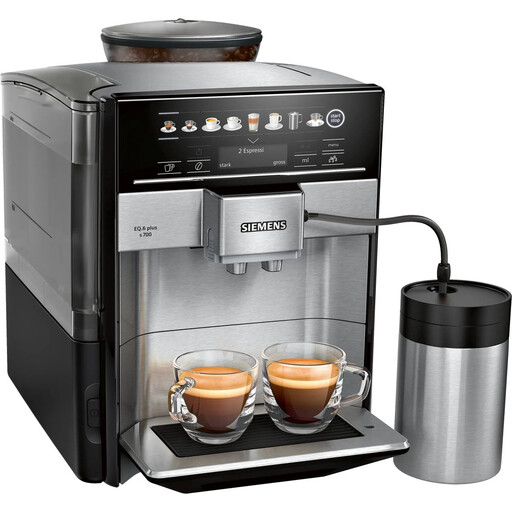
Siemens TE657M03DE EQ.6 Plus s700
Worth considering if volunteers want to make two cappuccinos at once and automatic cleaning of the milk system after each drink is important.
The product description mentions OneTouch DoubleCup for two cups and automatic steam cleaning after each drink. Check the dimensions and terms of use for the machine’s intended location.
Joybuy
 No image available
Philips 5500 Series EP5547/90 LatteGo
An option for a coffee corner where volunteers want to offer a range of drinks and clean the milk system after use.
The product description lists 20 drinks, two user profiles and a dishwasher-safe LatteGo system. Check that the cleaning routine and space required suit your organisation.
Joybuy
 No image available
Philips 1200 Series EP1220/00
An option if volunteers want the machine to grind beans for every cup and are happy to froth milk by hand.
The product description lists a ceramic grinder and a removable brew group. The Pannarello steam wand requires manual frothing and needs regular cleaning.
Joybuy
Frequently asked questions
How can you tell whether a domestic machine is sufficient for a Repair Café?
Count the drinks served at your busiest event and discuss organisational use with the seller or manufacturer. For its coffee machines, De’Longhi gives 10–15 drinks a day as an indication of the point at which use becomes non-domestic. Don’t apply this figure as a general limit for other brands.
What should you consider when placing and maintaining a machine in a small coffee corner?
Compare the available height, width and depth with the dimensions of the exact model, and check how easy it is to reach the reservoir, drip tray and parts that need cleaning. Siemens says the EQ300 TF301E09 has front access for maintenance; Melitta Professional lists a removable water reservoir for the Cafina CT4 Mobile.
Does the manufacturer’s warranty automatically apply when a Repair Café uses the machine?
Don’t assume it does: check the terms for the buyer and the actual intended use before you buy. De’Longhi warns that non-domestic use may affect the warranty.
Does a Repair Café need to register with the NVWA to serve coffee?
This depends on the activity, among other things. The information provided doesn’t establish whether the Repair Café sells coffee, gives it away or offers it in another way. The NVWA says registration is required when a business sells food several times a year. It also sets out requirements for a food safety plan or hygiene code for that sales activity. First establish how the organisation offers coffee, then check which requirements apply.
What allergen information matters if you serve milk-based drinks?
According to the NVWA, businesses that offer food to consumers must provide information about the allergens it contains. Milk, including lactose, is one of the listed allergens. For non-prepacked products, the information can be provided in another way. Check how the rules apply to your organisation’s activities and agree how volunteers will make the information available.


