
Vandaag of morgen in huis

Kwaliteit gegarandeerd

Welkomstaanbiedingen ontgrendelen: GRATIS bezorging | Tot 80% korting | Gratis 30 dagen JoyPlus-proefperiode
Download de app
Buying a coffee machine sounds simple, until you have to choose between filter coffee, espresso, capsules or a French press. A large water reservoir may sound convenient, but it is unnecessary if you usually make just one cup. A high pressure rating on an espresso machine also does not tell you everything about how good your coffee will be. A glossy finish may look attractive, but can sometimes require more maintenance than expected.
As a Joybuy Product Recommendation Officer, I filter product information based on practical considerations: capacity, brewing method, operation, cleaning and materials. This helps you see more quickly which coffee machine suits your kitchen and daily routine.
An espresso machine is often advertised with a pump pressure of, for example, 15 or 20 bar. This is a technical specification of the pump, but it is not, by itself, a guarantee of the flavour in your cup. The grind size, amount of coffee, temperature and tamping method also have an influence.
A semi-automatic espresso machine therefore involves more steps than a fully automatic espresso machine. You have to measure out the coffee yourself, operate the brewing unit and froth the milk. This can be appealing to home baristas, but less practical if you mainly want coffee quickly.
Manufacturers do not always calculate capacity using a large mug. A filter coffee machine with a capacity of 1 or 1.25 litres, for example, is often described as making around 10 cups. For Dutch-sized mugs, the actual number of portions will be lower.
For one or two users, a coffee machine with a thermal jug or a smaller French press may be more convenient. For a family, office or guests, a filter coffee machine with a larger capacity makes more sense. Always check both the capacity in millilitres and the stated number of cups.
A coffee machine with a milk frother has more parts that need attention after use. Milk residue can quickly build up in a steam wand or milk system. With a fully automatic espresso machine, you also have a brewing unit, drip tray and coffee grounds container to clean.
Look for removable parts, a clear descaling procedure and information on whether components are dishwasher-safe. A machine that is used every day should be easy to clean without too much effort.
First, choose the type of coffee you usually drink:
Measure the space on your worktop before ordering. Do not just look at the width; also check the height if there is a cupboard above the machine. A 1.1-litre water reservoir is practical for several espressos, while a 350 ml French press is intended for smaller quantities.
A filter machine with a glass jug often uses a hotplate to keep the coffee warm. A thermal jug keeps coffee warm without needing to stand on a hotplate. This can be useful if you drink your coffee throughout the morning.
A stainless steel coffee machine often has a metal exterior, but check which parts are actually made from stainless steel. The housing, jug, filter holder and interior may be made from different materials. Also look for:
When it comes to brand claims about flavour or extraction, bear in mind that, according to the brand’s own research, certain features may contribute to the stated performance, but such claims are not automatically a guarantee for every user.
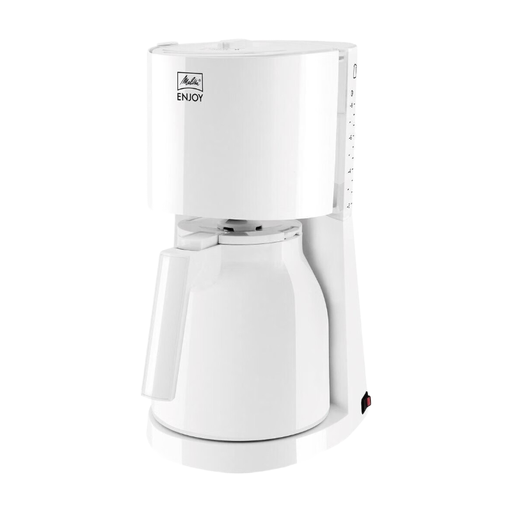
Why it suits this profile: This electric filter coffee machine is easy to operate and, according to the specifications, makes up to 10 cups with a power rating of 1000 W.
The 1-litre capacity and water-level indicator make it easy to check the capacity in advance. Automatic switch-off and the anti-drip function reduce unnecessary steps.
Thermal jug, 1000 W power, automatic switch-off and dishwasher-safe components according to the product information.
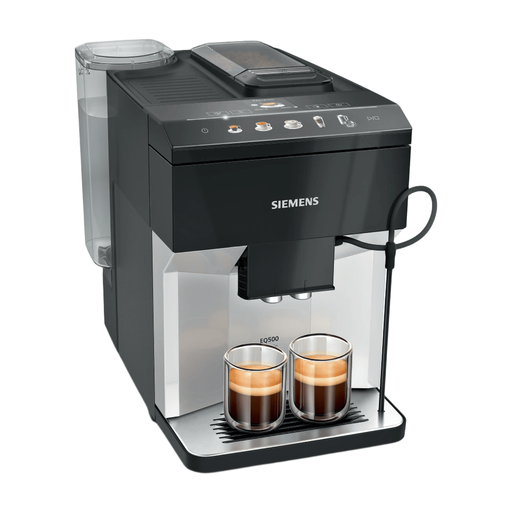
Why it suits this profile: OneTouch operation, ceramic grinders and the cappuccinatore milk system are designed for households that want to prepare a range of coffee drinks.
The product information describes specific cleaning steps, including a removable brewing unit and separate cleaning of the milk system.
1.3-litre water reservoir, 1500 W power, 15 bar pump pressure and settings for espresso, latte and cappuccino drinks.
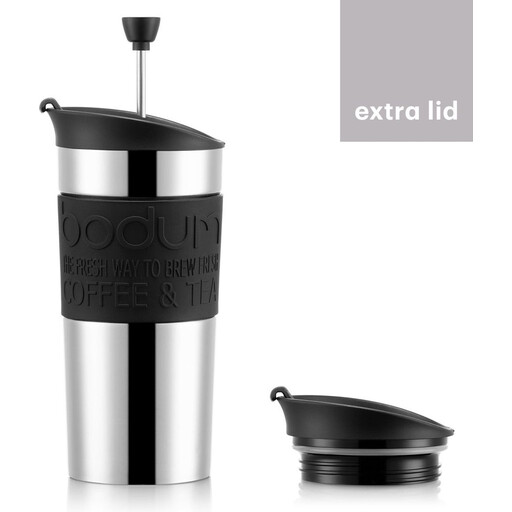
Why it suits this profile: This portable coffee maker is designed for use on the go, in the office, in a student room or while camping.
The 350 ml capacity means you do not need to buy a large machine for one user. Please note: the lid is splash-resistant, but not leakproof.
Double-walled stainless steel, reusable filter, two lids and dishwasher-safe components according to the product description.
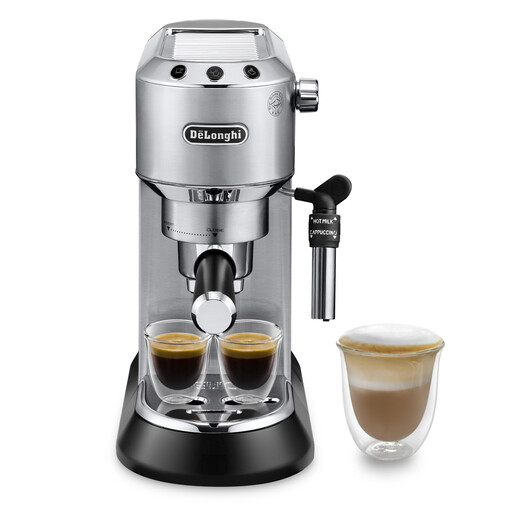
Why it suits this profile: The semi-automatic operation, steam wand and choice between ground coffee and E.S.E. pods give you the flexibility to customise the brewing process.
Its compact dimensions and removable reservoir make the machine suitable for smaller Dutch kitchens. The specifications clearly state its capacity and operation.
15 bar pump pressure, 1.1-litre reservoir, space for two cups and a manual milk frother.
We have put together a complete, up-to-date list of products that fully meet these strict selection criteria and the applicable European safety regulations.
A filter machine uses ground coffee and, optionally, paper filters. A French press does not need paper filters, but generally allows more coffee particles through. An espresso machine uses more components and requires descaling, particularly in hard-water areas. Check whether a water filter is recommended and how often the manufacturer advises carrying out maintenance.
Do not run a coffee machine when it is empty, and allow hot components to cool down before cleaning them. Descale the machine according to the instructions and do not use abrasive products on stainless steel or plastic. With a milk frother, rinsing it immediately is important to prevent residue from drying on.
For several cups, a filter coffee machine with a timer, water-level indicator and automatic switch-off is practical. If you mainly drink espresso or cappuccino, an espresso machine with a steam wand or automatic milk system is a better choice.
Its lifespan depends on usage, water quality and maintenance. Regular descaling, cleaning at the right time and handling glass jugs and steam wands with care can help reduce wear and tear. Also check the statutory guarantee and any additional manufacturer’s warranty provided with the product.
In addition to the purchase price, you will pay for coffee beans or ground coffee, filters, descaler and, where applicable, replacement maintenance parts. A French press requires few consumables. A fully automatic coffee machine may require more maintenance, but saves time on manual preparation. Consider how many cups you drink per day and the price of the coffee required for your chosen machine.
