
Vandaag of morgen in huis

Kwaliteit gegarandeerd

Welkomstaanbiedingen ontgrendelen: GRATIS bezorging | Tot 80% korting | Gratis 30 dagen JoyPlus-proefperiode
Download de app
A coffee machine uses water every day, and the minerals in it can build up in the pipes, thermoblock and heating element. Over time, this can lead to slower water flow, more noise or a change in the taste of your coffee. The right descaler for your coffee machine helps remove limescale, but only if the product is suitable for your appliance and maintenance programme.
Many buyers focus mainly on the brand and price. That is not always enough. The wrong product, an unsuitable dosage or a forgotten water filter can actually increase maintenance costs.
Not every product is suitable for every machine. Fully automatic machines from Siemens, JURA, Philips Saeco and De’Longhi often have their own descaling programme, with a prescribed amount of liquid or tablets. A product may claim on the packaging to be suitable for a wide range of appliances, but always check the manual for your specific model.
Pay attention to the difference between:
Cleaning a coffee machine involves more than removing limescale. Coffee residue, milk deposits and oils require a different cleaning product. A descaler is intended for mineral deposits in the water circuit. Do not use ordinary bathroom descaler or cleaning vinegar unless the manufacturer explicitly recommends it.
A product such as Antikal Express is intended for bathroom surfaces, not for the inside of a coffee machine. Only use products sold specifically as descalers for coffee machines.
Brands sometimes mention benefits such as a longer lifespan, better flavour or faster results. Do not present such claims as guaranteed outcomes. According to De’Longhi’s own research, EcoDecalk removes limescale faster than certain traditional products under laboratory conditions. That is not a universal guarantee for every machine or usage situation.
It is more practical to look at verifiable features: volume, number of applications, format, compatibility and safety instructions.
Look in the manual for the recommended maintenance products. Examples:
Compatibility is not only about whether the liquid can pass through the machine. The quantity, contact time and rinsing sequence may vary between appliances.
A 500 ml bottle may seem good value, but the actual price depends on the number of applications. According to the product information, the De’Longhi EcoDecalk DLSC500 is supplied as 500 ml for five applications. Gaggia Descaler contains 250 ml; the instructions specify dilution with 500 ml of fresh water, unless the appliance manual states otherwise.
The number of tablets is easier to understand at a glance. The Siemens TZ80032A contains 9 tablets for 9 cleaning cycles. According to the product specification, the JURA pack contains 36 tablets for 12 descaling cycles.
Descalers contain acids. If in doubt, wear gloves, avoid contact with your eyes and skin, and keep the product out of children’s reach. Never mix different maintenance products.
A typical procedure consists of:
Only make your first coffee after maintenance once you are certain that no product residue remains.
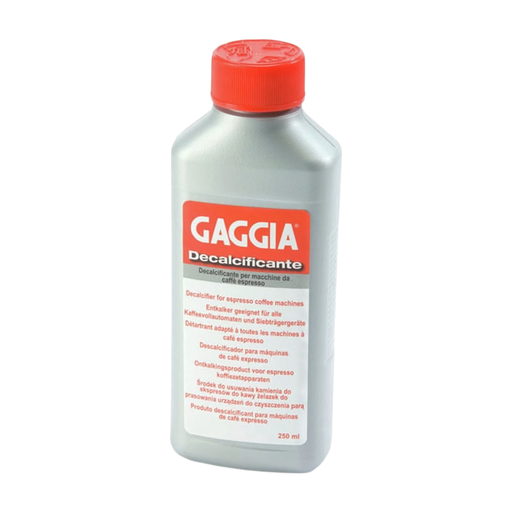
Why it suits this profile: The liquid dosage is easy to manage if you are descaling an espresso machine yourself for the first time.
The instructions specify dilution with 500 ml of water and refer to the machine’s programme. Always follow the manual for your model.
Liquid formula, 250 ml volume and suitability for Gaggia and selected Philips machines.
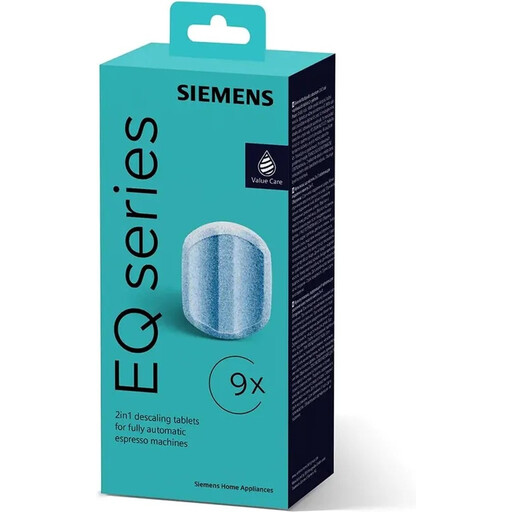
Why it suits this profile: A logical choice for owners of a Siemens EQ fully automatic machine who want to use original accessories.
The stated compatibility focuses on Siemens EQ.series fully automatic machines and built-in fully automatic machines, rather than making an unclear universal claim.
9 tablets, 9 specified cleaning cycles and a 2-in-1 formula according to the product description.
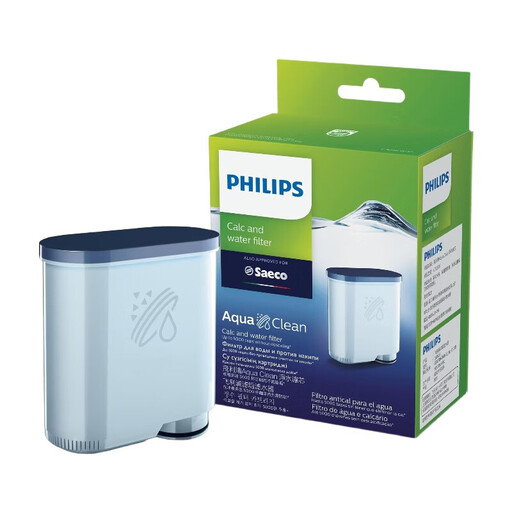
Why it suits this profile: For Saeco owners with an AquaClean system who want to reduce limescale build-up before it occurs.
A filter is not a replacement for every descaling programme. This option only works with machines that support AquaClean, so check this beforehand.
Easy-to-install filter; the product information states that it reduces limescale, chlorine and other impurities.
We have put together a complete, up-to-date list of products that fully meet these strict selection criteria and the applicable European safety regulations.
This depends on the water hardness, the number of cups made and the manufacturer’s instructions. Some machines display an automatic reminder. If there is no reminder, follow the manual and look out for signs such as reduced water flow, increased pump noise or a change in flavour. A water filter can reduce the amount of limescale, but it does not automatically postpone maintenance indefinitely.
Only use vinegar if the manufacturer explicitly permits it. Its smell and residue can remain in the appliance, and its acidity is not suitable for every system. An official descaler, such as a tablet or liquid compatible with your brand and model, is better suited to the prescribed programme.
Compare the number of maintenance cycles per pack, not just the price of the box. Tablets have a fixed dosage and are convenient for fully automatic machines with a tablet programme. Liquid products are flexible for espresso machines, filter coffee makers and machines with a portafilter, but often need to be measured or diluted. Calculate the price per cycle and check your machine’s instructions at the same time.
