
Vandaag of morgen in huis

Kwaliteit gegarandeerd

Welkomstaanbiedingen ontgrendelen: GRATIS bezorging | Tot 80% korting | Gratis 30 dagen JoyPlus-proefperiode
Download de app
Buying a new coffee machine seems straightforward, until you have to choose between a bean-to-cup coffee machine, espresso machine, filter coffee machine or capsule coffee machine. Manufacturers often focus on pressure, programmes and smart features. Yet practical considerations such as maintenance, size and running costs are what really determine whether a machine is right for you.
So watch out for these common pitfalls:
A bean-to-cup coffee machine grinds coffee beans, measures out the water and usually makes an espresso or lungo at the touch of a button. Models with a built-in grinder are suitable for households that want to use fresh beans without having to fill a portafilter themselves.
Pay particular attention to:
A bean-to-cup machine with a water reservoir of around 1.8 litres is practical for multiple users. For a one-person household, a smaller model may actually mean less work.
A portafilter machine or semi-automatic espresso machine uses ground coffee in a filter holder. You decide how much coffee to use, how firmly to tamp it and, often, the texture of the milk. This suits home baristas who enjoy being involved in the preparation process.
An integrated grinder is convenient, but often makes the machine wider and heavier. Also consider the machine’s width, the space above it and the position of the water tank. For everyday use, a removable drip tray is a clear practical advantage.
A capsule coffee machine works quickly and requires very little preparation. This type is suitable for small kitchens, offices or users who mainly drink one or two regular types of coffee.
Bear in mind:
A compact model is not automatically suitable for a large household. A 0.6-litre reservoir, for example, is practical for occasional use, but less convenient when several people want to make coffee one after another.
A traditional filter coffee machine with a jug makes sense if you want to prepare several cups of filter coffee at once. Look at the capacity, keep-warm function and automatic switch-off. A compact drip coffee machine can be appealing for a small kitchen, but usually offers fewer adjustment options than an espresso machine.
Do not just measure the worktop; also check the space above the machine. Some models require the water tank to be removed from the top or rear. At a minimum, check:
For a compact kitchen, models around 11 to 15 centimetres wide are worth considering. A larger bean-to-cup machine often offers greater capacity, but requires more worktop space.
Coffee residue, milk and limescale affect everyday use. Where possible, choose a machine with a removable brewing unit, clear cleaning alerts and a removable drip tray. A water filter can help limit limescale build-up, but does not automatically replace descaling.
Always follow the manufacturer’s instructions. According to the product descriptions of various brands, certain components can be cleaned under the tap or in the dishwasher; check which parts are suitable for this on each model.
A manual steam wand gives you more control, but requires practice and must be wiped clean immediately after use. An automatic milk container is easier for making cappuccinos and lattes, but has more components requiring daily attention.
Coffee machines use hot water, steam and sometimes high pump pressure. Place the machine on a stable, heat-resistant surface. Do not allow children to use it unsupervised, and never remove the portafilter or capsule holder while a drink is being prepared.
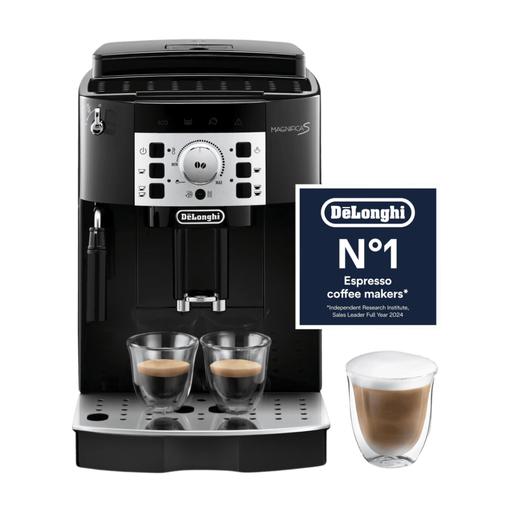
Why it suits this profile: This bean-to-cup coffee machine uses coffee beans, also works with ground coffee and has a manual steam wand for making cappuccinos or lattes.
According to the product description, the brewing unit is removable and can be rinsed clean. This makes regular maintenance more accessible than with a completely enclosed system.
1.8-litre water reservoir, 250-gram bean reservoir, adjustable grind size and the option to make two coffees at the same time.

Why it suits this profile: Suitable for households wanting plenty of variety, including espresso, americano, milk-based drinks and iced coffees, with settings for strength and volume.
The LatteGo system consists of a limited number of components. According to Philips, these can be cleaned under the tap or in the dishwasher; check the manual for details.
20 drink options according to the product description, two user profiles, QuickStart function and a ceramic grinder with 12 grind settings.
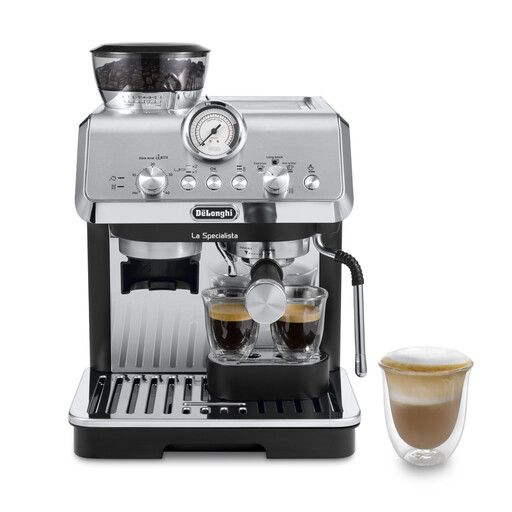
Why it suits this profile: For home baristas who want to grind, measure, tamp and froth milk themselves rather than leave everything to an automatic process.
The eight grind settings and manual steam wand make it clear that this is not a push-button appliance. You are deliberately choosing greater control, along with the maintenance that comes with it.
Built-in grinder, three pre-programmed recipes, dual thermoblock according to the product specifications and a 1.5-litre water reservoir.
We have put together a complete, up-to-date list of products that fully meet these strict selection criteria and the applicable European safety regulations.
Empty the drip tray and coffee grounds container regularly. Rinse the brewing unit according to the instructions and clean a steam wand immediately after use. Descale the machine when it indicates that this is necessary or when instructed to do so in the manual. The frequency depends on the water, the number of cups and the type of machine.
In addition to the purchase price, you pay for coffee beans, ground coffee or capsules, electricity, water filters and descaler. Capsules are convenient to use, but can work out more expensive per cup. With a bean-to-cup machine, you can adjust the cost more closely to the beans you choose. So do not compare just the price of the machine; also consider the number of cups you expect to make each day.
The lifespan depends on usage, maintenance, water quality and the availability of replacement parts. A machine with a removable brewing unit and clear maintenance procedures is generally easier to look after yourself. Check the warranty terms and keep your proof of purchase. Consumers in the European Union are entitled to at least the statutory guarantee; additional manufacturer terms may vary by brand and model.
