
Vandaag of morgen in huis

Kwaliteit gegarandeerd

Welkomstaanbiedingen ontgrendelen: GRATIS bezorging | Tot 80% korting | Gratis 30 dagen JoyPlus-proefperiode
Download de app
Buying a coffee machine may seem straightforward, until you have to choose between beans, ground coffee, capsules, milk functions and different pressure ratings. Marketing terms such as “professional espresso”, “20 bar” and “fully automatic convenience” sound appealing, but they don’t always tell you how practical a machine will be in your kitchen.
So, look out for these three common pitfalls:
A fully automatic coffee machine grinds coffee beans just before brewing. It’s a good choice if you drink several cups a day and want to adjust the strength or grind size. For example, the Philips 1200 Series has a ceramic grinder with 12 grind settings, while the De'Longhi Magnifica Evo has 13 grind settings.
A bean-to-cup machine does need more maintenance than a capsule coffee machine. You’ll need to check the bean hopper, brew group, drip tray and coffee grounds container regularly.
A capsule coffee machine is easier to use and often quick to prepare. Always check which capsules are compatible. Some models work with one specific system, while others support multiple formats or ground coffee. This affects which coffee you can buy later and how much choice you’ll have.
A tank holding 0.6 to 1 litre may be enough for one person. In a household with several coffee drinkers or in a small office, 1.5 to 1.8 litres is more practical. Also check the capacity of the bean hopper and how many cups the machine can make at once.
The De'Longhi ECAM290.61.SB has a 1.8-litre water tank and a 250-gram bean hopper, and can make two espressos or lungos at the same time. The Philips 1200 Series also has a 1.8-litre tank and a 275-gram bean hopper.
A manual steam wand gives you more control, but takes practice and needs cleaning after every use. An automatic system makes it easier to prepare cappuccinos and latte macchiatos, but has more parts that come into contact with milk.
Also check whether the brew group, drip tray and coffee grounds container can be removed. A built-in descaling programme or water filter can make maintenance easier to manage, but won’t replace regular cleaning.
Finally, measure the available space. The De'Longhi Magnifica Evo is around 24 cm wide, while the Nespresso De'Longhi Essenza Mini is just 11 cm wide. That difference could be decisive in a small kitchen.
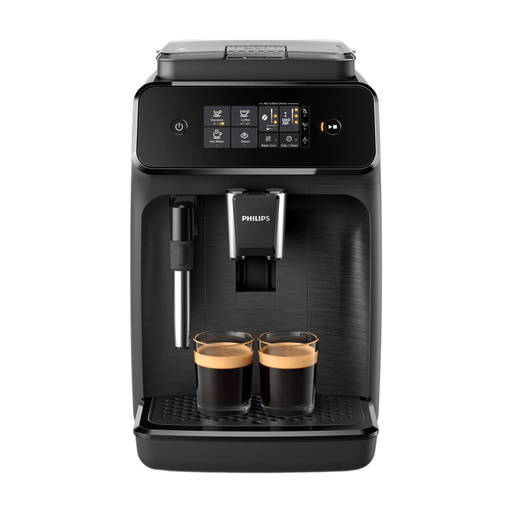
Why it suits this type of user: This fully automatic coffee machine combines bean grinding, adjustable coffee strength and a classic milk frother, without a complicated control panel.
The removable brew group and dishwasher-safe parts make maintenance easier to manage. The dimensions and capacity are clearly specified in advance.
1.8-litre water tank, 12 grind settings, adjustable coffee strength and a ceramic grinder.
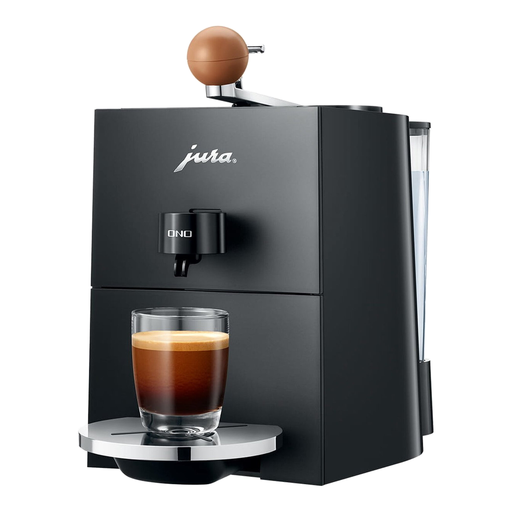
Why it suits this type of user: This model uses ground coffee rather than capsules. That lets you choose your own coffee and avoid using capsules.
Using ground coffee means you’re not tied to a single capsule system. The machine has a 0.95-litre water tank and is designed to make one cup at a time.
Adjustable coffee strength, automatic shut-off, water filter and, according to the product specifications, dishwasher-safe parts.

Why it suits this type of user: A household with several coffee drinkers benefits from the large tank, the ability to make two cups at once and the automatic milk system.
The milk container is removable, and the machine indicates when descaling is needed. The removable brew group, drip tray and coffee grounds container make routine maintenance easier.
1.8-litre water tank, 250-gram bean hopper, 13 grind settings and milk drinks at the touch of a button.
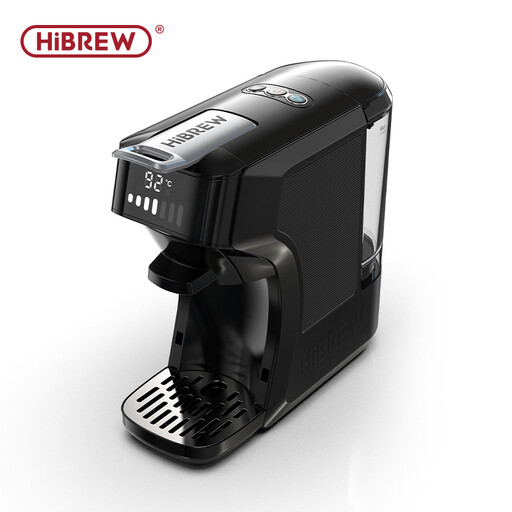
Why it suits this type of user: This compact coffee machine is designed for people who want to use different capsule formats as well as ground espresso coffee.
The product specifications list compatibility with several types of pods and espresso powder. However, check the recommended cup height and capsule format beforehand.
20 bar pump according to the product specifications, hot and cold modes, 600 ml tank and compact design.
We’ve put together a complete, up-to-date list of products that meet these strict selection criteria and the applicable European safety requirements.
Running costs depend mainly on the system you choose. Capsules have a fixed price per cup and create waste. With a bean-to-cup machine, you’ll pay for coffee beans, filters, cleaning products and possibly descaler. So compare not just the purchase price, but also the cost per cup and the maintenance involved.
Its lifespan depends on how often you use it, water hardness and maintenance. Regular cleaning, descaling when needed and following the instructions help reduce wear on the components. A water filter can help limit limescale build-up in compatible models, but it needs to be replaced on time.
Start by checking the machine’s width, depth and height. A compact capsule machine such as the De'Longhi Essenza Mini is around 11 cm wide. A fully automatic coffee machine offers more features, but generally takes up more space and needs larger tanks. Also check that you can remove the water tank and drip tray easily.
